

Panopticon returns with a symphonic approach to their environmental and deeply human post-black metal on the excellent Det Hjemsøkte Hjertet.
Release date: May 8, 2026 | Nordvis | Bindrune Recordings | Instagram | Bandcamp
We live fragmented lives, and there is an impossibility of escape. Yes, we are atomized and commodified and strive to connect and compete with each other in trivial ways encouraged by capitalism’s relentless hunger for profit, extracting our labor, our time, and our attention in its black hole maw to the point that our anxieties, depression, and sense of self are distorted and every aspect of our lives subservient. Yes, technology and social media exacerbate these things while wreaking havoc on our cognitive performance and self-worth and ability to delineate truth from fiction, but ultimately what started all of this is out disconnection from nature. Biologically and psychologically, our bodies and brains are wired to be part of our environments, and as concrete, plastic, and screens have filled our visions, so too have the lights and sounds of urbanity and industrialization replaced diurnal rhythms, the wonder and majesty of a starry night, and the calming effects of seeing the lush greenery of minimally touched, open spaces. This wounds our souls, or whatever concept we have of them, killing a part of our hearts in the thrum and bustle of modernity.
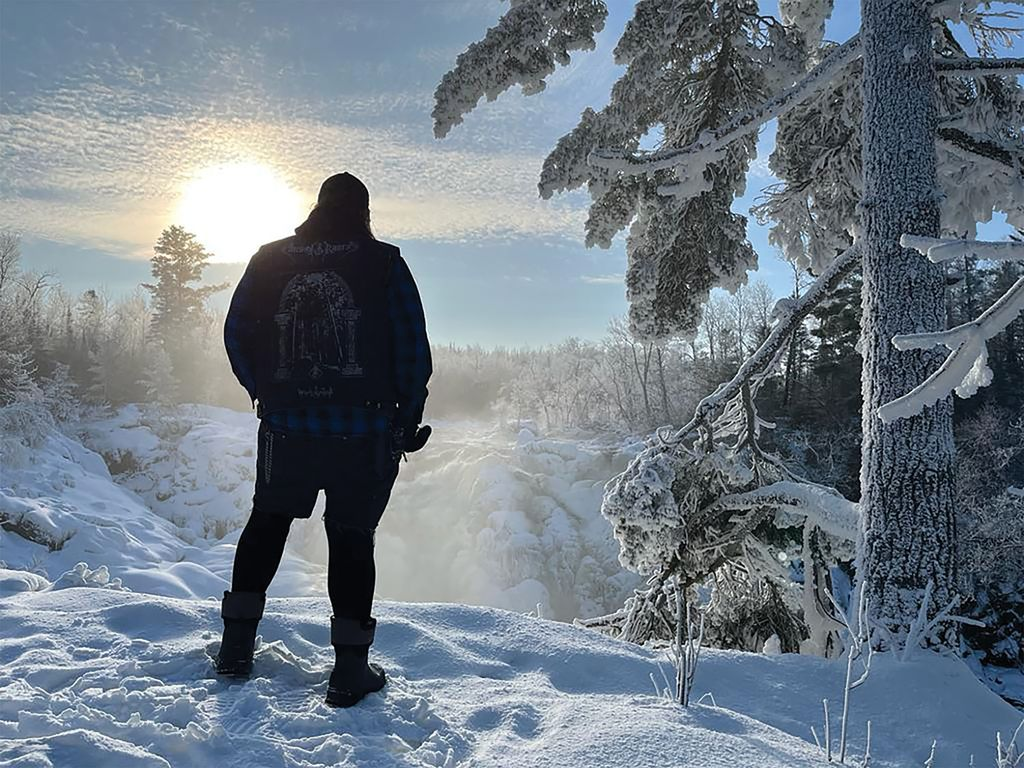
Over many albums, Panopticon, the black metal and folk project of Austin Lunn, has explored these themes through the lens of social collapse, labor movements, and environmentalism. Most recently, Panopticon has been working on an album cycle that began with 2021’s …and Again Into The Light, followed by 2023’s The Rime Of Memory, touching again on these themes with the folk record Laurentian Blue in 2025 labeled as a companion piece to …and Again Into The Light. Now, Austin concludes this cycle by seeking the interconnectedness of ourselves; our present lives and experiences, nature, and the parts of our hearts that have died on his latest album, Det Hjemsøkte Hjertet, which translated from Norwegian means ‘the haunted heart‘. The timing couldn’t be better, for me. Det Hjemsøkte Hjertet was released on the same day as Sir David Attenburough‘s 100th birthday, a man whose narration of beautiful nature documentaries and calls to action to protect our precious planet’s biodiversity has left a profound impact on my life. On the same day, I began reading a book titled Greenwood by Michael Christie concerning generations of a fractured family each bound by their connection to trees. I am very ready to go camping.
Anyway, Det Hjemsøkte Hjertet begins with the sound of a string section warming up and the sound of an animal squeaking as footsteps crunch through the underbrush on “Woodland Caribou”, an immediate sonic metaphor for humanity’s impacts on nature. The mournful strings of this song carry its weight, gorgeously lilting and weeping in place of black metal’s icy guitars, but give the sense of winter just the same. Lyrically, the song is the laments of an old man, solitary in a Northern winter forest preparing to go the way of the Minnesota caribou, which is to say dead. Lunn explains that the caribou were outcompeted by deer in their Minnesota habitats. As the character reflects on his life and wanderings guitars start to shimmer and plod along with the drums in a gorgeous post-metal crescendo that eventually welcomes in the blast beats and tremolo guitars of black metal. Throughout the song’s 12-minute runtime, the string section is never far away, nor is it for the entire album. This added layer to Panopticon‘s sound is absolutely stunning and leaves me transfixed in awe.
Non-traditional metal instruments have always accompanied Panopticon‘s output, though usually in the form of banjo, steel-, and acoustic guitars. This orchestral element is new, though I would hesitate to classify this as ‘symphonic metal’. That term always signals, to me, some of the most overproduced and banal-sounding stuff in the metal world. Though “Woodland Caribou” is closer to a ballad’s pace, “The Great Silence, Escaped” roars in with all of the aggression and grandeur of the finest of black metal songs. About halfway through, the tumult relaxes into relatively more triumphant and almost blackgaze levels of shimmering beauty, but instead of effects it is the string section guiding the atmosphere and glory, alongside almost classic rock guitar solos that somehow fit perfectly into this maelstrom of sounds. This track fucking rips and apart from the sound of boots walking through snow, flows right into the similarly vibrant and heavy “Blood And Fur Upon The Melting Snow”, which melts into a cleanly sung melodic section with bells and choir vocals, again shockingly beautiful.
This mix of aggression and beauty continues through the album with each new track unveiling incredible moments. “The White Cedars” serves as a sort of microcosm of Det Hjemsøkte Hjertet, weaving between moments of high intensity and melodic string accompaniment with an Alice In Chains-influenced coda. This track recalls the lingering memories of ourselves, as well as the memories of trees. In the cedars and the land, the memory of the narrator’s woodcutter grandfather lingers and dies as the felled timber returns to the moss. This is remarkably similar to Greenwood, which also uses trees as a memory and plot device. Additionally, a section of the book regards the connection of wood to a viola, how the grain selection and placement in the body of the instrument can affect resonance, how the skilled hands of a master woodworker must feel and respect the trees that gave their lives so that we may create. So, it feels fitting that so many wooden instruments are employed on this album that holds so much reverence for those sacred spaces and trees.
I have been a huge fan of Panopticon since Kentucky. I have most of their work on vinyl and have always found it difficult to chose a favorite album. Autumn Eternal maybe gets the most frequent replays, but the rawness of Collapse and the anarchist spirit of Social Disservices and Kentucky speak to me. Roads to The North and the previous releases in The Laurentian Trilogy show an amazing evolution of sound. I don’t think you can go wrong with any Panopticon album, but there is no doubt in my mind that Det Hjemsøkte Hjertet is my new favorite. This album lands with so much vigor and eloquence that it is not only a high water mark for Panopticon‘s career, but one for all of North American black metal as well as handily the best metal album this year. The execution of the themes surpasses any black metal record I can think of, well-researched and considered with each moment’s musical accompaniment sticking the landing like an Oscar-worthy film score. Listen to this album, then find some woods or a park or whatever space you can that has been minimally trampled by humanity. It will start to heal parts of you that you didn’t know needed healing. Leave no trace of your presence as you leave, so that maybe future visitors and existing life can thrive and heal as well.