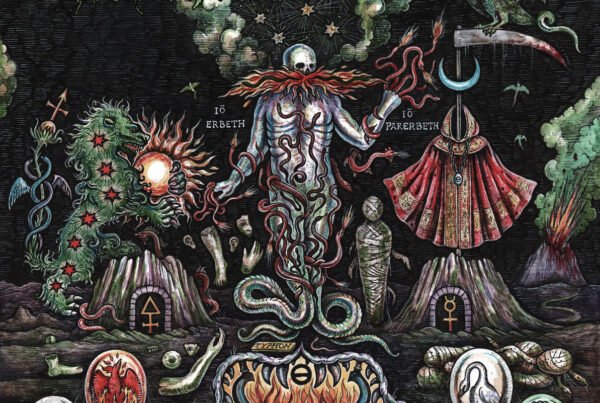


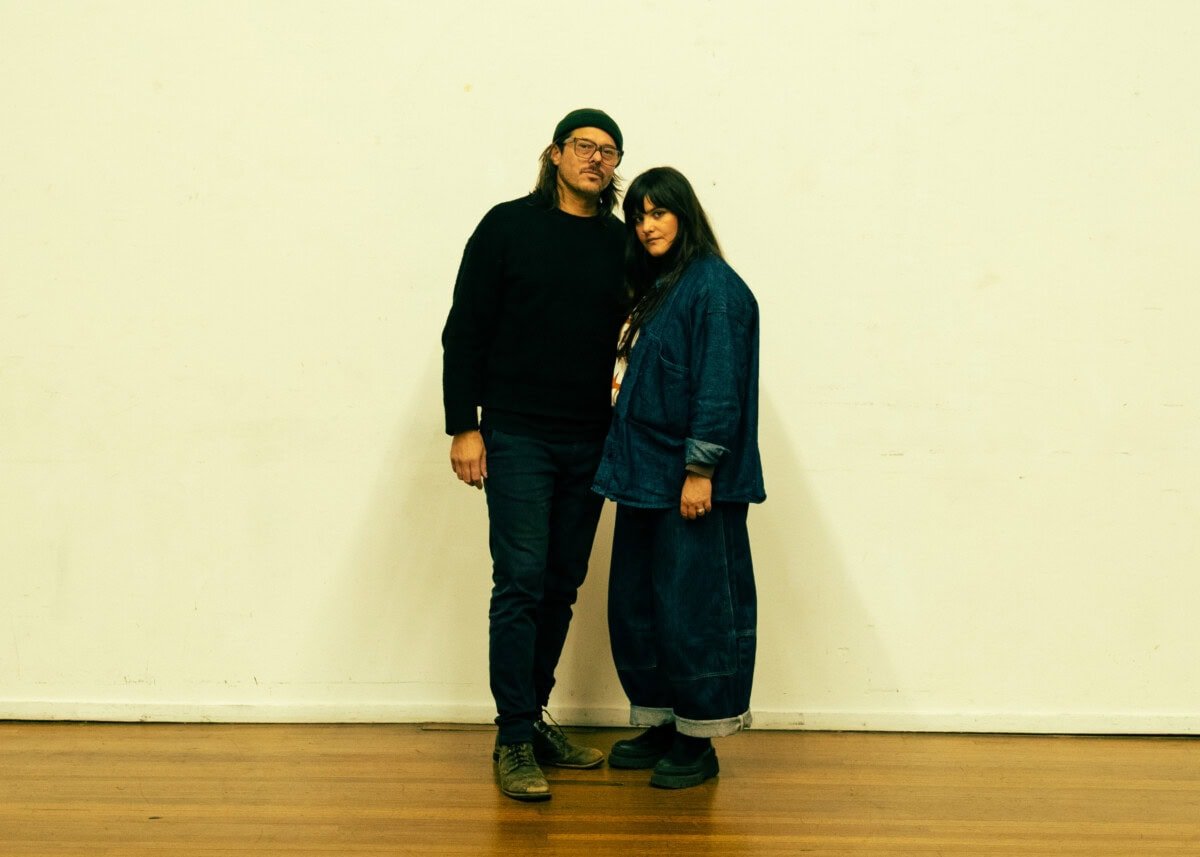
Ibelisse Guardia Ferragutti & Frank Rosaly further explore and expand upon their ancestral heritage through experimental jazz on O.
Release date: October 16, 2026 | International Anthem | Bandcamp | Ferragutti Instagram | Rosaly Instagram
Earlier this year I realized that I am out of touch with my cultural heritage. I was raised ‘white‘ in the United States, in a smallish area, a school district in Iowa that accommodates some outlying communities and farm towns on the northern side of a larger metropolitan area. Non-white people were regrettably scarce in my school days, and the individual European ancestries of myself and my classmates, like most of the United States, wasn’t celebrated. As I have grown and learned more of the world, I have realized how the idea of ‘whiteness‘ creates a hollow cultural hegemony. We don’t celebrate being German, Irish, Swedish, etc. Our country’s white supremacist culture has nullified those things and employed countless acts of racial violence to maintain it. It is to the point that i think even referring to oneself as ‘white‘ upholds white supremacy in an ongoing attempt to erase any kind of cultural heritage that isn’t worshipping wealth and materialism and a conformity that reduces our unique natures.
I know that isn’t an ideal way to start a music review, but O by Ibilesse Guardia Ferragutti & Frank Rosaly is very much an album about celebrating cultural differences and honoring the heritages that time and socioeconomic structures would have us forget. The duo collective ancestry celebrates Puerto Rico, the Caribbean, and Brazil, though they are based in Amsterdam with percussionist Rosaly being an expat from the USA. Their previous collaborative album, 2024’s MESTIZX similarly explored their Latinx backgrounds while also exploring the time, mood, and experimentation that jazz can offer. It was among my favorite albums that year, and I’ve been eager to see what would come next. The six-song EP O answers that eagerness with even more lushness and experimentation. At 35 minutes, the EP straddles the line between EP and LP (MESTIZX was less than 7 minutes longer), but format classification aside, O offers a lot to unpack and enjoy.
“Escondida” begins with a cymbal crash and a hypnotic polyrhythm of hand drums as a slow bassline and a twinkling descending melody from bells beckons the listener into a hypnotic meditation. As autoharp and other curious sounds unfold, you are taken on a psychological journey that flirts with horror movie sound effects as much as it does with free jazz. The experience is nearly disorienting, but the persistence of the percussion keeps you locked in, like a sort of Caribbean krautrock. It is an interesting choice for an opening track, as it is high concept and curious rather than immediately inviting, but it sets the thoughtful and reflective tone for O while also showcasing the duo’s talents and ear for unique soundscapes. “18º14’46.3″N 65º47’08.3″W”, coordinates that take us alongside the Rio Blanco in Puerto Rico just below the El Yunque National Forest, is almost more of a drone piece, synthesizers waver and pulse, building a kind of surreal tension that becomes more approachable once Rosaly’s drums and a horn settle in. It feels like coming home out of the rain, a sense of relief and comfort from the grey that surrounds us.
“X” similarly begins with a droning synth, but there is immediately more melody and movement ushering in another complex drum pattern. This track is springy and infectious, featuring Ferragutti singing in Spanish. I adore this track. Hearing these two explore more playful and joyous sounds is always a treat. The rhythms still feel meditative, but this is something you could dance to under the moonlight on a night of revelry and good rum. “O” the titular centerpiece gradually builds into a Latin jazz crescendo that is also trance-like as Ferragutti recites a poem centered around ‘O‘, the Taíno word for mountain, giving reverence and jubilation to the unifying and liberating force the ‘O‘ represents. This connection to the earth, connection to people who were the first to encounter Columbus on his fateful journey that eventually lead to a genocide of some 3 million Taíno. Though fractured over the centuries and intermixed with colonizers, the extant culture and ancestry lives on, and this track feels like a powerful tribute to that resilience.
“Liberta” kicks off the final third of O with the chirps of insects and frogs as a backdrop to more spoken word from Ferragutti, describing a connection to an indigenous woman communicating dreams of a peaceful, reflective home. Synths help embellish the dreamlike quality of this track, percolating in and out as bubbles in a stream break the water to indicate feeding fish. There is a holistic and eerie quality to the sounds here, as if Ferragutti and Rosaly are tapping into every level of consciousness. To carry on the dream state, “Sueño” closes the album, carrying over the bell sounds from the previous track as a field recording of Caribbean music and revelry fade up to the foreground, perhaps the result of a community collaboration or simply something captured from the duo’s travels. Either way, there is something vaguely punk about hearing a lower fidelity recording at the end of such a complex and impactful album that I really appreciate. They are giving a voice to a moment, to a people.
O sees Ibelisse Guardia Ferragutti & Frank Rosaly expanding on their previous work with more experimentation and stronger compositions while remaining devoted to their heritage, their culture. It is a reminder for everyone to not lose sight of the distinct ancestral traditions that we too easily lose in a world that rewards conformity. This is music rooted in jazz, but far from what the term ‘jazz‘ may conjure in most people’s minds. It feels empowering, though I have no ancestral claim to any of this music or these people’s traditions. The fact that anyone can reach back into the past and find traditions, music, food, rituals, art, clothing, and music to connect to is something I think we all could use as a reminder. To break the dominance of hegemonic culture, we must learn from our pasts and from those more in tune with theirs. No one people are a monolith, and this album is a potent reminder of the necessity of decolonization for everyone.