

‘Ka’s lyrics are the record of a malignant world, given sound by a man who’s seen entirely too much shit in life, and yet has the strength and resolve to stand on ten toes and spit unbridled knowledge.‘
-David Rodriguez
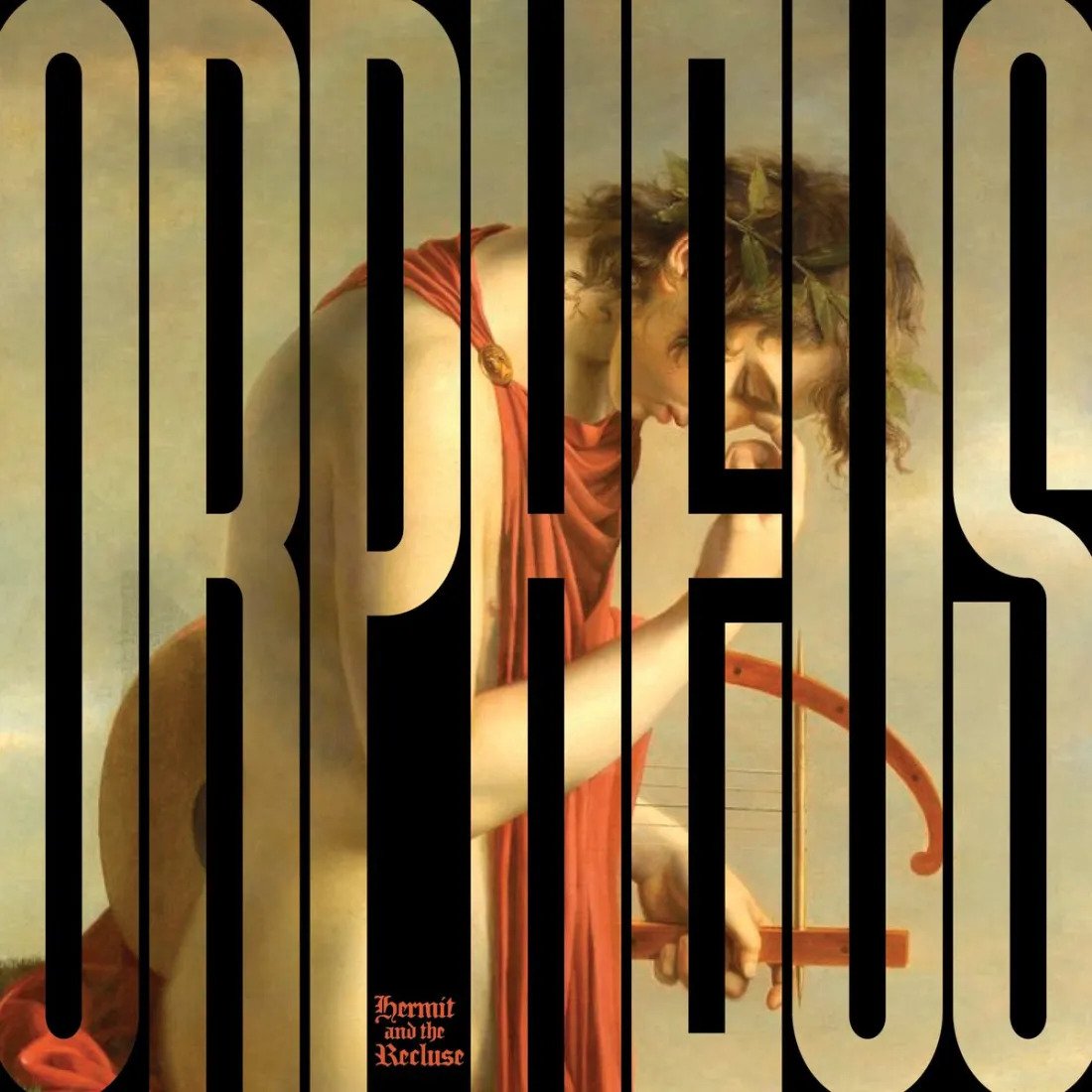
Release date: August 18, 2018 | Obol for Charon | Ka Instagram | Website | Animoss Instagram
Some records are more than just the sum of their parts; they transcend background and culture to become something unique and fascinating. Late Brownsville rapper Ka, together with producer Animoss, was able to channel such a record as Hermit and the Recluse. Orpheus vs. the Sirens, the only album they put together as a unit, draws from Greek myth, not to mythologize, but to hauntingly illustrate the stark realities of street life in New York City.
Broc Nelson
This album is rather new to me. My editor, fellow rap nerd, and penguin-appreciating pal David introduced me to Orpheus vs. the Sirens and by extension the late rapper Ka shortly after I joined Everything Is Noise. Hermit and the Recluse was Ka’s project with producer Animoss. I had just enough time to enjoy this album as well as Ka’s final album, The Thief Next To Jesus shortly before Ka’s passing in October 2024, just two months after The Thief Next To Jesus was released. That short introduction period sold me on the brilliance of Ka who, at the time, seemed underappreciated, but posthumous praise revealed his cult status, a rapper’s rapper, notoriously reclusive while undeniably skilled.
The story of Ka’s life is as intriguing and layered as his lyrics. The Brownstone neighborhood Brooklynn-ite wanted to be a rapper from a young age. He dabbled with a hip hop career, joining and forming groups in the ‘90s, even doing a guest spot for GZA, but it wasn’t until he was 36 that he released his first solo venture, 2008’s Iron Works. The follow-up came another 6 years later. His solo albums were truly solo, crafting the lyrics and beats during his downtime from his day job. He also made two collaboration albums with other producers with different aliases: Days With Dr. Yen Lo (with Preservation) and Hermit and the Recluse. His albums were conceptual, each focusing on filtering retrospective stories of street life and poverty as an older, wiser man through various mythologies and fictions from popular culture.
Later in his career, his day job was revealed to be a firefighter chief in NYC. After his death it was revealed that he was a first responder during the September 11th attacks. His sense of privacy and quiet heroism is nearly mythical itself, especially in a right-wing culture where that kind of narrative could easily be exploited and aggrandized for profit. Ka wasn’t like that which alone is an admirable position. I will always admire the workers doing what is necessary over braggards with a God complex. Ka’s passion was hip hop by his own rules, a true artist.
Notably, his artistry was ahead of its time. He favored drumless beats. Yes, J Dilla, Madlib, and RZA were forerunners in the drumless movement, countering boom bap, and Roc Marciano pioneered and carried the concept into the wider New York scene with his own brilliance, paving the way for the Griselda crew’s popularity. Ka, however, took it in a different direction. His muting of the percussion became a delivery method for his hushed vocal delivery and allowing his skills as a lyricist become the focus.
On Orpheus vs. the Sirens, Animoss stays true to that beat style while slinking waves of psychedelic guitars through along with samples from the film Jason & The Argonauts. The combined effect of these old samples and Ka’s quietly layered bars make this album feel like if MF DOOM flipped his villainous persona and whimsical wordplay into a softened novella that synthesizes Greek mythology with the realities of growing up in a world full of violence, drug deals, and loss. “Sirens” opens with the most prominent example of this, though the concept runs faithfully through to the last track. On “Sirens”, Ka works a reference to Greek mythology into each bar of the first verse, setting up a kind of overture to the rest of the album. ‘Quietly spoke volume of my drama, since then I’ve been at war/It’s no bull, my lab was in a labyrinth like the Minotaur,’ he confesses.
“Atlas” sees Animoss throwing in a more bouncy melody while Ka reflects on the ‘weight of the world’ on his shoulders as a metaphor for his past and present as an MC and a man trying to do right. The wonky harpsichord sample was used this year by Blockhead on his album with Brian Ennals, Boatshoes, a fact David pointed out immediately. This small connection across 8 years of time shows how deeply this album and Ka’s work is embedded in the culture. “Golden Fleece” is another standout track as Ka paints a metaphor of the myth into his own journey to become a legend-worthy MC, a king.
The third verse of “Hades” has to be my favorite, opening with, ‘there’s purity in obscurity, in glory I’ll never bask,’ which retrospectively seems like an essential line to understand Ka. The closing bars give insight into applying that humility to life with caution, ‘essentially once empty bellies is full the house is greed/between you and me, every knock ain’t opportunity/I hate the maybes, so wake the ladies and take the babies/in case it’s Hades.’ Brilliant shit.
Ka’s greatest talent lies in his terseness. Through an exceptional economy of language he is able to convey immaculate wordplay, gripping narratives, and layers of meaning without coming off as too simple or too abstract or dense. If his brand of shadowy poetics is appealing on first listen, then repeat listens provide deeper revelations and connections. That kind of lyrical puzzle solving is addictive for me. I’ve spent years of my life analyzing literature and lyrics, and Orpheus vs. the Sirens merges that habit with hip hop that was, and maybe still is, ahead of its time. Many other rap albums feel like snacks, but this one is a five-course meal.
Toni Meese
Sometimes, putting words on something which deserves all the words in the world, to a degree where they become meaningless, is a Herculean task. I was contemplating for a while how to approach this text. I’m still not very sure what the right way is, but I will try my best.
Orpheus vs. the Sirens is the first and only album by abstract hip hop collaboration Hermit and the Recluse, which consisted of late rapper Ka and producer Animoss. You probably already knew when you clicked this article, or learned about it when you read Dominik’s introduction text. And, frankly, this is not only one of the best rap albums ever created, but also generally one of the best albums I’ve ever heard.
Ka‘s prolific bars are no secret to hip hop fans. For some, his introspective, reflective, and spiritual lyrics were pretentious and convoluted, but I always found them to be very special. Even in a genre as rich and vast as hip hop, Ka held a very special place, but even considering his monumental discography, Orpheus vs. the Sirens manages to stand tall. Concept albums are not overly common in hip hop, but if someone was able to pull it off, it’s definitely Ka.
This album follows the titular Orpheus, a representation of Ka himself, and his fight against the Sirens – temptations and shortcuts a young black man living in Brownsville will be eventually confronted with. The mythological analogy gives the very intimate topics Ka is sharing through his lyrics some twisted sense of grandeur.
‘How do you survive while refusing to become what destroys everyone else?‘
Minotaurs as violence and Hades as death on the streets – all of those mythical terms have a real-life counterpart. The epic tale is just a frame which Ka uses to ask existential questions. Can you ever fully leave a toxic environment behind? What is real strength? Ka not only tries to navigate through the ‘labyrinth’ of those questions, he also delivers everything in a surprisingly constrained way. Wisdom doesn’t need to be shouted.
This is not your typical coming-of-age story or a tale of cultural struggle. This is a reflection on fundamental human issues, which repeat themselves in mythology and on the streets of New York City. And beyond all the elevated storytelling, Orpheus vs. the Sirens remains a very human piece of art, a concept album like no other, and a must-listen for everyone, and I mean everyone, who likes music.
David Rodriguez
‘I have sung storms to sleep. I have made the crashing rocks move away from our ship. I have been to the end of the world and seen things more terrible, more beautiful than I thought could be.’
I’ve already eulogized Ka in my own way with my look at his last album before passing, The Thief Next to Jesus. Suffice it to say, he was and still is one of the best rappers to ever do it, an enigmatic creative whose heart beat deeply within his community, who stayed humble beyond measure. I regularly see praise and emotional messages of grief tracing around the hole he left in the music world to this day on Twitter. All I can do is share them as if they’re my own words because I always feel the same way.
Arguably, Ka’s best work was with producer Animoss under the duo’s name of Hermit and the Recluse. Their sole project Orpheus vs. the Sirens is without a doubt, no question, one of the best albums I’ve ever heard in my life, mixing several myths and stories of struggle and plight from Greek history into his weary, street-born sensibilities. It’s so far beyond a reference desk’s worth of name drops and elbow nudges like ‘heh, get it?’ and more a deft and expert melding of legend and life, an exacting of conceptual persistence that almost feels effortless in execution from both artists.
Ka does what he does best. Every single fucking bar of his feels quotable and immense. Every verse a learned scripture from the depths of urban Hades where the reality of death, destitution, and malice brought forth by systemic neglect and societal poisoning must clash with defiant hope and the unbreakable spirit of community. For every demonstrable ill Ka coolly raps about, he gives a reason to push back, a causal link to be reckoned with, and a ray of light delivered via his relaxed and hushed flow.
‘I want compassion from the highest
Food for the lowest
Cures for the afflicted
Roofs for the homeless
Direction for the misled
Heat for the coldest
Love for the lonely
Peace for the soldiers’
Animoss is a wizard, weaving samples together within production that perfectly matches Ka’s greyscaled vocal tone, only to be outdone by Ka himself when he’s behind the tables for his own music. The instrumentation he captures on tracks like “Companion of Artemis” or “Argo” are appropriately moody, and yet so textured so as not to give into a morose temperament. Songs like “Hades” and “Oedipus” invite some of the only sunnier disposition afforded on the album, less a gimmick or box checked off for its own sake and more a representation that to live is to do more than suffer.
Ka’s lyrics are the record of a malignant world, given sound by a man who’s seen entirely too much shit in life, and yet has the strength and resolve to stand on ten toes and spit unbridled knowledge. You can feel the weight on his shoulders at all times, like the famed titan Atlas after whom a song is titled on Orpheus vs. the Sirens.
Throughout the whole album, Ka fashioned himself as an Orpheus figure, a new millennium bard that traverses the underworld to find ambrosia for him and his people. So I suppose – like the myth and its adaptations, many of which are sampled on this album – in a sense that makes Animoss Jason of the Argonauts, a man with his own troubles who seeks his Golden Fleece.
That’s really all Orpheus vs. the Sirens is: a modern classic hero’s journey against the odds, trudging through hell to reach the other side to a better time. If they are not afforded that for whatever reason, they die, martyred by the assorted cancers of the world and turned into folklore for the people you left behind. May we all be adequately lucky, well-intentioned, and purposed in life so as to be the talk of orators for generations over.
Animoss is still with us. I can only imagine the stories he has of and with Ka. He, like many of us, even parasocially, were shattered when Ka died. But thanks to the art he left behind, we know what he stood for, what was important to him, and how he chose to spend his time on earth. Now, perhaps, he finally knows peace, his heavy head feather light, and his empathetic heart weighed justly by whichever deity he may have met when he passed, to send his soul where it rightfully belonged. A small piece of it is apparent in each of his bodies of work for us to listen to, dissect, and reflect on which makes each and every article written about his music its own separate eulogy.
‘Of death, I am knowledgeable, danger I do not fear, and I can give you music. Music that will tame wild beasts, lift men’s hearts to heaven.’