

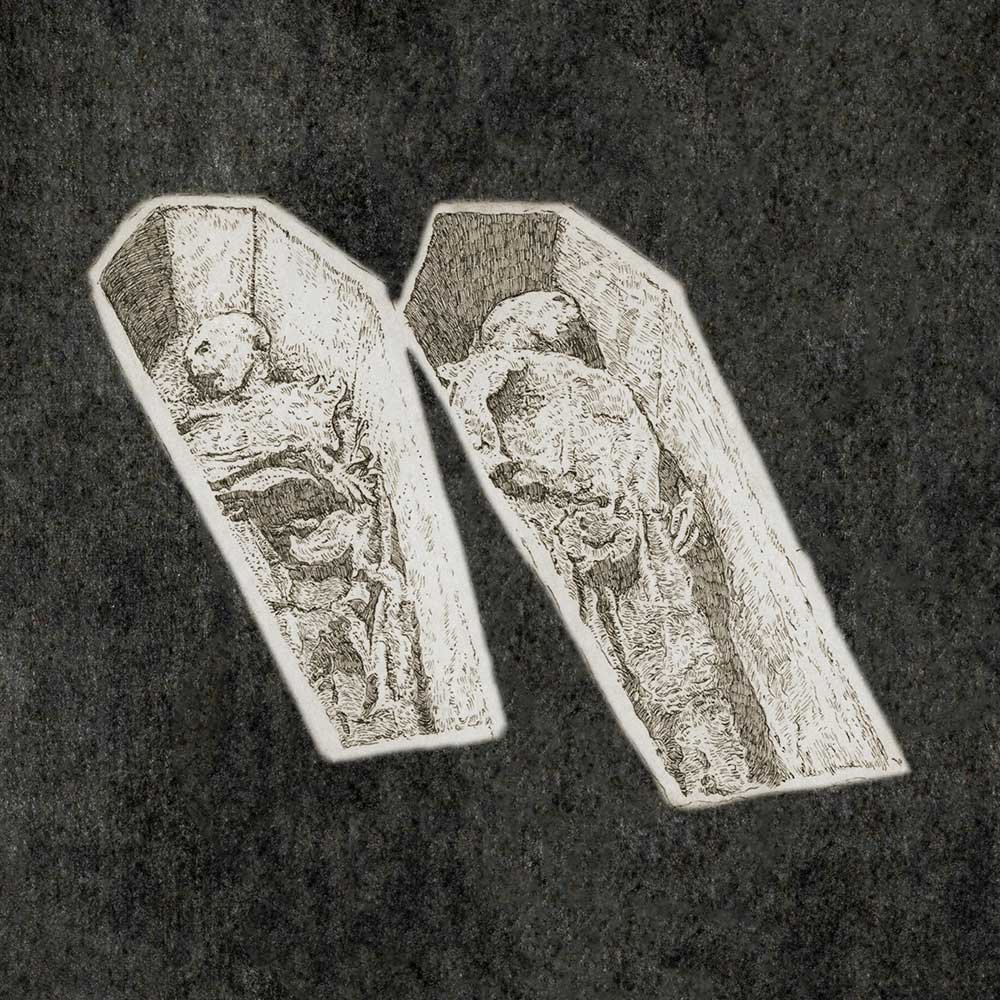
The mysterious Swedish entity re-emerges from the shadows, with a sickening, filthy collection of songs to soundtrack your next sleep paralysis.
Release date: April 17, 2026 | Amor Fati Productions | Bandcamp | Facebook
Has life been treating you too well lately? Are you tired of the sunshine, sitting by the pool, and constantly winning? Well, I’ve got just the cure for you. What you need is a fine dose of the piss-and-vinegar nastiness that is Mylingar’s third full-length, Út. That’s right, the seven fat years are over, and everyone’s favourite group of shapeless demons have blessed us with another harrowing album of death/black metal excellence.
Út, which the internet tells me is Old Norse/Proto-Germanic for ‘out’ or ‘outward’, is the first record to follow Mylingar’s Döda (to kill) trilogy: Döda Vägar, Döda Drömmar, and Döda Själar, which the band put out in rapid succession between 2016 and 2019, before disappearing into the darkness from which it came. That trilogy caught a lot of attention in the underground black and death metal scene, and many listeners assumed that they wouldn’t get another Mylingar release, and that the band’s story was now over. So the arrival of a new record in 2026, as grim as the music it contains may be, is quite the reason to celebrate.
True to their nature, the band wastes no time in going about its business. Út shows up with a bang, as opener “Megi” showcases everything this project is known for: swirling, suffocating guitars; drumming that marries small moments of intricate flourishes with big, stomping punk beats and hammer blasts; a powerful bass tone with snaking lines that keep things fresh as the band tries to murder your will to live on every track; and, towering above it all, vocals that run the gamut from deepthroated guttural bellows to ear-splitting vomit-like sounds. And once this record starts, it does not let up. You’re on a ride to hell, and the windows are down so you get to really take it all in.
What makes the sound of this band so unique is not the intensity, though. They don’t build a claustrophobic wall of death like Teitanblood or Portal, or go for the jugular like Revenge do. There’s a discordant quality to it, but it’s not quite in the Ulcerate or Gorguts range. No, what Mylingar does differently is in their dedication to pouring out aggression and unease at an equal rate. The best way to describe their music is to compare it to a violent case of sea sickness. It makes you feel unmoored, queasy, and unsettled, all while bashing you with a brick over the head throughout the whole 45 minutes of playing time.
A big part of that quality comes from the mix: it’s sharp and clear, punchy and direct, with ample room for each instrument to shine. It’s not polished, and the sound is absolutely filthy, but it’s also a far cry from a bedroom recording. They’ve managed to nail a mix that sounds live, powerful and dynamic, without sacrificing the inherent evil at the core of their musical identity; that is no small feat.
That really benefits the bass on this record, and the bass player makes full use of it. The bass lines are upfront, moving things along nicely at times, then switching to elaborate, twisting runs that act as a lead guitar at others. The thickness of the bass complements the hollow, more traditional black metal sound of the guitars perfectly, and it allows the songs to explore little nooks of dynamic interplay between these instruments, within their otherwise tight and suffocating sound. For a record this aggressive, these small proggy flourishes do a lot to counterbalance the monotony of its all-go-no-slow approach, preventing the experience from ever becoming dull.
As they did on their previous record, the band closes Út with a more expansive track, where things get a little more out there and psychedelic. “Neðan” is an 11-minute sprawling, spiralling journey down the proverbial rabbithole of a mind shattered. It is a crack of dirty light cut into the fabric of a flesh prison, with manic, convoluted guitar solos pulling you towards it, only to bring you crashing and flailing down to the floor. The track closes with a long noise and distorted vocal rambling section, where hope gets strangled and bashed to the floor over and over again.
As the great Sermon of Flames – in many ways, the musical twin of this record – once so perfectly put it: with Mylingar, you have seen the light, and it was repulsive. On Út, the Swedish band serves up a dense, mean-spirited sonic hellscape for the ages, one that has enough intensity to appeal to the gasmask-clutching war metal crowd, and enough character to win over fans of more traditional black/death metal projects. In a year already full of aggresive music highlights, this record manages to stand out as a real highlight.