

British singer Jessie Ware dazzles at the disco with Superbloom–but can it hold up outside of that environment?
Release date: April 17, 2026 | EMI Records | Facebook | Instagram | Website | YouTube
Prior to the present decade, Jessie Ware was almost a completely different type of artist. Leaning towards a mixture of pop-soul, alternative R&B, and new wave revivalism throughout all of the 2010s, Ware appeared to show not one iota of interest in disco until her fourth album, What’s Your Pleasure?, in 2020. This reinvention of the UK star’s image could not have come at a better time–even with COVID-19 isolating us from each other across the globe, the musical zeitgeist at that time was still a vintage, retro-inspired dance party, and there was no better record to satisfy that niche than What’s Your Pleasure?
That being said, while the 2020s disco revival was a great thing for her career and expanded her reach outside of England, it’s still jarring to hear the contrast between these two decades. Ware followed it up with That! Feels Good! in 2023, another disco-inflected full-length. With this year’s Superbloom, it seems as if she’s aiming to make her disco era into a trilogy.
The reason I say that is because it’s disco. Duh! Of course, there are always other genres factoring into her style, primarily old-school funk and soul, with two tracks on here (“Sauna” and “Ride”) benefitting immensely from co-producer Stuart Price’s electronic touch. There are much less synthesizer-heavy compositions on Superbloom, even less than on What’s Your Pleasure? or even That! Feels Good!. But whereas That! was still an incredibly hedonistic escapist fantasy, Superbloom‘s lyrical themes are more grounded and cohesive than ever, at least according to Ware herself.
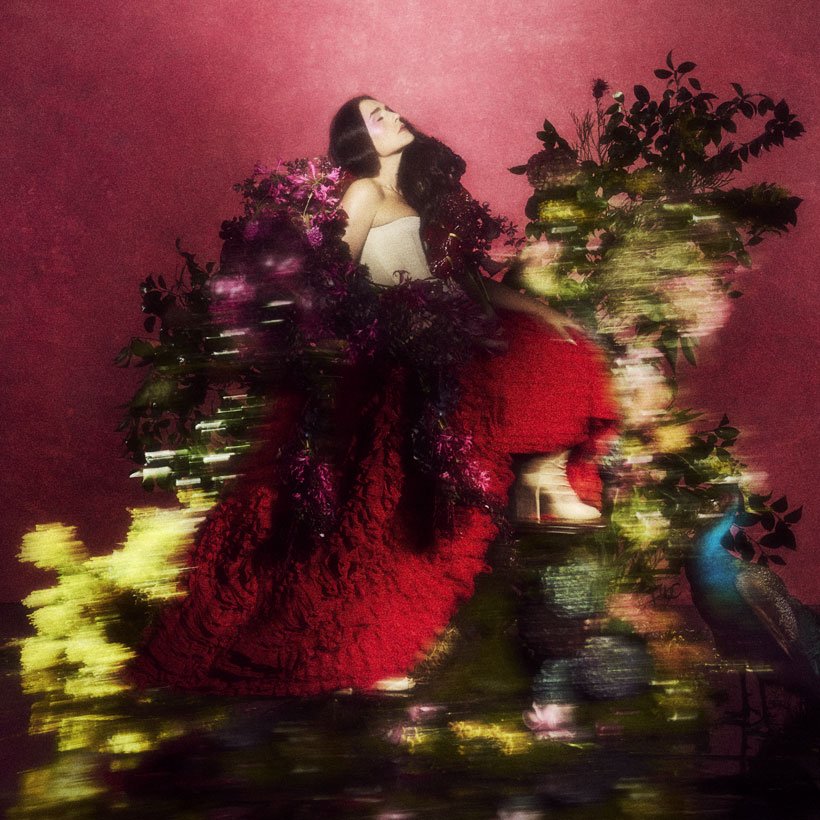
Thematically, this album is different, maybe even a bit more personal, and the overall sound is a lush, more authentic approach to recapturing the sounds of the mid-to-late 70s. The cohesion of this gardenia-inspired LP is stronger here than on any of her other albums thus far, and it translates well to all the hookier songs on here, like “I Could Get Used To This”, “Ride”, and “Don’t You Know Who I Am?”.
It’s only on duds like the title track, “Automatic”, and “Mon Amour” where the disco revivalism is played too safe. For that matter, Ware’s elegant vocal performance on “16 Summers” is sidestepped by tacky instrumentation. It’s like listening to some 2D-animated Walt Disney film, albeit one that’s not very good. “Mon Amour” just feels like an oddly anticlimactic closer, but otherwise, it’s fine.
Listening to the middle part of Superbloom, however, is where the experience feels truly rewarding. The campy Talking Heads-meets-Olivia Rodrigo rollick of “Mr Valentine” being followed up by sentimental piano-backed ballad “Love You For” is a cool pairing, especially since both tracks hold their weight. On the latter, when Ware goes into falsetto towards the conclusion, it’s such a gorgeous sound that I wish Minnie Riperton were still alive to hear it.
Those two are my personal picks, but I can clearly tell which song on here is the most impressive, and that would have to be “Ride”. Interpolating the melody of Italian composer Ennio Morricone‘s “The Good, the Bad and the Ugly” for a high-energy dancefloor anthem where the cowboy metaphor turns sexual proves to be Jessie Ware‘s biggest individual accomplishment.
As a whole body of work, Superbloom doesn’t evoke any environment other than the old-fashioned discotheque, and that’s fun while it lasts, even if those very best moments are fleeting. It’s a decent, if not quite multi-dimensional, listen, but it still manages to take the tried-and-true pop formula of the 2010s to new heights for this present decade.