


‘This is less of an expansive jam that got out of hand and more of a transportive experience that guides the stoned, unbeknownst listener to a land of herbal soils and sacred eternal grounds.‘
-Joe McKenna
Release date: April 22, 2003 | Tee Pee | Facebook | Instagram
Hushed tones and quiet reverence don’t match the type of reception Sleep have received for their masterpiece Dopesmoker, which has gone down in history as a crowning jewel of stoner-doom, influencing a whole slew of bands and entire genres on its enduring odyssey through drugged-out, psychedelic desert landscapes. Its genesis and version differences are the stuff of legends, forever elevating the band into the metal pantheon.
Joe McKenna
Listening to Dopesmoker (or Jerusalem) for the first time feels something of a rite of passage for a young, aspiring doom-head, at least that’s how it felt for me being in my early twenties and wanting to explore the more excessive and absurd aspects of this kind of music. Sure, Dopesmoker is seen now by many either as being a definitive landmark in the world of stoner rock and doom metal that captures the hypnotic and fantasy-like qualities of these genres, or as a rather gimmicky and outlandish sort of meme that is often shared through shitposting communities and stoners alike; but, when you dig a little deeper into the lore attached to this record, there is much to appreciate for how Sleep’s 52 minute, weed-packed, Dune-enthused, Sabbath-worshipping, biblically transcendental odyssey across a plain of riff-filled sands set something of a precedent to how underground music has been produced, distributed and appreciated today.
Firstly, there isn’t really anyway to discuss this album without mentioning weed in some capacity. Secondly, there isn’t much point in talking about this album without acknowledging the influence of the psychoactive substance on the musical imagining of a world where the Weedian crosses the sand, dropped out of life, with bong in hand. Of course, it’s pretty commonplace for those who know of the band and their creative process that weed played an integral part during both the writing and performative stages, I was all the more infatuated to learn if the myth that the band spent practically all of their studio budget on it was, to an extent, a true story, and that only further piqued my interest. From the opening, the baron riff that just repeats in a multitude of forms attains such a hypnotic feel. It taps into the artist’s altered state at the time of performing and heightens your sense as if the low-driven guitar of Matt Pike is resembling the sonic equivalent of your first bong hit. Then come Al Cisneros’ meditative vocals that emulate an ancient monk conjuring the sands of a forgotten, alienated world with their earthy, raspy presence. All of that accompanied by Chris Hakius’ tribal-like percussion, this is less of an expansive jam that got out of hand and more of a transportive experience that guides the stoned, unbeknownst listener to a land of herbal soils and sacred eternal grounds.
Yet another important aspect that always drawn me to this album was the story behind the making of Dopesmoker and the long-lasting impact it had on the industry. I think, especially in the world of doom an post-metal, hour long tracks are something of an ambitious but now quite usual approach to songwriting; and does garner some marketability albeit catered to smaller, dedicated audiences. The band were no stranger to conflict with the wider scope of the music industry and, despite the creative freedom that a more mainstream label like London Records might promise, an hour long, stoner-worshiping extravaganza didn’t exactly cut it with short-haired, suited executives of the early ’90s. To learn how this fallout not only meant that the record remained in a developmental purgatory, but also was responsible for the eventual split of Sleep for a long time, this just highlights how far we’ve come in terms of the way in which extreme metal music is perceived nowadays. Dopesmoker is an album that sees its creators stick to their own creative vision and remain stubborn against any outsider interference with their art. And whilst it must have been a difficult period for the members of Sleep to get through after the album’s release, I think you could honestly say it paid off when you consider the amount of radical and insane combinations of musical ideas being implemented in the genres of doom, stoner, sludge, and post-metal by bands across the world today, and it’s only fair to give credit to Sleep for influencing most of it.
Broc Nelson
Hold on…
*exhales, coughs*
…
Ok.
*hits play*
Dopesmoker slowly takes off as you do after a bong hit. Nearly the first three minutes are the guitars and amps warming up to bring you the most legendary 63-minute stoner doom metal song recorded in a single live take of all time. As the drums and riffs kick in, you easily get locked into the slow and steady headiness of Al Cisneros’s bass leading the heady dirge with Matt Pike’s guitar in tandem and Chris Hakius’s driving-while-ripped drums that stay steady with an edge of unpredictability. Al’s barrel-chested voice bellowing, ‘drop out of life with bong in hand/follow the smoke toward the riff-filled land’, beckoning you into this hypnotic epic.
I followed the ritual inhalation of the riff tree in a solo adventure the first time I heard Dopesmoker, headphones on while laying in bed staring at the ceiling. I was certain that with such a long song, my mind would drift in and out, but isn’t that kind of the point? The groove locks you in, the riff steadily evolving until Pike grips your attention with incredible amounts of Iommi-worship. ‘Proceeds the weedian, Nazereth’, Cisneros retorts. I was locked in.
While I was introduced to this album by a friend, I had no idea how many friends it would lead me to. There is a circle of Sleep fans in my hometown where undoubtedly each person had introduced the next with bong hits and a record player, its starting point unknown but wreathing ever outward like some sort of unholy cannabis sigil beckoning every person who grew up smoking to “Sweet Leaf” or who caught their parents doing the same to partake in this ceremony of the green herbsmen.
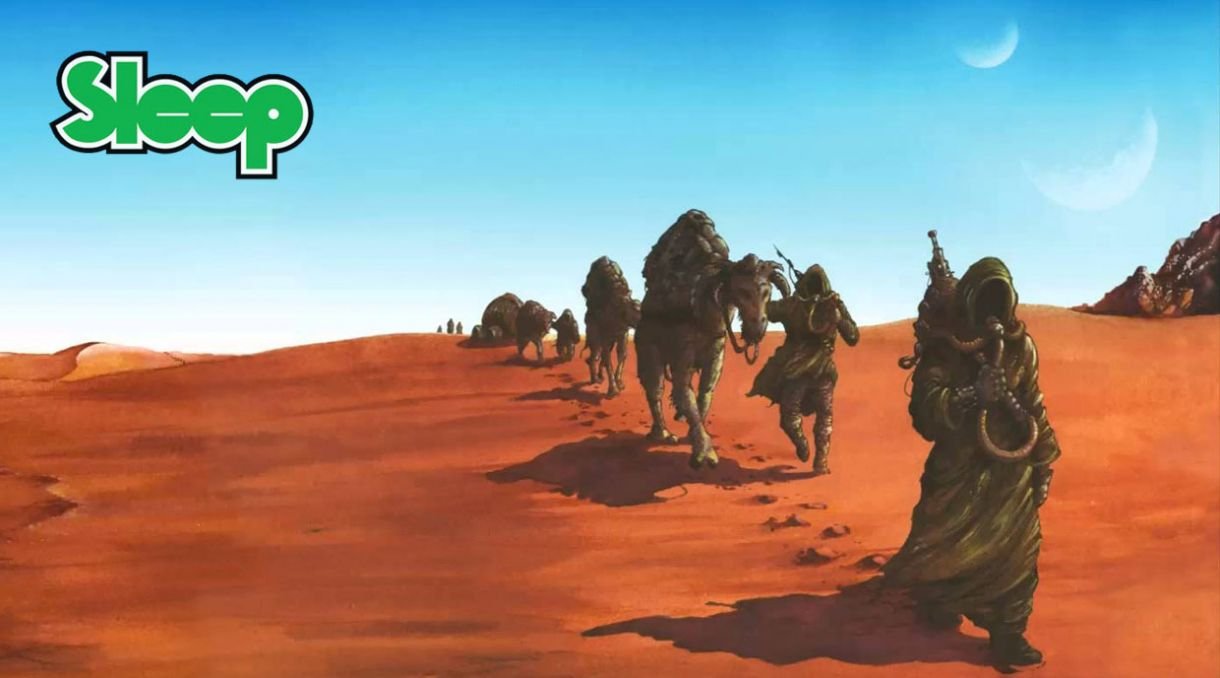
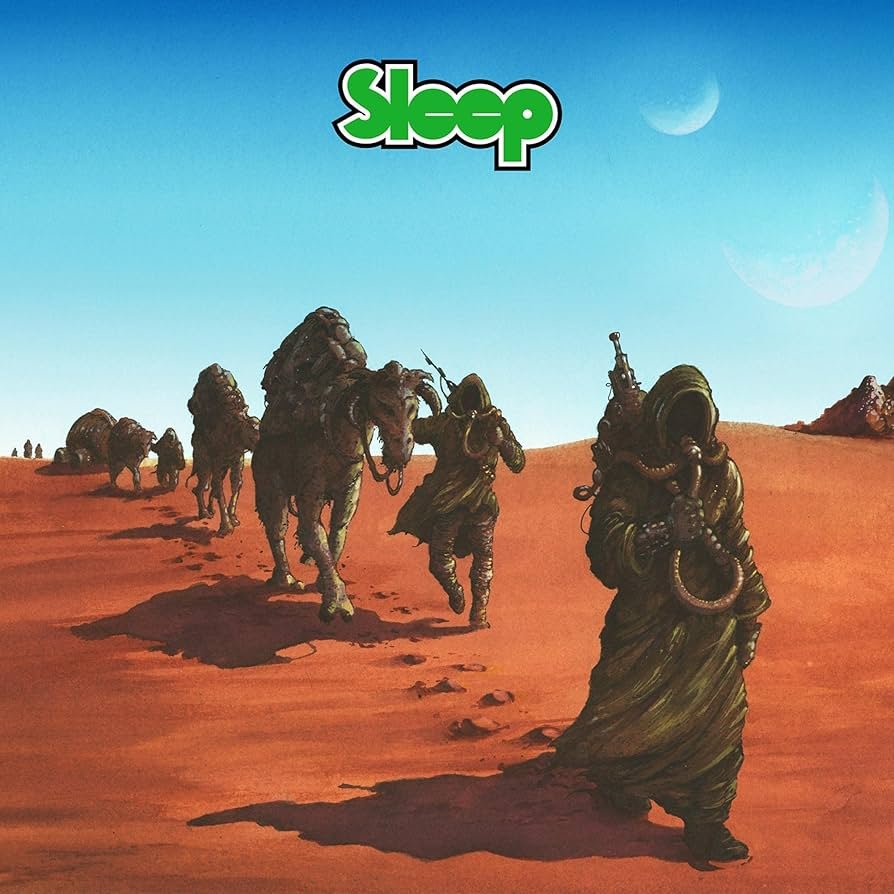
The trio wrote Dopesmoker over the course of four years, had to record it in 22-minute sections to accommodate the reel-to-reel studio, and watched it evolve into several different versions before settling on a final take. Custom amps were built for the recording so loud that the musicians couldn’t be in the same room. This track is monumental in scope and size and difficulty. I’ve memorized scripts for plays, but that doesn’t feel close to memorizing a song of this magnitude, with its riffs and detours that roll as slowly as the desert dunes on Arik Roper’s famous cover art. Though this album has a few other releases due to label disputes, the most current and best remasters feature Roper’s art originally done for a bootleg version.
I don’t have the foggiest idea how many times I’ve listened to Dopesmoker, because to experience it is a haze in itself. The slow, persistent hypnosis that Sleep conjure on Dopesmoker makes time disappear. You’re left trancelike, aware only of riffs and the story of weedians, weed-priests, and stoner caravans, among others, that reads like a chronicle of what leads humanity to a weed-obsessed species, worshipping iit in reverence while breathing deeply of its wonders. There have been many odes to reefer, but this one is as essential to have on hand as a lighter.





Wild no one touched upon the Gnosticism, and meditative elements that Al Cisneros has cultivated from Eastern music traditions from this point onward through Om. Nor is there any reference to the historical elements of the birth of each High of Fire, and Om, through the demise of Sleep for 20+ years due to the lack of industry support. This album was the end point in a double spiral in which we all sonically benefited from the likes of not only one band’s amazing anti-consumerist testament, but three (could argue four with Neurosis) fantastic band discographies. It’s not just a weed album, but a contemplation on world building and mythos that indoctrinated millions into the cult of the holy, and burning bush. It’s a meditation on pilgrimage through religious fervor that no record label had the foresight to consider and gave birth to a legend of an album before the digital age killed everything.