

‘The end result of experimenting with all of these techniques amounts to more than just a great shoegaze album; it is, and continues to be, a glorious artistic statement among any genre of music.‘
-Joseph Krebaum
Release date: November 4, 1991 | Creation Records | Facebook | Instagram | Website
History is full of troubled visionaries struggling to translate their ideas into the limits of our shared reality. Kevin Shields might be one of the more infamous examples in rock music, turning his manic obsession into a nigh-bankrupted record label – and one of the most enduring, influential, and downright ingenius guitar records ever concocted. My Bloody Valentine rewrote the book with Loveless, which remains legendary even 35 years after its release.
Joseph Krebaum
If you’re wondering why Irish-English indie band My Bloody Valentine, also known as MBV, doesn’t get nearly as much recognition within the realm of ’90s alternative as Nirvana or Pearl Jam, it’s probably because they were never the sort of band to ever want a significant amount of commercial success. Their unique blend of sleepy vocals and disorienting guitars connected to armies of effects pedals became known as shoegazing, a term that stemmed from watching performers look down at their pedals while singing. It was this Sonic Youth-on-steroids style of theirs that embodied a considerable portion of early ’90s indie rock, especially in the UK.
There may have been other bands that released shoegaze material before Loveless – Ride, Lush, Pale Saints – but My Bloody Valentine were the ones who planted the seeds of the subgenre with their 1988 debut, Isn’t Anything. As revolutionary as their debut is, it was more like a rough blueprint for what was to come during the 1990s and beyond. In the years that followed, guitarist Kevin Shields would experiment even further, meticulously crafting his band’s sounds until he was satisfied with them. It took roughly two years for Shields and the rest of the band to record the final product. Unsurprisingly, it came close to bankrupting their original label, Creation Records (the famed independent label would eventually meet its complete demise just before the turn of the millennium). Much of the innovative production techniques involved digital manipulation, even though the recording process was mostly done on analog tape.
The end result is an enticing combination of both past and future sounds. With Loveless, it’s all about the sonic landscapes that MBV are capable of creating. Not to overshadow their terse lyrical messages – or the pivotal contributions of vocalist Bilinda Butcher, their bassist, or their drummer – but with this being the quintessential shoegaze LP, the guitars are amplified, distorted, and treated with various effects. In this case, the most prominent effects on here are reverse reverb, fuzz and tremolo, the latter of which can be heard on full display in the album’s opening cut, “Only Shallow”. Additionally, Shields’s idiosyncratic guitar playing led to a one-of-a-kind technique known as ‘glide guitar’, a wavering electric vibrato heard on seven-minute closer, “Soon”.
The end result of experimenting with all of these techniques amounts to more than just a great shoegaze album; it is, and continues to be, a glorious artistic statement among any genre of music. Commercially speaking, you would never guess that Loveless would go on to have such an immeasurable impact on rock music, but it received unanimous critical praise at the time of its release, and has only aged more strongly over the next three and a half decades. It’s simply breathtaking to hear all the different textures of this album imitated by popular alternative rock groups, such as The Smashing Pumpkins, Oasis, Deftones, M83 and even Coldplay. Furthermore, big-name musicians including Robert Smith (The Cure) and Trent Reznor (Nine Inch Nails) have referred to it as inspirational. Even in the music from all of those post-’90s-era shoegaze and dream pop acts, it’s hard to deny the influence that songs like “To Here Knows When” and “Come in Alone” have had on their pillowy, heavensent atmospheres.
Loveless is considered by many to be the embodiment of shoegazing, but it sadly became a death knell for the movement as well. After its release, it became a benchmark for shoegaze albums to live up to, but nobody could fulfill critics’ expectations. My Bloody Valentine themselves wouldn’t even release another studio album for 22 freaking years! Thus, the initial UK shoegazing movement faded away after about 1994 or so, and while most other albums within the subgenre have unfortunately been forgotten by the masses, Loveless remains a pinnacle of pop culture. After three and a half decades and counting, MBV still has damn near all of us gazing at our shoes.
Broc Nelson
I must apologize to whoever gave me a burned copy of Loveless in high school. I know that is how I first heard this seminal album, and I am sure I uttered a cordial ‘thank you’ to this forgotten gift-bearer. My fledgling teenage charisma could not muster anything better than cordiality, and the years it took for me to truly appreciate this album are in some ways still unfolding.
My first listen to Loveless was confounding. Several friends throughout high school and my early college days spoke highly of the album, but it didn’t quite click with me, then. Opener “Only Shallow” still has one of the heaviest sounding riffs of all time, but it is followed by these hushed vocals that to my metal-infected brain sounded timid and moody in a way that didn’t match the guitar tone. This was my first exposure to shoegaze, and I didn’t know what the fuck was going on.
I liked Pixies, who were known for their loud-quiet-loud dynamic, but this was too loud. I was into The Jesus And Mary Chain, whose washed-out, distorted guitar tones were sort of a precursor to shoegaze, but this was too dense to compare to any of The Jesus And Mary Chain’s more straightforward rock songs. I had no context for how alien My Bloody Valentine sounds on Loveless. It took me years of revisiting this album, usually being reminded of it from some ‘great albums’ list or another before I began to appreciate its brilliance.
I am an eager shoegaze fan, now, but even after all of the other shoegaze albums and shows that I have witnessed, Loveless still stands as a mystifying and beguiling as anything I have ever heard. Bandleader Kevin Shields constructed an album that is probably impossible to reproduce. With a haphazard studio wizardry, Shields crafted an album that frequently ranks among the best recorded pieces of art of all time.
Consider the track “To Here Knows When”, a disorienting blend of drum samples, twinkling guitar melodies, and an ever-present wall of distortion that wavers in-and-out of tune while vocals coo several decibels softer behind that wall. It sounds like ‘60s psychedelia played at full volume through ripped apart speakers while a jet engine pitch shifts through shitty computer speakers, also on full volume. Somehow, this cacophony transcends all of its potential ugliness into a hypnotizing, comforting beauty.
“When You Sleep” follows with one of the most memorable melodies on the album, once again grounding the listener in something more familiar with its more traditional rock structure. The choral vocals of this song are really just Shields layering a baker’s dozen vocal takes over each other, speeding some of them up or down to create layers of pitch. This kind of studio manipulation is what makes Loveless the legend that it is, but Loveless also stands as one of the most frustrating recording experiences of all time.
My Bloody Valentine was signed to Creation Records in the UK. The original deal for recording Loveless anticipated 5 days of studio time. Through Kevin Shields’s inability to articulate his vision to others, several setbacks due to tinnitus, illness, and injury of the band, a tour, and rejecting multiple studio engineers, Loveless was recorded at 19 different studios over the course of 2 years. The owner of Creation Records allegedly went gray overnight due to mounting studio bills and the frustration of working with Shields. For all intents and purposes, the rest of My Bloody Valentine was barely involved in the recording process. The cost estimates of recording Loveless range from £160,000 to £250,000, which adjusted for inflation would be the equivalent of half a million pounds today.
For all of the distortion and unique sounds on Loveless, Shields maintains that very little effects pedals were used in the recording process. Influenced by Public Enemy, Shields worked with samples, piecing together recordings of their drummer for the beat and running guitar parts through pitch-shifters and samplers, re-recording those through mics on the amplifiers, and then again fine tuning them to meet his wild vision. This was coupled with his own innovations in ‘glide guitar’ playing where he would manipulate his whammy bar while strumming to create the wavy pitch-bending effect that has come to define My Bloody Valentine’s sounds as well as influencing hundreds of shoegaze acts to follow.
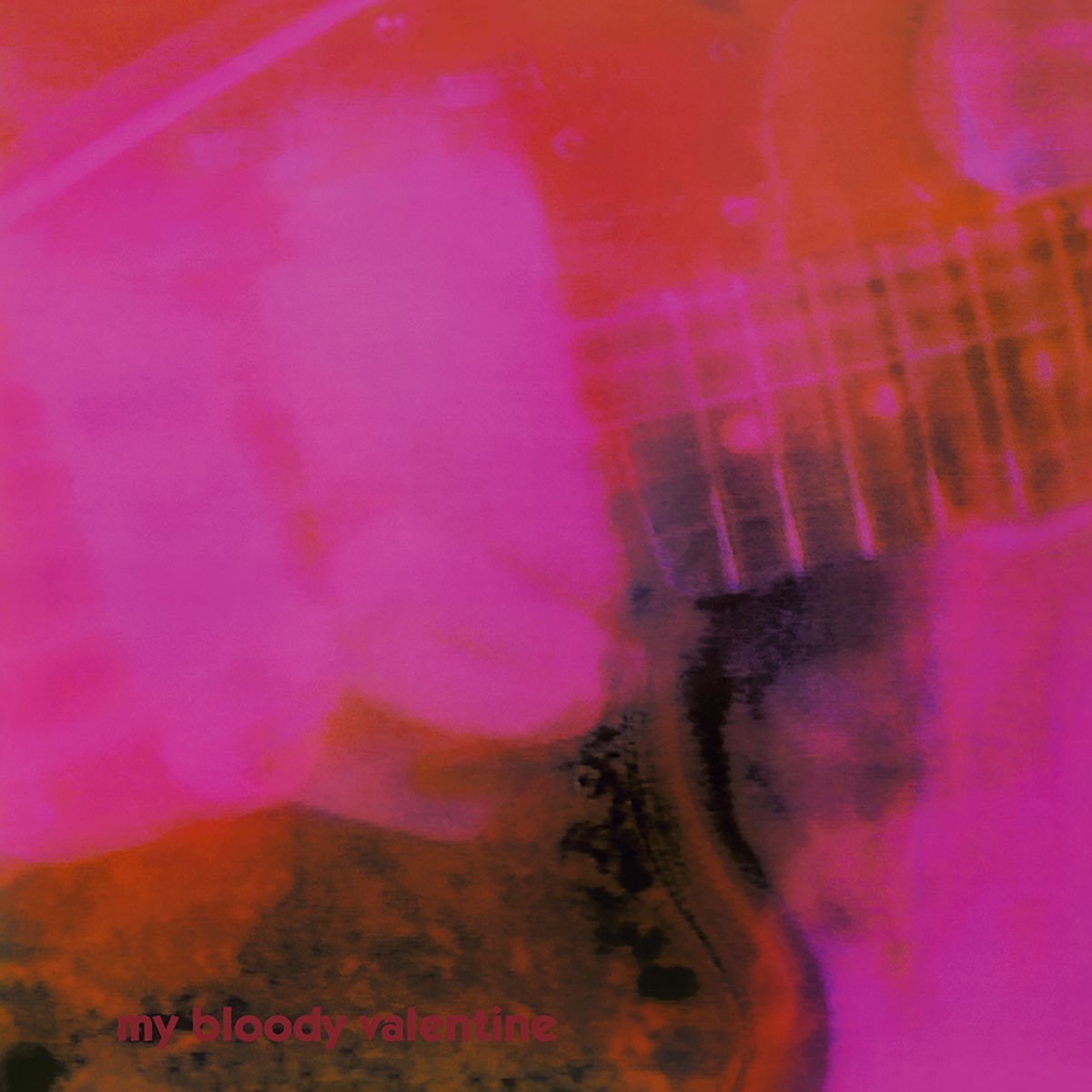
Somehow, all of this combines to make a guitar lead on “I Only Said” sound like a weeping electric violin. That has always been a standout sound for me on Loveless. It is the kind of fuzzed-out guitar magic that matches the album cover perfectly, though the iconic pink-shaded, blurry close-up of a a guitar being played, its neck just visible on the right-hand side of the photo next to a blur of fingers remains one of the most influential and recognizable covers ever.
I can’t think of any other album that I have somehow owned consistently in one form or another for 25 years that has remained so mysterious. I can wrap my head around it much better now than when I first heard it, but every listen still feels like I am discovering some new little detail or passage that got lost in the distortion the first 100 times I listened to it. Loveless has become the much beloved poster-child of shoegaze, influencing countless bands since. Some critics compare it favorably to or even above Pet Sounds, another record driven by innovative music and studio techniques by an auteur with a singular vision. I can’t disagree with this. Loveless will remain a lifelong companion, always primed to demolish my eardrums and uplift my soul with twee melodies and guitars like a thousand galloping horses running across a glass prairie.
So, again, to whoever gave me my first copy of this album, thank you from the bottom of my heart. If you happen to read this, come forward. I’ll buy you a beer. I promise not to send you my future audiologist bill.