

‘Honor Killed The Samurai is yet another piece of Ka’s cryptic mosaic, an album that cemented his style and caught the attention of critics.‘
-Broc Nelson
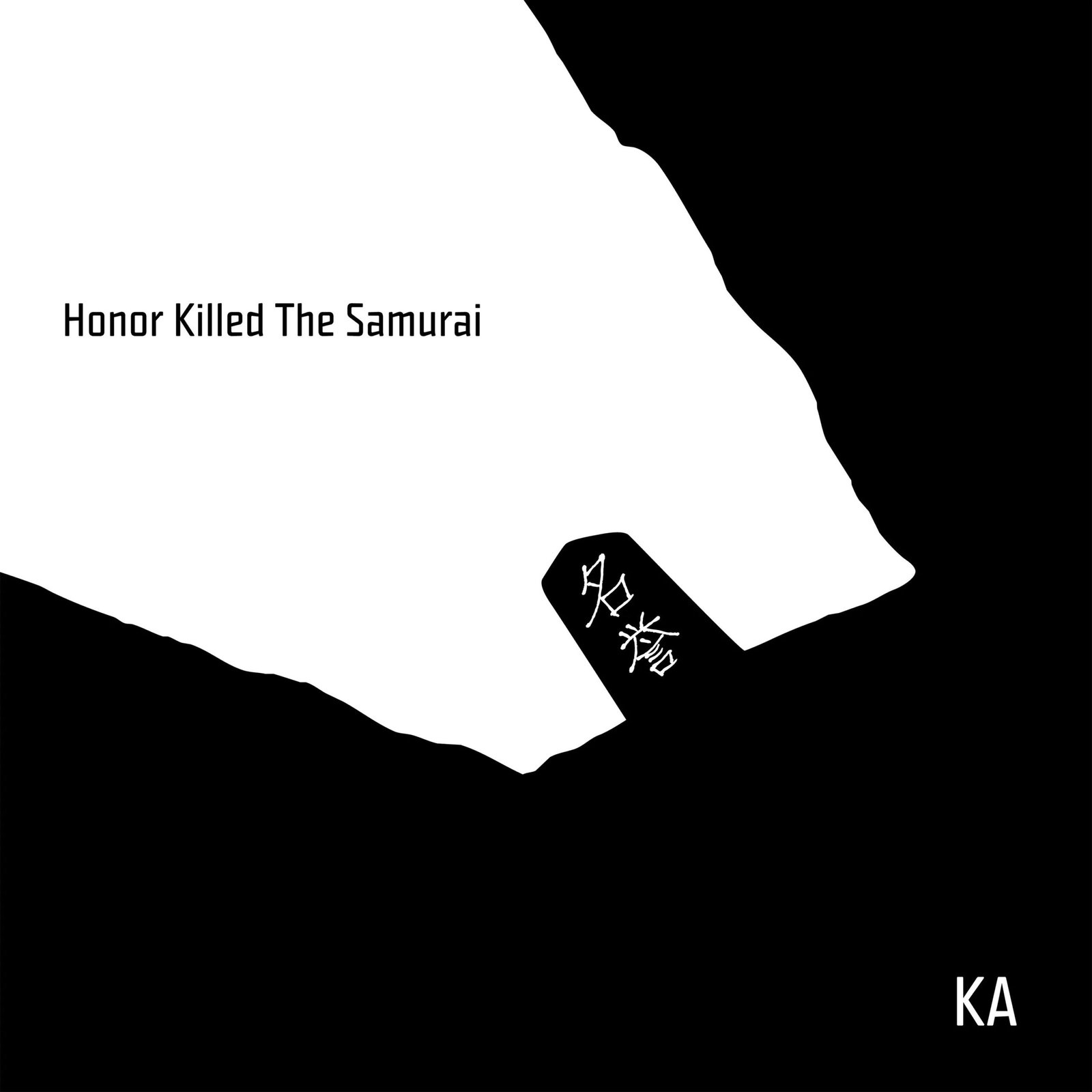
Release date: August 13, 2016 | Iron Works | Instagram | Website
As with most hip hop releases we cover on this website, I feel woefully unprepared to add any substantial commentary. It’s just not my area of expertise. What has become very clear to me, however, is how much of a singular, beloved, and revered figure the late Brownsville rapper Ka was. His life and work are held in high esteem by many; 2016’s Honor Killed The Samurai always comes up as one of his career high points, which prompted today’s A Scene In Retrospect.
Broc Nelson
Once again I am beckoned to reflect upon and explore the brilliance of the late Brownsville rapper Ka. Previously, we covered Orpheus vs. The Sirens under his collaborative project Hermit & The Recluse, but despites starting in a rap group and doing a guest verse with GZA, Ka is a solitary MC and producer, more like a ronin than a samurai. Honor Killed the Samurai is an entirely solo endeavor, however, and like most of his discography, the album sees Ka rapping and producing at his own pace, creating a world by him and for him. We are but fortunate townsfolk who happen to be briefly in the presence of the brilliant warrior poet.
During the Hermit & The Recluse episode of A Scene In Retrospect I covered Ka’s history and legacy in greater detail, so for this album I will keep it brief and focus on the album itself. His story and legacy are important, and I encourage you to hop over to that article to familiarize yourself with the mythic and quietly heroic MC.
Honor Killed The Samurai, like many of Ka’s projects, focuses on a concept. Unlike Orpheus vs. The Sirens, Honor Killed The Samurai takes the concept of an honorable, code-abiding warrior as more of a thematic inspiration than a narrative (an issue I’ve been contemplating regarding concept albums that I will explore in an upcoming review). Applying aged codes of honor and militant archetypes to street life isn’t an unheard-of thing in hip hop. The Wu Tang Clan’s entire aesthetic is loosely based on Shaolin monks and kung-fu, for instance, referring to their own Staten Island as Shaolin and donning names inspired by Shaw Brothers movies and other classic kung-fu films.
Ka operates more abstractly that Wu Tang Clan, calling into question the idea of honor itself through his tales of crime-ridden street life. On “Conflicted” he starts out with his purpose, ‘I strain to obtain so I could give more.’ He needs money, in these tracks, but he makes it clear that it isn’t a quest for riches and luxury. Ka is focused on bringing himself up as much as his family and community. He expands on this on “$”:
‘I need money, not for trivial material
Just to fix our flaws, the whole cause is ethereal
What you minin’ for? If unaware share with blind and poor
You tellin’ stories that’s celebratory in times of war
With bars of greed. I plead, how many cars you need?
When fathers bleed to fill ribs of kids that hardly read‘
Or the earlier line, ‘watch me blueprint rec centers, I’m tryin’ to inspire,’ may be a more succinct way of describing Ka’s sense of honor through hustle, but his lyrics are worth celebrating. Ka’s hushed and intense delivery underscores his incredible economy of language, further enunciated over his drumless production that eschews hi hats and snares for softer beats. You can’t dance to this; you are meant to think to this.
Take this approach to production and writing in contrast to Westside Gun, an artist I also love but for different reasons. Westside Gun uses the drumless approach to boast and celebrate in times of war. He definitely has multiple cars and probably a shoe collection that would make any sneakerhead’s heart palpitate. His raps and adlibs are boisterous, often funny, and occasionally cartoonish. This is all fun, but Ka has the grim countenance of a dedicated warrior that derives honor from helping others as much as he does from always being ready to face conflict and never snitch.
Any gains or honor are dubiously met, however. Ka’s world harkens to the psychological depths of Geto Boys with all of the grit of Mobb Deep. On “That Cold And Lonely” he remains self-aware and humble. ‘Don’t howl like I’m holier than thou, a mere sinner,’ he spits with all of the confidence of his sins. For all of Ka’s headiness, humility, and heroism he knows that the streets are cold. That he could be a body or catch one, and that a life of selling drugs to get paper is from a forced hand for survival rather than some malicious intent. The stakes in which Ka plays aren’t inherently honorable. It is how he plays them.
Ka fills this album with wisdom, lyrically, but he also paints a grimy, grey backdrop with his beats. There are samples from samurai movies to help carry the theme, but his samples also extend into arpeggiated synths, acoustic and electric guitars, and jazz, collectively giving this album a unique feel, akin to the gradual pace of an Akira Kurosawa film where each new scene and moment are met with crisp focus and impeccable framing.
Honor Killed The Samurai is yet another piece of Ka’s cryptic mosaic, an album that cemented his style and caught the attention of critics. It is often cited as his best work, and that is understandable, though all of his albums are worth celebrating. I will always do my part in recommending one of hip hop’s finest poets.
David Rodriguez
Hey y’all, it’s time yet again for me to get overly sentimental about an artist I didn’t know. I’ll keep it short this time though… kind of. I genuinely remember it like it was yesterday. A decade ago, I had been pressing the proverbial pedal to the metal with my rekindled love for hip-hop. So many artists were to thank for that – Danny Brown, Das Racist, El-P, etc. – but others helped push that love further. Ka was one of them.
Being as in love with hip-hop as I was (and still am, arguably more), I was also consuming a lot of other media about it. I eventually found Dead End Hip Hop on YouTube and they quickly made a subscriber out of me with their incisive yet casual analysis and multitude of takes and tastes among the five main members of the team. They were the first real team of reviewers I saw where multiple people reviewed the same album and made it more of a roundtable discussion event. You weren’t getting this with Anthony Fantano, though big ups to him as well – any Millennial or Gen Zer savvy in music and the internet that says they didn’t find a great album from The Needle Drop is lying or not as savvy as they thought.
On September 1, DEHH dropped a review for Ka’s Honor Killed The Samurai. I had never heard of Ka before much like how Feefo247 admits in the intro of the video. But they were all gushing about it, dropping quotables and enjoying the profound finesse that Ka used when weaving his lyrics with his production. It wasn’t very common for the whole DEHH crew to be so over the moon about an album together like that – I had to listen to it.
I did, I pulled it up on the premium Spotify account I had at the time and, as they say, the rest is history. The mood Ka revels in was something I still don’t engage with very often, let alone back then, but it’s because of albums like this that I always make space for Ka and have found other artists that form similar art.
Through samples and deft wordplay, Ka uses the code and demeanor of feudal Japan’s samurai to liken to his own and his life experiences, just as he did with Greek myth and struggle on Orpheus vs. the Sirens. It’s less Wu-Tang martial violence and more deep reflection of how the very thing we live by can doom us from the start. Real ‘live by the sword, die by the sword’ type shit. Rap really is a literary endeavor for Ka, melding street smarts with book smarts, and you know there’s something to be said for those who learn their history. They’re less likely to repeat it.
The arpeggiated synths on “Just” captivate. I remember them being a little jarring just like the samples on “Ours” are when I first started listening to the album as I was still getting more comfortable with more experimental sides of hip-hop still, but it absolutely grew on me. The song’s unique take on doing dirt to get by was appropriately morose, not promoting it when he says lines like ‘when war rage, fours blaze on sight/shot for the stars, I’mma reach ‘em one day/left for dead, started moving rocks like Easter Sunday’ or ‘coldest role model if the masses wanna follow/it’s goin’ better, I hope I never have to blast another hollow’.
I love the beat for “Mourn at Night” which uses this similarly arpeggiated, calm guitar lick that reminds me of something Blue Oyster Cult might use somewhere on their more reserved, psych-informed rock tracks. It really feels like something you listen to at night, it instills a pensive, mournful tone as it is literally about mourning losses at night once the heat of the day is gone, a simply clever double entendre for the weather and heat as a euphemism for guns. Although Ka puts himself in all his tracks, this is one of my favorites ever, getting autobiographical with his verse:
‘Wasn’t shook though, I took bow and a strong quiver
Since elfish, wasn’t selfish, a born giver
Until I get my slice, suffice with a formed slither
Spoke with Moors, know the laws and walk with assurance
I commence with strength, now I’m talkin’ endurance
Felt a gleam, too much self-esteem to be a groveler
Been leader since toddler, teachin’ not to be a follower
Them days raised my sister rigid, never coddled her
I ain’t poppin’ shit, just got her doctorate, I’m proud of her’
One thing Ka does so well that I haven’t really delved into much is how economical he is with his art. Most of his songs are around three minutes long, but they feel like a minute and change. It’s not that the songs are lacking and feel like they need more substance to fill space, it’s that the enjoyment of them makes the time fly. Between his well-used samples, atmospheric production, and arcane use of language that’s deceptively intense and layered, everything just works. Anyone that says this is his best album, they’re right. Anyone that says Descendants of Cain or Grief Pedigree is his best, they’re right. That just the kind of artist Ka was.
Honestly, I don’t make any apology for feeling as indebted and emotional as I do to Ka. I’ve said time and time again what an actual wizard he was on the mic. We’ve now given you a third reason. It’s never too late to get into a stellar artist and their output. Ka may be gone, but he lives forever through his work and spirit of perseverance. We could and should all learn the right lessons from them.