

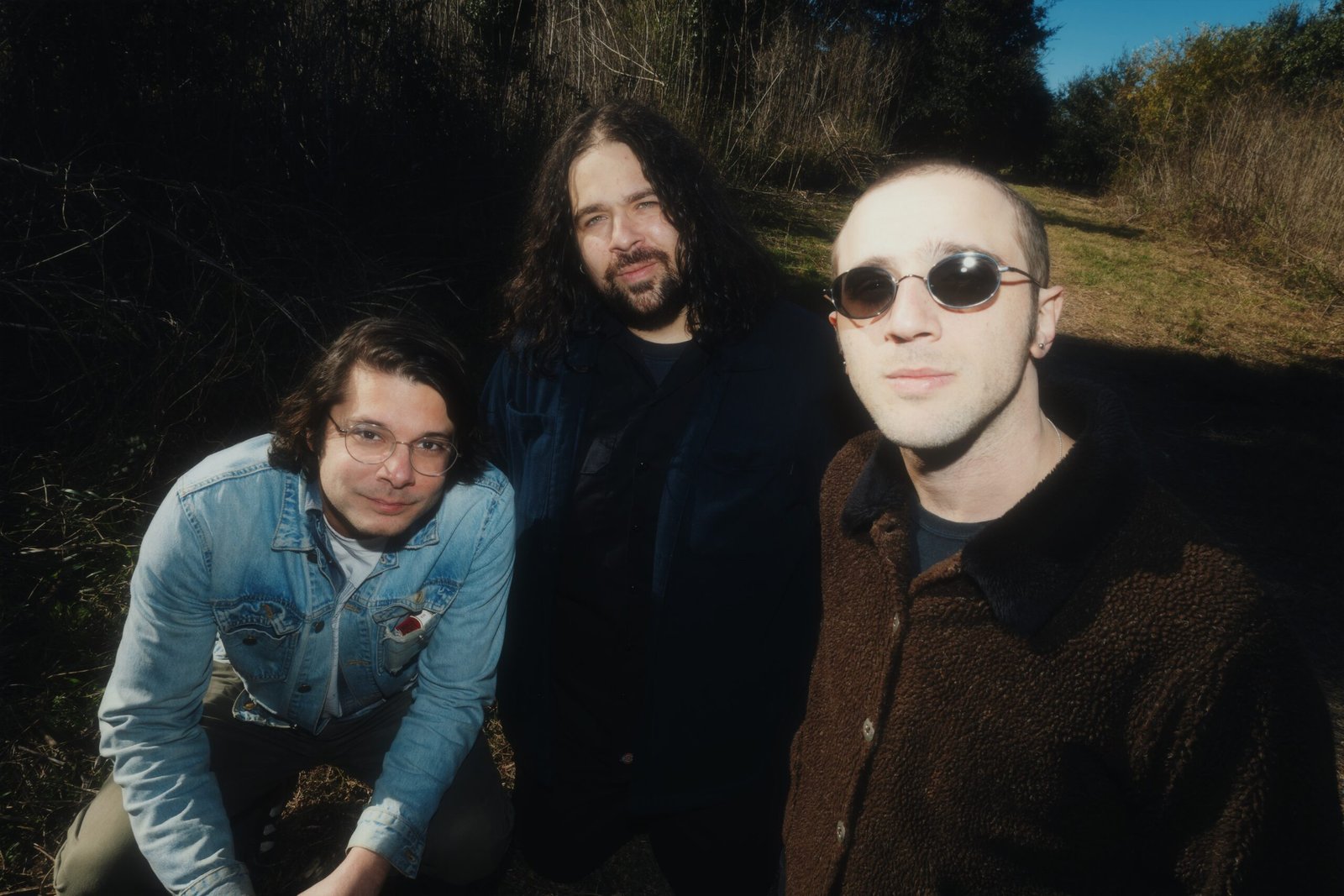
Pope return after a nine-year hiatus with a renewed sense of identity.
Release date: April 30, 2026 | Rite Field Records | Instagram | Bandcamp
New Orleans indie trio Pope have a lot of experience. Despite just two previous full-length albums under their belt, that last of which came out in 2017, they’ve toured extensively, supporting well-known acts like MJ Lenderman, Mitski, and Alex G on stage. I think a hiatus of this size–over eight years–used to be a lot more commonplace; back in my day, that was the anticipated interval between Queens of the Stone Age albums. But the landscape around releases has changed substantially, with social media algorithms conditioning fans to expect roughly an album a year, a previously unsustainable rate. So when a band takes this long to drop a record, the expectations are usually sky-high. It seems like Pope have managed to meet them, however, with the release of BFM.
BFM opens with Pope putting several iconic indie bands in a blender and serving us the result with “Song 2”. The most recognizable influence is Death Cab for Cutie, but I also hear bits and pieces of The Decemberists, particularly their album The King Is Dead in this track. It’s a good vibe; contemplative in a bit of a Built to Spill way, but lightweight enough that it still feels like music to drive around with the windows down to. BFM as a whole had this effect on me–somehow sunny, but retaining just enough melancholy to keep things from verging into the saccharine. It’s an album that feeds on the contrast of intense weariness and the refusal to give into apathy. It sounds a bit crazy to glean all that from the first track, but you’ll see what I mean.
Pope don’t let us linger in the sunshine for too long, though, because they crank up the tempo and volume considerably with the utterly catchy “Newboi”, which shows them at their most Wine Lips on BFM. I appreciate when a band doesn’t play it too safe, especially early on in an album. I think the first handful of tracks are an artist’s best bet at making an impression, and risk-taking often pays off. Pope have signaled to the listener that they don’t intend to stick to one corner of the vast indie sphere, opting to collect scraps from a variety of influences and collage them together, to great effect.
“Sick Minute” features singer Julia Steiner of Ratboys and is absolutely BFM at its most optimistic, which is a little funny considering it one of the shorter tracks. Steiner’s voice lends some lovely harmonies, singing lines about pushing yourself and taking the leap of faith into creative endeavors. It’s cute, quick, and manages to not come across as twee despite the genre’s predilection for that. And again, it keeps things unpredictable but still cohesive, which I think might be the major triumph of the A-side.
I do think that the B-side of BFM is less refined, from an instrumentation standpoint. There’s several songs in a row that sound too similar, and that contrast from the diversity of the first run of tracks is not ideal. But I found that the lyrics in the back half were stronger than the front, which ticks BFM back into ‘very, very good’ territory for me. “John Thomas” is a relatively straightforward acoustic guitar-driven song on the surface, but it winds up exploring boredom and fatigue with both lo-fi simplicity and razor-sharp clarity. Album closer “Underdawg” balances evocative imagery (‘fortunes on the back of a phone’) and an enduring central question (‘is something fucked up?).
I think Pope are just hitting their stride with this release. There’s something intensely earnest about BFM that suggests to me that they are most interested in making the music that suits them best right now, after all this time on the road, after moving from Houston to New Orleans, after the pandemic and god knows what else. I hope they keep pushing the envelope and finding the edges of their sound when they get back to the studio, maybe in this decade.