

On its first full-length album in 15 years, the legendary UK band opts for more experimentation — sometimes to a fault.
Release date: May 1, 2026 | Warp Records | Bandcamp |Instagram | Facebook
The history of Seefeel is one of lauded accomplishments and a cult-like status. Famously bequeathed with the honor of being the first guitar-based band to be signed by Warp Records in the mid-nineties, they’ve since gone through several incarnations: expanded line-ups that include ex-Boredoms members and a breakcore producer, records that veered into deeper electronic sounds and then follow-ups that circled back to post-rock, and long periods of silence while key members focused on other projects.
Through it all, though, two things remained constant: a sound rich in dub and ambient elements, and the core creative duo of Mark Clifford and Sarah Peacock. On Sol.Hz, the band’s first full-length record in a decade and a half, Seefeel stripped every other element away, delivering Clifford and Peacock’s vision through an open-ended, playfully dark ambient dub record.
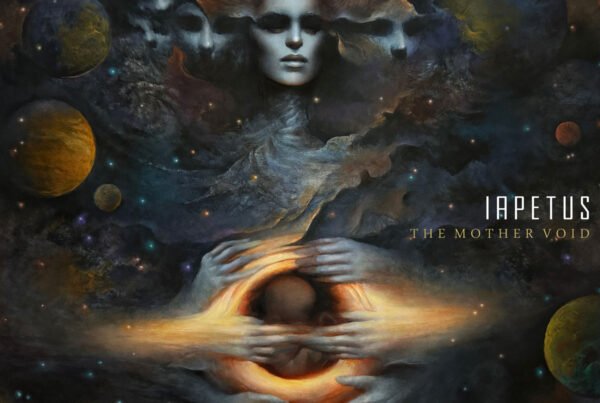
The push and pull between darkness and playfulness is presented to us even before the first note is played, in the contrast between the sun mentioned in the title and the gaping black hole in the center of the artwork. It’s evocative of how the band uses the lighter elements of their sound — shimmering synth lines and Peacock’s breathy, heavily processed vocals — to draw the listener into cavernous, subterranean compositions that make up the majority of Sol.Hz. Throughout the record’s runtime, the feeling is very much of diving down oceanic depths, with barely perceptible rays of sunlight growing further away, and the ocean floor illuminated with strange, half-translucent creatures.
Take the album’s third track, “Ever No Way”, as an example. The gauzy, gorgeous keys it opens with gradually take on a haunting effect, as stabs of heavy kick drums and oscillating FX textures push the track in a weird propulsive motion. When the vocals join in, the feeling is akin to being called by a siren: hypnotic, disorienting, and utterly enthralling. Seefeel run through several of these tracks in succession, though, which makes the record feel more like a loosely defined collection of sonic fragments than a cohesive artistic statement.
Thankfully, things take a decided turn on the seventh track, “Falling First”, as warm and euphoric house synths are coupled with a throbbing dub bassline, conjuring up a sound that is as deep as it is uplifting. The darkness of the first half of the record is left behind, as the track builds on a starry-eyed, majestic chord progression that is simply begging to be edited into a dancefloor hit. This is the point in the record where you switch from lying down on your bed with your eyes closed to getting up and lifting your arms. It’s not quite a danceable track, but it gets as close to it as it can without breaking the ambient dub formula, revealing how truly masterful and in control Clifford and Peacock are with this sound.
The momentum temporarily continues with the penultimate track, “Until Now”, where the percussive elements take center stage, and the record gradually shifts gears towards its conclusion. Despite being an effective track at first, and a welcome change from the preceding tracks, it quickly loses direction, and essentially feels like the band is experimenting with tools that don’t quite flatter its sound. Ultimately, as much as Sol.Hz shines in its best moments, this dip in form towards its end is replicated in other parts of the record, causing it to leave much to be desired. Taken as a continuation of Seefeel’s three decades of sound exploration, this feels rather natural; but for first-time listeners, this might not justify the band’s legendary status.
At the end of the day, what you get out of Sol.Hz depends a lot on your expectations. It’s a record that can be quite rewarding if you come to it with a curious mind and a willingness to accept the fact that some zigs here just ain’t gonna zag. But if you’re looking for a truly immersive record, there are simply too many abrupt endings and half-baked ideas to really leave a lasting impression. To these ears, it’s definitely a ride worth taking — just not one I would consider some of this year’s best.