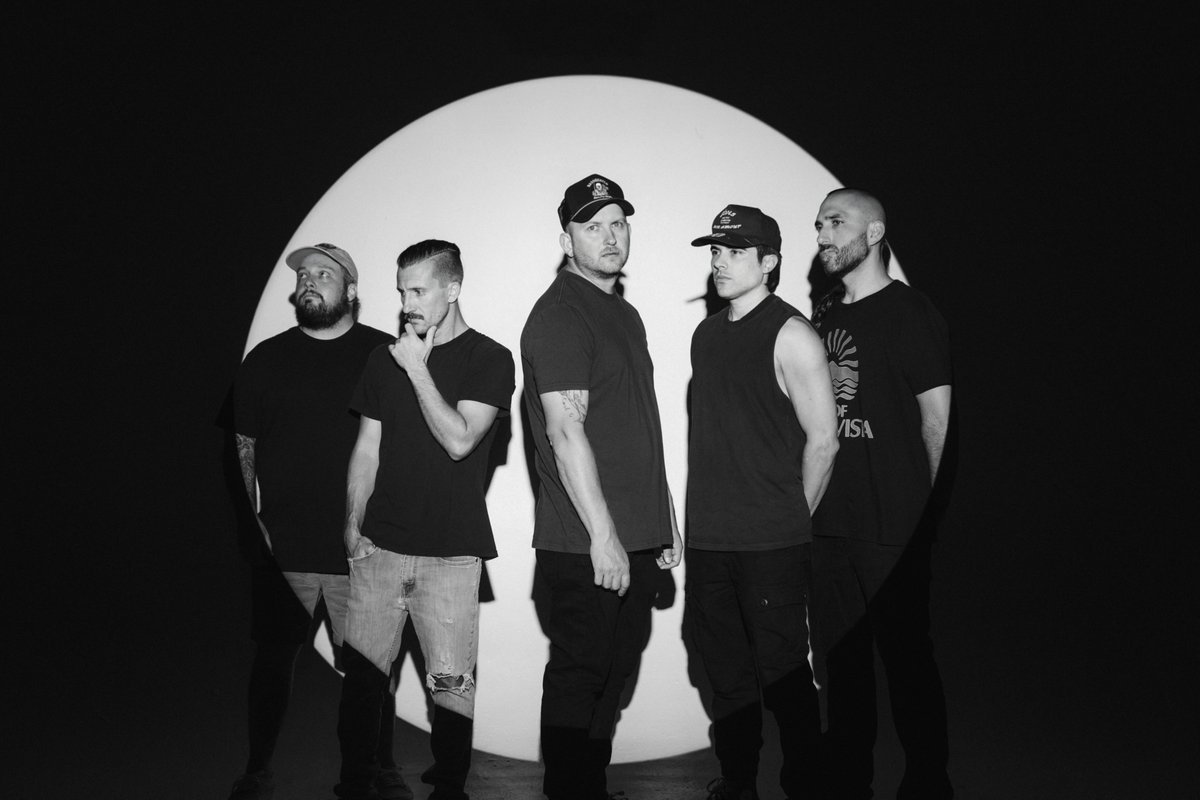
Post-hardcore outfit Lower Definition brandishes their first album in 18 years, The Purpose of the Moon – a comeback that is effortless as much as it is tastefully nostalgic.
Release date: January 9, 2026 | Independent | Bandcamp | Instagram | Facebook
Given the immediacy of the internet conflated with the ever-increasing uncertainties of the world, being a fan of bands that have stuck through it all or that have returned with new material after years of inaction is honestly feeling like a luxury more than ever now. Cue me being delighted over a new Lower Definition album cycle: 2008’s The Greatest of All Lost Arts was formative to my post-hardcore journey – as I’m sure it was for the genre as a whole as well – thanks to the San Diego post-hardcore act’s moody, sharp, and enveloping songwriting along with a nostalgic flare for core-leaning heaviness. Of course, the album would end up becoming a product of its time for many, which makes it even more surprising how their follow-up record The Purpose of the Moon shines with confidence and stands tall among the genre’s newer outputs.
There’s a fine, challenging line between nostalgia and identity, and Lower Definition achieve in balancing both on The Purpose of the Moon as the record’s overall sound never steers towards seeming lazy nor completely derivative of themselves. Although the saying ‘like visiting an old friend’ is a reliable descriptor for this album (and which definitely rings true for me), there’s simply just something more to it here – like an essence evolving in real time. Hints of this were slightly noted on the couple of singles the band have put out between 2021 and 2022, but it’s with this record that the five-piece fully take their idiosyncratic sound into broader avenues with much spirit and intention.
Much of this comes from the sheer gravitas displayed throughout the album and how it elevates the way the band deliver these tracks. Lower Definition never shied away from being punchy and aggressive with their sound, but with The Purpose of the Moon, the weight not only feels more muscular, but multifaceted in the way the lyrical expressions are more developed, the performance focused, and the overall execution immediately tangible. The album’s opener “Loom” is what you’d exactly expect from them: velvety and impassioned vocals, soaring guitars, and spin kick-inducing palm muting all within the confines of throttling post-hardcore. This time, though, the gears shift as the band explore atmospheric and textural flourishes that gives the track a much fuller sonic palette. And sure – it’s not like they haven’t explored these production choices on previous releases, but it was immediately clear to me that the treatment’s different in this occasion – the intent here is to integrate rather than to merely add to it. Coupled with some pretty heavy lyrics about shared trauma and finding a way to work around it (the ‘communal pain’ refrain is so well done) and you end up with a hell of a first impression of a proper comeback.
The Purpose of The Moon is quite consistent with this added layer of arrangement. “Potion Castle” lives up to its name with intricate drum work and mystical background vocals on an otherwise moody but assuredly pummeling slow-burner that speaks of unabashedly giving in to someone. The fact that they almost imitate a siren’s calling completes the track and turns it into one of the album’s most well-rounded cut. More exploration can be found on a song like “Spirals”, where bright and emotive guitar leads give way to a stellar wind-down involving delicate piano passages, distortion, and a pulsating bassline keeping the dynamic alive – for all to descend into one of the most gut-churning breakdowns of the record.
Admittedly, the latter half of the album wanes even if just a tad due to the stylistic sameness and a muddied production that unfortunately amplifies it, which can lend for these songs to become one-dimensional within the context of the record. They’re great songs in and of themselves, though: “Apparition Room” undoubtedly has the band’s trademark post-hardcore moodiness along with a fervent vocal performance, whereas a song like “Abattoir” presents itself as an animated track thanks to its mathy riffage and those airy but nonetheless heartfelt guitar leads that fully got me into the band’s catalogue in the first place.
This perceived sameness does not deter from how fresh and lively The Purpose of the Moon is overall – not in the slightest. “Godmode” fits as a perfect first single for the record the more I listen to it because of its borderline primal drive (complete with panic chords and insanely gravelly screams) and how it beautifully clashes with the earnest anguish coming from the cutting vocal cadences. Similarly, “Blackflower” sees the band entering into djent-y territory and looking good in the process, reintroducing the haunting background vocals which gives it a darker, even theatrical edge to their sound that I wager they should explore more of in the future. Meanwhile, the title track further proves how the band excel at making mid-pace bangers, one whose earnest instrumentals cut very deep but whose melodies are blissfully infectious; definitely my favorite off the record.
But the ultimate surprise came in the form of a sequel – “Miami Nights” is one of the songs off The Greatest of All Lost Arts that’s still very near and dear to me, so imagine my excitement when I saw the title “Miami Nights II” playing when giving the album that initial spin. The song captures the sense of infatuation and the shimmering soundscapes found on the first one, albeit much more urgent and wistful, with a spacious chorus whose progression is nothing short of ethereal. It really finds Lower Definition at their peak, able to grasp onto the sound that made them who they are, while evolving it into something that is both familiar and exciting.
The Purpose of the Moon is what happens when a band is so attuned with their musical instincts that whatever they put out will, one way or another, cause impact regardless of time passed. Truly, my thoughts on it would’ve been similar had they released the album right after The Greatest of All Lost Arts. Lower Definition found a way to repurpose their sonic brand to one that is wiser, heavier, and poignant, but never losing sight of the sound that kickstarted their career and that also defined an era of post-hardcore that is still dear to many. I can only hope that this ushers a new chapter for the band where a new generation of fans discover them for the first time and fall in love with their stuff the same way me and my friends did 18 years ago.
But for now – I’m just happy that they’re back, man.