

Loneshore have the perfect album for all the progressive/post-metal castaways out there, full of emotion, melody, and purpose.
Release date: June 19, 2026 | Willowtip Records | Facebook | Instagram | Bandcamp
When I first started listening to Loneshore, it was more about the feeling than the music. This is fine – often I’ll find myself more into the emotions music brings to the fore than the composition itself. That’s why I write the way I do, focusing more on evocative themes or what the music sounds like rather than what it is. It’s a pretty fine line. Post-metal especially is pretty great at this, conveying power, despair, maybe other stuff through immense weight and atmosphere, maybe other stuff there as well. I hadn’t listened to much post-metal when I started spinning Nothing Left to Deconstruct and I’m kind of glad because I think it made me appreciate it more than I otherwise would have.
Running through this album a few times now, it’s apparent that Loneshore need praise for both their emotionality and their musicianship. Some of the riffs, melodies, and sequences on this album are just too good not to talk about. But they’re both indebted to each other, aren’t they? The best artists don’t get their best music out without feeling something of their own, and their best work isn’t their best without it making us feel something. This is a deft give-and-take that really carries this LP.
The single “Parhelion” sets the stage so nicely, but doesn’t give away all of Nothing Left to Deconstruct‘s tricks. Named after an observable phenomenon in the atmosphere, there’s a primal mystique etched into it. Slow and heavy which highlights the more doomy aspects Loneshore play with in their music, but it still has awesome momentum and allure. It feels dramatic, but not overwrought; it’s like watching a good moving and fully suspending your disbelief to fall into its world. I absolutely love the recurring melody in this song, and the hook is especially powerful.
What’s even better though is the momentum the album carries from track to track that “Parhelion” is simply a part of. At the beginning with “Self Oscillations”, Loneshore sing and play nearly completely cleanly. A cold, blank slate given dark, murky color, it’s the shortest song on the album which practically makes it the album’s intro track, but is substantial enough to demand respect of its own. The drums are understated, there’s this percussive beat that joins in with the rest of the band about midway through, and it all cracks and breaks under the weight of its transition to the second track, “Straylight”. I love how Loneshore play with expectation and build to this metal tumult for this song.
It’s here the album starts to resemble its cover art. Big swipes of brightness marooned in the waves of blue and black. Jutting, cascading patterns that form something like ocean waves or a sky painted with the stress of fiery destruction. There’s beauty and agony – clean vocals meld with the harsh, incorruptible guitars flanked by their more dissonant cousins. As much as music can be, Loneshore represents visual art given a new form. Each instrument is profoundly audible, nothing buried. Everything has its place, the pristine and the chaos, and never does one take over the other in a way that makes you feel lost. It’s harmonious.
To be more literal for a second, Loneshore encapsulate, purposefully or not, some of my favorite modalities of metal. “To Stride the Black Earth” for example kicks up some of the Mastodonisms with the driving riffing and clean vocal mixture. It also pronounces the band’s melodic and progressive tendencies more, drawing some comparisons to some Katatonia or even later Amorphis works. Still, it’s achieved in a way that I haven’t really heard done like this before. It’s uncommonly good.
There’s just not a lacking moment on this album, but one of my other favorite places to be on it is the ender, “With Nothing We Part”. The vocal profile is expanded with nice harmonies, synths come in with this twinkling gleam hanging overhead, and it’s all appropriately sad. It takes its time too, the heaviness not kicking in until four minutes in. While it’s far from dirge-like, it’s a forlorn end to a forlorn album, done big to close out what it worked up to over the last 50 minutes. For as expansive as Nothing Left to Deconstruct feels throughout its runtime, it also can feel claustrophobic with how much goes on, vexatious in the best way possible before eruptive release.
Loneshore deserve heaps of credit for taking this underutilized intersection of post-metal, progressive metal, and doom and turning it into something with real legs. Nothing Left to Deconstruct is an achievement of profundity for the metal fan that thinks they’ve perhaps seen it all done in all ways possible. In ways, it is peerless; even when and where comparisons can be made, they come up short because there’s a myriad of elements present at any given time to make this feel fresh and deceptively unique. You may have heard something like this before, but there’s an enigmatic quality that deserves your time.
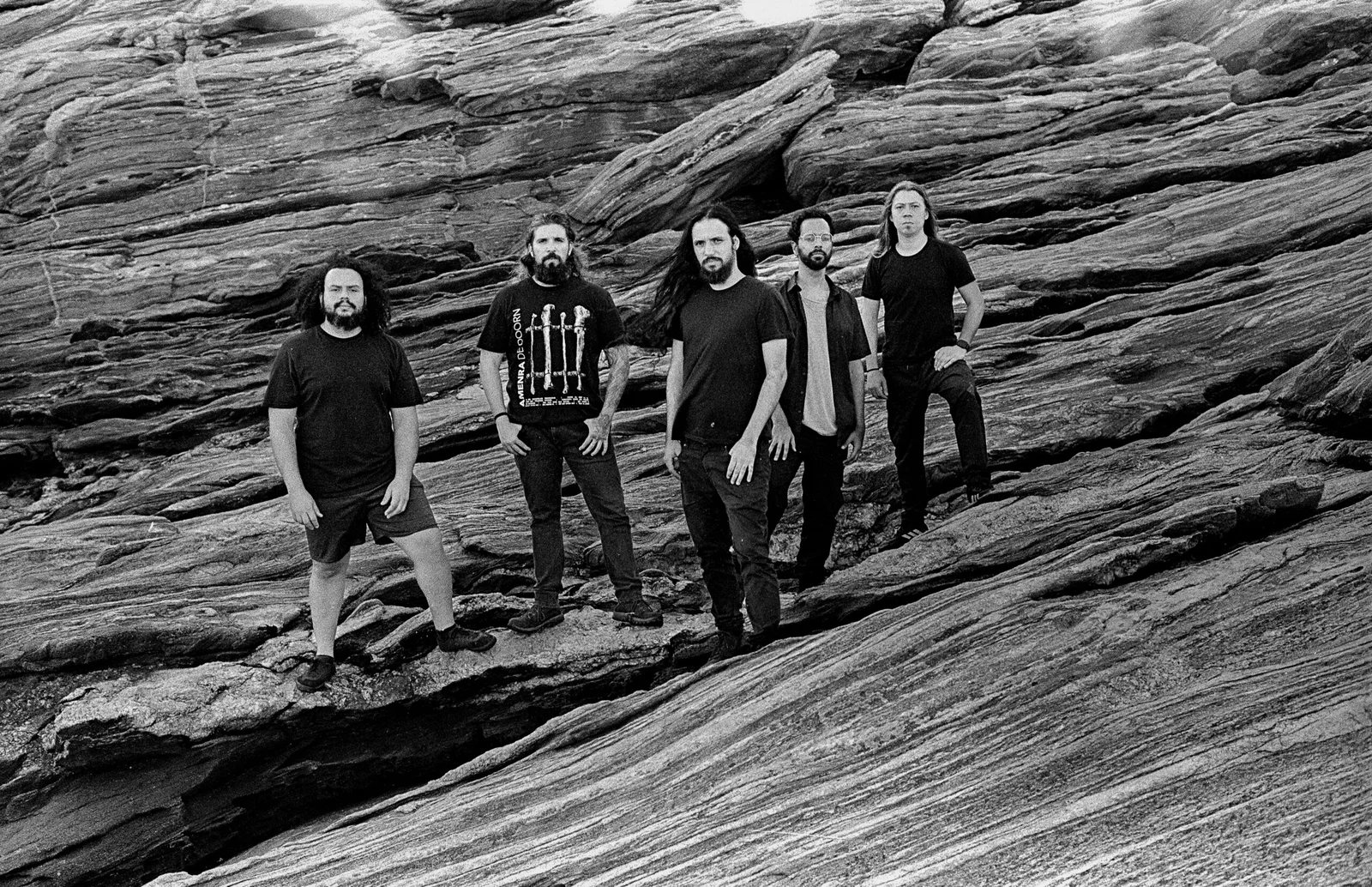
Band photo by Vitor Coutinho