

The keyboard king of Syrian and Kurdish dabke, Rizan Said, returns with a futuristic, fusion-imbued record that takes electronic hafla music to spacey new heights.
Release date: November 6, 2026 | Kou Records | Bandcamp | Instagram | YouTube
As someone who was born and raised in the Middle East, but in that certain part of it that is decidedly an outside spectre (to put it mildly), I was always fascinated with the music coming out of that region. It wasn’t just a distant interest; this was music I heard all around me as I was growing up in various mixed ethnicity cities in the region, through friends and colleagues, in restaurants and neighbour house parties, from passing cars. This was also the music my relatives who came from all across the MENA region brought along with them, the music that was playing on the radio when they were growing up: Umm Kulthum and Farid al-Atrash, George Wassouf and Fairuz, Saleh and Daoud Al-Kuwaiti. It all felt very close and very foreign at the same time, deeply personal and foundational to my cultural upbringing, yet just out of reach, tucked away behind complex geopolitical walls, cultural boycotts, and ultranationalistic fervor.
But the heart – and booty – want what they want, and I have spent most of my adult life trying to keep up with interesting new artists coming over from all of the Middle East and northern Africa, both the more traditionally inclined and the boundary pushing kind, helped by the righteous work of folks like Jakarta Records and Heat Crimes. One artist I didn’t need to look far to find was the hipster (remember that word?) sensation, Omar Souleyman, who after two decades of non-stop gigging around Syria and Iraq as a wedding singer, exploded into the Western mainstream circuit following the release of Highway to Hassake, a collection of his songs put out by Seattle’s Sound Frequencies label in 2010. Combining traditional rural folk music known as chaâbi with Western instruments and influences, and performed mostly in haflas (parties, mostly weddings) where people performed dabke stomp dancing to it all night, Souleyman’s music was the perfect new soundtrack for ravers and electronic music fans looking for the next big thing that will keep them moving all through the night.
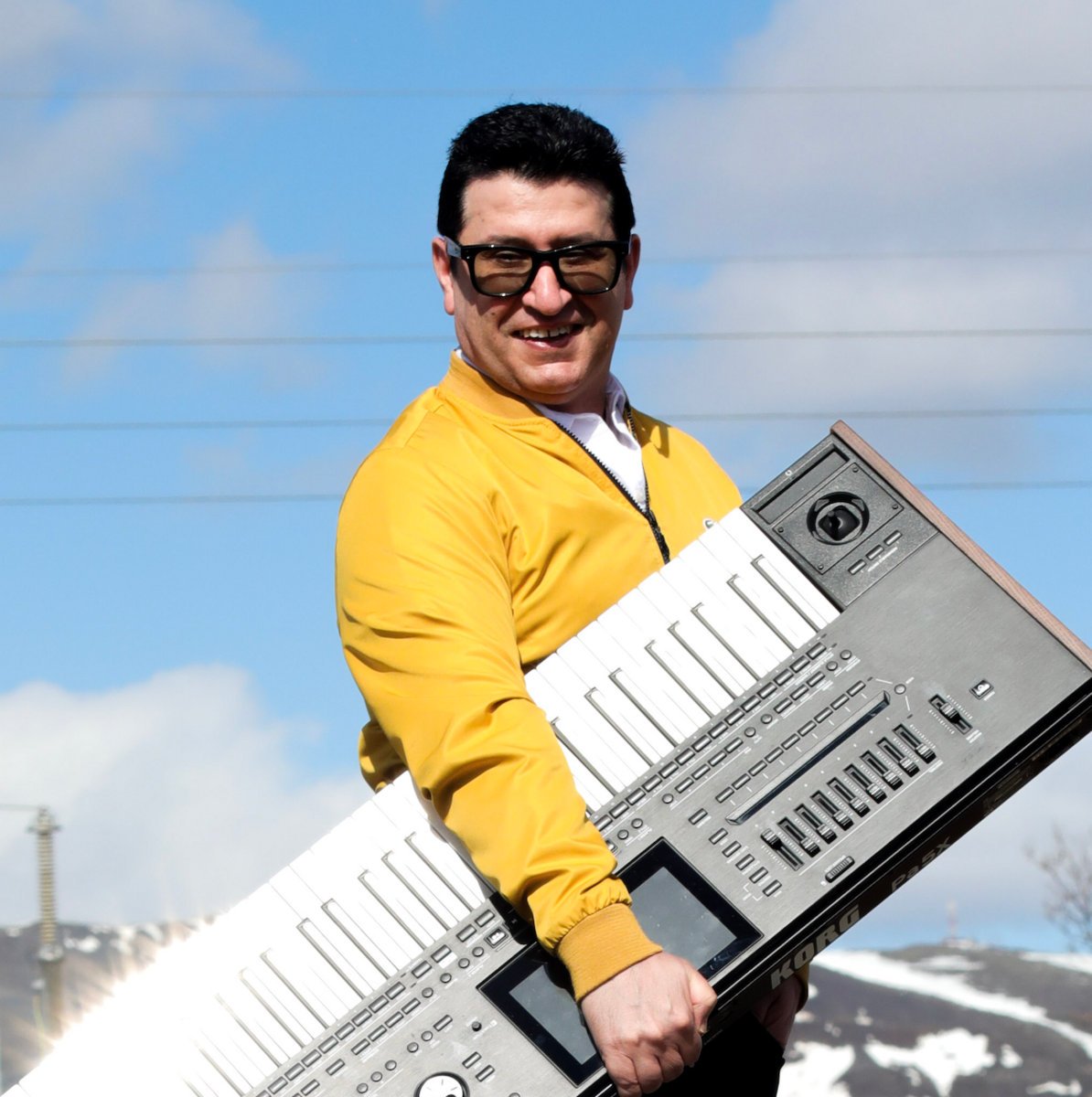
Behind that sound was another person though, hunched over the synths and ready for his turn in the spotlight after decades of operating as Syria’s King of Keyboard and being an ever-present in the country’s thriving cassette circuit. That man was Rizan Said, and Ma Waraa Al-Shaabi, out now through New York’s Kou Records, is his third solo album under his own name. Roughly translated as beyond Shaabi (or chaâbi), this record is Said at his most creative and ambitious, pushing the style of music he helped popularize in his home country and around the world to ambitious new directions. It brings in fusion, prog, techno, and disco influences, and highlights just how much musical grounds can be traversed when you’re a talented keyboard player with an encyclopedic mastery of your roots and style. If I had some concerns going in that it might just sound like an instrumental take on Omar Souleyman’s music, I was quite pleasantly surprised.
The album is made up of just seven songs, but they all take their time to establish their flow as mini epics that you can lose yourself in; in that respect, Ma Waraa Al-Shaabi operates very much as an electronic record played through the lens of traditional Syrian folk instrumentation, something that Said playfully sets up right with the opening notes of “Choubi Kawniyya”, the first track. Starting off with a strong, disharmonic flute (maybe a reed ney, Said’s first instrument, or a Kurdish zurna) played over an ominous hum and ringing Middle Eastern electronic strumming sounds (bringing to mind a synthesized qanun, pretty cool), the song then cuts into an absolutely filthy, stomping percussive beat, which sent my whole upper body into uncontrollable bobbing and swaying. The beat is really cool, with little percussive flair thrown in for flavor, and it leads the track forward in a lunging momentum as the flute, strumming, and keyboard sounds play out all around it, like a royal procession heading down from the desert.
Next up, we have “Baladi Aajil”, which starts off with a frivolous, joyous keyboard melody; maybe a little nod to Said’s time playing at weddings with Souleyman? The notes spin around a lulling, heavy darbuka hand drum beat, before piercing flute lines cut through and bounce off the heavy, club-ready beat. This is the point where the album’s sound really starts to become clear, and it’s another strong effort from producer extraordinaire Randall Dunn, known for his work with SunnO))) and Björk, among others (who is also an active contributor here, credited with playing Minimoog bass on some of the tracks). The drums sound massive, like they’re being played inside giant, empty silos; and the keyboards sound both futuristic and retro, like an old cassette classic that got a digital facelift by the best surgeon money can buy. A huge part of that sound comes directly from Said himself, of course, but Dunn builds a sonic apparatus around him that really makes the artist shine.
The album takes a sonic detour with the fourth track, “Mawwal Al Ather”, a somber and darker piece where the keys replace the traditional vocal performance of a mawwal, a non-metrical, often improvised vocal style that is often also performed a cappela. Here the keys are put against the ominous, crawling backdrop of Dunn’s Minimoog, and the sparse, once in a blue moon hit of a pad kick. It’s another example of Said’s ambition to push traditional Syrian music to new territories, taking genre conventions and subverting them with his keyboard. I’d love to get a full record’s worth of this direction, and if you’re looking for a soundtrack to your next movie, this could be a brilliant choice.
We’re treated to more of that melancholic, meandering keyboard playing at the start of the next song, “Naba Kurdi”, and I was sure this is now where the album takes its time and swims in these slower, more heady waters for a while. But three minutes in, and an unmistakable trance melody rolls in like a storm cloud of glitter, and things start picking up fast, with a thumping bass drum and unfolding layers of synths that start building on top of each other, fading out and in, building and building anticipation. One minute goes by, and the destination becomes clear; we’re headed for a massive, massive climax. The head bobbing resumes, the feet now follow, and oh, we’re dancing now. The track has such a strong pull, with Said clearly taking the moment before to prime us for the payoff. But the track never explodes, it just keeps rolling, gaining momentum, taking side turns (like the clapping, dabke-inducing section around the sixth minute) and pummeling forward like a steam train. If the previous song was soundtrack material, this one’s a dancefloor jam through and through, and I can’t wait to be at a set where the DJ pulls it. It’s a proper ripper delivered by a steady hand, and it’s my favourite track here.
Well, if my final verdict of this album isn’t clear by now (which means I really should reconsider my reviewing skills), I’ll just spell it out: this record is really cool, and really fun, and if you like traditional Arab dance music in any capacity, you should absolutely check it out. The different elements and influences definitely help push things in interesting directions, but I would not go as far as to call this a fusion or prog record by any stretch. This is hafla music for people who dig proggy stuff or techno, but not the other way around. Which, obviously, is a camp I’m very happy to be sitting in, as it’s not often we get records like these from true masters of their genre. My view is also helped a bit by a personal angle, I won’t lie: Said is of Kurdish origin, and has become famous across Syria, a country just now piecing itself back together from a brutal decade of civil war, and still dealing with dangerous, sometimes lethal ethnic tensions. His most famous collaborator is a Sunni Arab, and their music was played in parties full of Kurds, Arabs, and Assyrians.
Syria, and let’s be honest, the entire Middle East as a whole, are so often considered only for the seemingly endless cycle of wars, national conflicts, and now ethnic cleansing and even genocide. But there’s so much more to it, and there’s so much incredible music coming out of it, literally bridging national and ethnic divides every day. So do yourself a favor, take a break from the news cycle, and get to know another side of Syria, of Iraq, of the Middle East: its culture, its resilience, its joys, and its dances. I promise you it’s going to be fun, and I promise you there’s going to be dancing.