


Sound can be an extremely elaborate and versatile paint brush used not on a canvas but directly to one’s psyche. The way waves transform into vivid imagery is by large a mysterious mechanism that takes into account the palettes of both the creator and the recipient. It’s somehow funny how music is often said to be an universal language, though the translation always varies and is ultimately entirely dependent on the individual. Interpretation as a concept lends itself to various outcomes, but especially when talking about something as abstract as music as an experience, it’s open-ended and thus bears an inherent value in this context.
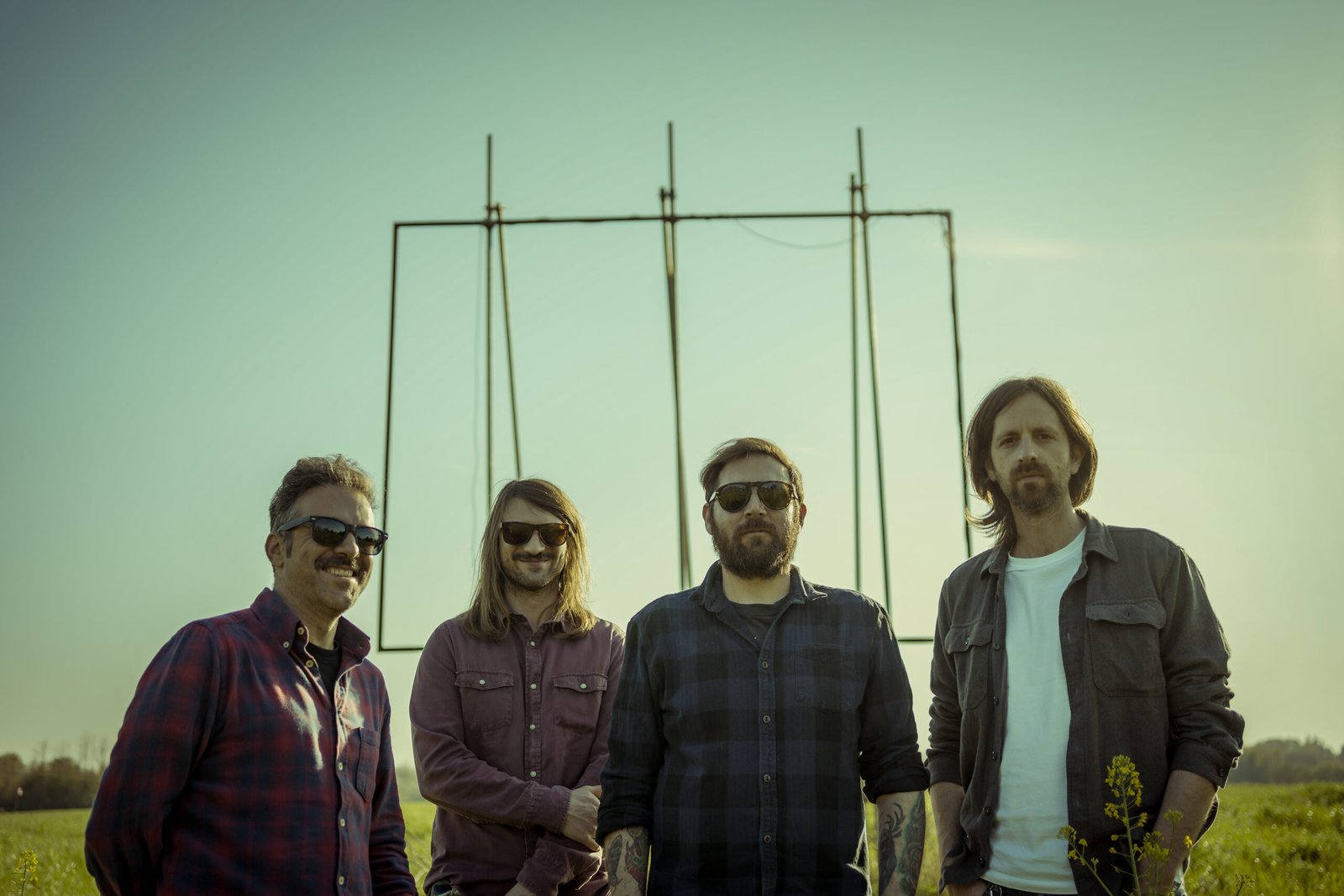
Threestepstotheocean have been painting their own picturesque, aural tapestries with a very unique brush for twenty years now. The Italian quartet’s evocative sound has been very particular and unique since the beginning, including having enough of an experimental approach to lift them far and beyond any standard post-rock/metal acts. With numerous albums under their belt, the band’s gearing up to release their new one titled Death of Permanence in October, and having written about them already years ago as well as last week, now felt like optimal time to get them on board with this feature.
Before going on about the present, we naturally have to dig into the past first. Threestepstotheocean was formed around 2006, at an area (the suburbans between Milan and Varese) that enjoyed a great deal of both musical and otherwise creative buzz at that time; ‘Lots of stages, bands, people playing music — some of us were on the verge of founding a socio-cultural association that later became a constant in the band’s life. We met in these contexts, each of us had small active projects, and one thing led to another. In short, it’s from this context — between chance encounters and shared urges — that the band was born and continues to this day.‘
Threestepstotheocean released their self-titled debut EP in 2007, and the three tracks making up the entirety were already fully realised as far as personal and characteristic output goes, foreboding the things to come. Consistency has always been the band’s strong suit, and that is quite impressive given their experimental, avant-gardistic nature of doing things. Even though the so-called normal instrumentation is present most of the time, there’s a fair bit of leftfield elements sprinkled in as well, adding a ton of detail value to the bigger picture. Threestepstotheocean also knows how to utilise everything in a proper manner, where it all sounds deliberate and intentional instead of a patchwork.
With the above in mind, I inquired the band about how they usually approach writing music, are there any particular methods utilised, and if so, have they transformed throughout the years;
‘Our working method has always been terribly simple: hours of jamming in the rehearsal room, going with the flow, a few listening sessions, and more hours of jamming to tweak whatever didn’t feel right about the songs. We’ve always done everything instinctively, following a mood or an idea.
‘Everything changed quite a bit with the writing process for Death Of Permanence. We felt the need to change our method, to really dodge that ‘demon’ (that’s what we call our tendency to suffer from musical horror vacui) and spend more time ‘studying’ what we’re playing, why we’re playing it, and how.
‘The tracks on Death of Permanence are the result of this hybrid approach, combining long jam sessions in search of imagery to evoke with structured desk work. Songs like “What Went Wrong” were even born entirely out of that analytical work. We always start in reverse: ‘what do we definitely NOT want from this record, or what have we already said we’re no longer interested in repeating?’ The instinctive side still counts a lot, but we’ve rediscovered the beauty of working with less impulse and more method.‘
The band’s first full-length Until Today Becomes Yesterday carried the flame ignited on the debut EP in an expected manner, with the main exception of being able to obviously dig deeper and spread out, as allowed by the context of an album. Having relied more on the post-rock aspect up until then, Threestepstotheocean‘s second album Scent brought in the metal elements in a way more emphasised fashion, adding a layer to their output that in hindsight, was necessary to fully drive their point home.
Noticing this particular change, and some other similar ones with the latter ones, I was curious bout their primary influences and sources of inspiration, not necessarily in a ‘tell me why you did this exact thing’ fashion, but more broadly. After all, any creative person knows that while some things just come to us, others come through someone — or something — else. Decisions are made whether knowingly or subconsciously, neither being better than the other. That said, the importance of a hunch or gut feeling can never be addressed enough.
‘Probably, mostly other music. All of us listen to a lot of music, very often outside of our ‘genre’, so to speak. We go to shows and some of us organize gigs in a club in our city. So from all these shows, records, bands we are always trying to catch something to bring into Threestepstotheocean — melodic references, transitions, arrangements, sounds, discussions with other bands, musical imagery completely outside the usual conventions of instrumental post-rock/metal.
‘Then, of course, there’s inspiration coming from other art forms we love. But ultimately, we think the greatest inspiration is simply the attempt to translate the emotions and thoughts of the moment into music without necessarily spelling them out: personal, political, or social events.‘
Threestepstotheocean put out their third album Migration Light in 2015, again introducing novel aspects to their output. Here, I think the band achieved their wall of sound stature for the first time in a way where the gut punch is extremely visceral in addition to being just a towering sonic entity. Songs like “Sulaco” and “I End” exemplify this part of their sound rather well, while those such as “Dust Bowl” and “Wooden Shelter” are mostly all about exploring the other end of the spectrum.
The band’s particular forté since day one has been the way they utilise dynamics in their sound. Whether you’re scrutinizing details, song structures, or the albums as entireties, the spectrum Threestepstotheocean operates on is pretty fucking insane, pardon the expletive. The dynamics also concern everything in their output from actual loudness levels and the force everything’s performed with to the structural work and crescendos, particular sounds, and so on. This is also something that greatly affects the musical narrative, and of course shapes the way the listener reacts to it.
Different dynamics can equal to varying shades of colours or their strengths, or something more concrete found in the listener’s psychical map of the band that forms while listening to them. Especially when the use of vocals have been extremely scarce with the previous records, there’s a certain limiting factor to how much the artist can affect their listener’s conclusion and so on. The band themselves knows this, and can relate;
‘We don’t think we can say that our music contains specific or deliberate messages. In fact, we genuinely believe that even each of us envisions and feels different things when we listen back to the tracks. There are certainly common images and sensations at the root of it, probably dictated by how we feel at that exact moment, by our personal struggles or successes, by how we see the world outside, by the daily news, the socio-political context we live and observe. We aren’t indifferent to all this, even in our personal lives and choices, but it wouldn’t be truthful either to say that every song is an explicit attempt to tell a story or a theme. We like the idea that our music leaves open space for interpretation. That everyone can project onto it whatever feels most right to them, leaving room for doubt and imagination. We just try to scatter a few hints here and there in the track titles or the artwork.‘
This brings us to 2020 and the release of Del Fuoco, which at least for me was a significant source of light and warmth during a catastrophic global downfall that really never ended. This was when I first heard Threestepstotheocean as well, and am pretty damn glad I did. You can read my musings on the album via the review I linked here earlier, and it’s worth mentioning that my adoration towards it has only deepened since. I couldn’t begin to count the times I’ve spun through the album ever since, and I honestly feel like it represents the most refined and cutting edge that the post-world has to offer in modern times. Big words, perhaps, but the music is nothing but deserving of them. Just listen to “Dal deserto” or “Fieri immortali” and I double-damn-dare you to come up with any further stupid questions.
Del Fuoco‘s monolithic and hypnotic nature carried it far, and I only recently noticed that it’s actually been a long while since we’ve heard from Threestepstotheocean — if not taking into account the single Duende from 2023, which I may or may not have missed entirely — but I reckon I’m not alone in saying that after the last six plus years, time has sort of lost meaning in more ways than one. Either way, it wasn’t long after this realisation that I saw a familiar name pop up on our premiere list, and I obviously leaped at it instantly.
As insinuated above, the world is a very different looking thing today when compared to what it was six years ago. Not everything has gone to shit by any means, but at times it’s really damn hard to keep up the good spirits. Music luckily tends to always help, and as we know, great music helps more, which is offered to us here aplenty. How are the Italians feeling about releasing new music after such a gap?
‘We’re beyond exited! It’s been a while since we released new music – not since the single Duende back in 2023, and we haven’t put out a full-length album since Del Fuoco in 2020. So for us, this is a truly special moment, one of those times that makes you feel excited and anxious all at once. We’re also really happy to have launched this project alongside SubSound Records, who believed in it and decided to invest in Death of Permanence and us. SubSound is one of those labels that has always put out music that’s in heavy rotation in our headphones, so working with Davide is super exciting for us.
‘Death Of Permanence really marks a brand new chapter for us. Once Del Fuoco was done, we told ourselves we wanted to do something different: maintain our identity, sure, but abandon old patterns and embrace something new, something we weren’t even sure we were capable of doing. It took us 6 years to get there (lol), but what matters most to us is that we made it happen. In 6 years, the world has truly changed, and with it, music and the way it’s conceived, consumed, produced, and listened to. So if you ask us where Death Of Permanence fits into our discography, we’d say that for us, it’s a true rebirth.‘
A fascinating thing about Death of Permanence is that it features plenty of guests and collaborators. While the band isn’t exactly alien to these concepts, the features are much more broad and pervasive than before. So how did all of them come about, and how did the additional personnel’s involvement affect the material and the direction of the album as a whole?
‘We’ve always wanted to include external ‘voices’ in our music. Back in 2012, on Scents, the track “Zilco” featured the voice of our friend Federico Pagani (Diskinesia, An Harbour, Le Sacerdotesse dell’Isola del Piacere). This time, we really went for it and decided that collaborations should play a defining role in the making of the record from the very beginning. We often remind ourselves that in this precise historical moment of extreme fragmentation and individualism, one of the few ways we have to react is to ‘do things together with others’. Music plays a crucial role in our lives, and for us, it’s one of those rare spaces where we can still experience an authentic sense of community. Perhaps never as much as in recent years have we felt this to be so important.
‘This applies to the songs themselves, but also to their production and mixing, which we entrusted to our friend Stefano Santi at SPVN Studio – whereas on previous records, most of the work was done entirely ‘in-house”, thanks to Francesco (keys). The same goes for the album’s visual concept created by Riccardo Giacomin, whom we’ve been working with for a long time now and who plays a role we consider fundamental in giving meaning to our music.
‘From there, it was a natural step. We chose to entrust Dalila Kayros (the voice on “Black Syrup”), Conny Ochs (the voice on “Outer Gods”), and Moonlit (sax, flute, guitar, and ocarina on “Every Time I Dive”) with closing the circle and giving a definitive meaning to those tracks. We chose them because, to us, they are incredible artists from the Italian underground and beyond, each with unique qualities. Dalila is an extraordinary singer and performer that embodies the struggle and the history of the island of Sardegna. Her voice is magical, powerful, and ritualistic. Conny is one of the last true rockers we know, and we knew he would bring to the song exactly that rock ‘n roll feeling. Moonlit are a young duo from our area, at the foot of the Alps. Passionate, special, enthusiastic guys full of creativity, and with them, we knew we were hitting the mark.
‘Each of them, just like Larry Stromberg’s voice on our previous single “What Went Wrong”, managed to do what we wouldn’t have been capable of doing ourselves on those tracks. Working this way has taught us a lot as musicians too – trying in some cases to leave room, rein in the melodies, and streamline the structures to give them the space they deserved.‘
I’ve managed to listen to Death of Permanence a few times myself, and have to say that I’m simply in awe of what I’m hearing. It will require some more thorough sessions with the record to fully be able to put my thoughts about it into words, let alone coherent sentences, but I’m getting there. In short, listening to it now, feels like meeting an old friend who is insistent you have never met. But, in a positive sense. I don’t think that makes as much sense as I’d like it to, but alas.
The collaborators bring significant amounts of differing perspectives and tonalities into the mix, and what’s clear straight from the beginning, is that Threestepstotheocean are taking yet another massive step forward with their overall sound, still bearing all their individual resemblances and their own sound, but reinventing it in crucial places. Personally, I think it’s way too easy to get carried away when artists begin meshing and the results rarely fall linearly to anyone’s discography, which isn’t a bad thing per se, but can make things feel off if we’re practically just talking about one band. That isn’t the case here. This is Threestepstotheocean, to the max.
Continuing on the earlier subject of methodology and ways of working, I asked if there was any particular new instrumentation or other fresh motifs included on the creation process of Death of Permanence, aside from the obvious;
‘Mmmm, probably nothing particularly groundbreaking. Maybe one of the most interesting aspects musically is that on a few tracks, we tried replacing the standard bass with a Bass VI, a hybrid instrument between a regular bass and a guitar that was really big in the ’60s and ’70s, used by The Beatles and in funk music too. Introducing it gave us the chance to think about the songs in a completely different way: we let the synths handle the bassline while treating the Bass VI sometimes like a second guitar (“Outer Gods”, “Every Time I Dive”) and sometimes like an ethnic instrument (“Black Syrup”).
‘We experimented with things like this a lot on this record — for an example, ‘self-imposing’ restrictions like not playing certain chords or drum components. “What Went Wrong”, for instance, grew out of our obsession with Dälek and the industrial American hip-hop. Drums and bass stay locked onto a basic hip-hop groove and don’t budge, while all around them the synths build something closer to a soundscape than traditional harmonic writing. The guitar comes in at the end, very deliberately. In the past, we never would have held back the guitar for three-quarters of a song. Things like that, basically.‘
Circling back to the opening paragraph and our further musings about imagery and themes, the new record’s title is a particularly poignant one, if you think about it. Not only is it a not-so-subtle hint towards the fact that the band has taken leaps forward and found themselves anew, it is also a solid fact about the world of today — a statement very much present in all of our lives. As we grow older and see old things being torn down from the way of new ones, people shifting in and out of our reaches, the general commotion and inherent chaos of things, the only certainty we have is change. Nothing is permanent. Not now, not ever.
Here I felt it’s appropriate to give Threestepstotheocean a bit of room to just say whatever about whatever;
‘We want to just truly thank you for this space and for the attention given to this new chapter of Threestepstotheocean. We really hope that Death Of Permanence will be enjoyed and leave a small mark on whoever listens to it. And we definitely need to thank all the people who were involved in the project, for everything they did with us and for us, placing their trust in us. We’ve already mentioned them in this interview, but we could extend the list to many others who continuously encouraged us and gave us good advice throughout the album-making process.
‘Really, returning for a moment to the topic of community, perhaps the only message we feel we can convey with absolute certainty is that music can and must continue to be a powerful vehicle for truly coming together, sharing, including, and reacting to the oppression surrounding us. In Italy, we really need this.‘
I’d just venture to add that this is exactly what we all need regardless of where we are in the world. Music, community, and the power to withstand the seemingly endless fight against oppression.
Threestepstotheocean are releasing their new album Death of Permanence on October 17, and you can secure yourself a pre-order of the album as well as discover the rest of their discography over at Bandcamp, and throw the band a follow on Instagram and Facebook as well to stay on top of things that need to be stayed on top of. Meanwhile, I’ll continue my explorations into the uncanny realms of the new album and re-emerge to talk about it more later on.