


I didn’t explain the subtitle of this year’s MISSED CONNECTIONS in Part One and while it’s kind of a ‘if you know, you know’ kind of thing, I’ll indulge. I think this year is the worst I’ve seen as far as politically, socially, anti-intellectually in America – AI is fooling us at unprecedented rates, people are being kidnapped by the state at massively increased levels, millions lose food access on a whim. What the fuck is going on? This shit’s not going to get better any time soon, a sentiment many agree with and therefore spawned a bit of a meme based on the real Chinese century of humiliation that lasted from 1839 to 1945 where everything was bad all the time. Personally I believe we’ve been in our own century of humiliation since the 1980s which means… another 50-ish years to go? Fuck me.
ANYWAY, one reason why music is so wonderful is its ability to pull us from that doom temporarily and give something to help color in space between the sadness. Part Two distracts you with chaotically downtrodden experimental jazz rock (or rock jazz?), hard-bodied hip-hop from the Griselda school of thought, and resplendent shoegaze to sift through our moods to.
Brandon
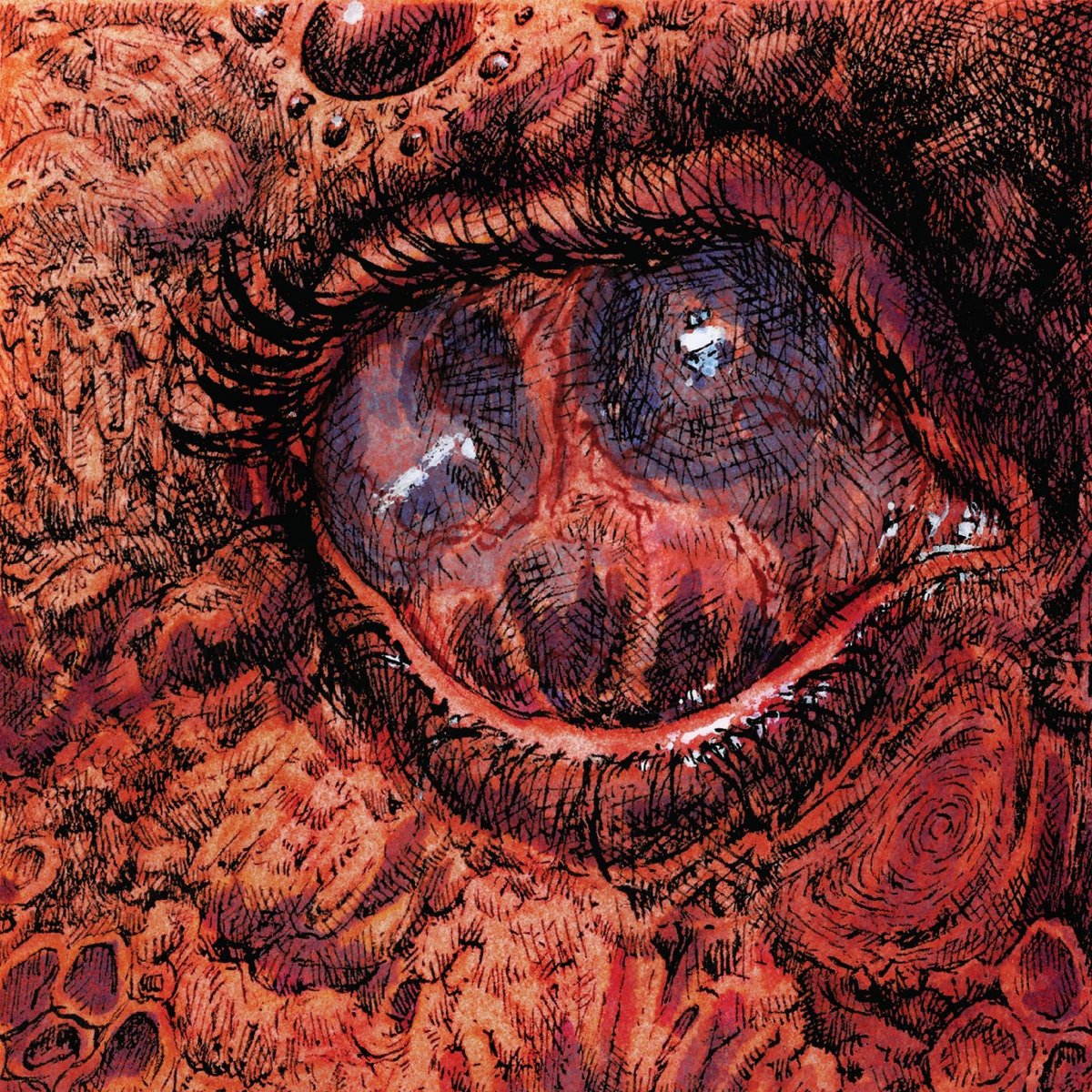
I was in college when I first heard the term ‘bacchanal.’ Originating from ancient Roman festivals that celebrated wine and excess, the word has come to refer to a more generally wild party or orgy. Coupling such a word with ‘cruelty’ immediately makes one wonder how a party centered around negativity and harm would play out; the answer may sound something like Shardik’s Cruelty Bacchanal, their second record in eight years. Its nightmarish cover art – looking (to me, at least) like an alien eye but with a fly’s face shining through – gives the listener a reasonable expectation that this is not going to be a conventional listen. That would be an understatement, to say the least.
The opening seconds of the first track “Existential Threat” – complete with hammering drums, distorted guitar and bass, and screeching violin – set the tone for the lurching menace of the rest of the song as it moves jaggedly but effortlessly from one staccato rhythm to the next. Sana Nagano’s violin work in particular is positively gruesome, elongated ascending lines rubbing together with atonal soloing that proves as thrilling as it does jarring. As the band plumbs its molten Meshuggah-meets-John Zorn (the latter credited as executive producer on Cruelty Bacchanal) grooves underneath, one is left with the impression that the album will be one hellish maelstrom of noise after another, which makes the following “Orbital Dance” all the more surprising. With vaguely Eastern European underpinnings to the melodies, it feels as though Shardik is deliberately harking back to the Roman parties of yore the album takes its name from. The structure, while still complex, is somewhat more traditional on this track, with an almost Aristocrats-type of playfulness to its sound. The band was wise to position these two songs at the beginning of the album: it showcases both brutality and creativity, carnage and nuance, cohabitating exceptionally well.
“Edifice of Denial” is an even bigger departure, at least from the outset: while there is still dissonance at play, Nagano’s violin playing and the bass work from Nick Jost (of Baroness, no less) are understated and almost ballad-like, lulling the listener into a false sense of comparative relaxation, until things start to pick up after the two-minute mark. Danny Sher’s drum work picks up into frantic jazz cymbal swinging, Matt Hollenberg’s guitar employs some clean tones while experimenting with jazzy noodling, all before the distortion comes crashing back through and the song finishes on another display of Shardik’s mutant thrashing. It’s this compounding and extrapolating of simple ideas that keeps their music engaging even as it confounds the listener’s expectations – “Construct the Non-Struct” uses a repeating violin pattern as a springboard into dense, intoxicating prog metal, while “Into the Mouth of the Great Nothing” indulges in nigh-death metal blastbeats and tremolo guitar in a way I can only describe as Mr. Bungle-esque.
“Post-Earth Capitalist” plays like an amped-up prog version of Swans’ “A Little God in My Hands” with its bizarro funk pocket proving the perfect foil for Shardik’s experimentation: free-form jazz freakouts give way to sludgy stomping and ambient interludes, without a single element feeling tacked-on or out of place. “Impenetrable Delusion” manages the impressive feat of having some of the most conventional sounds on the album while also having some of the most eclectic, with staccato stop-start instrumental stabs alongside the album’s more melodic violin playing. The title track ends things on a somewhat slower, mournful note, although no less intense for the wear – even when the rhythms are more straightforward, the band finds ways to layer an emotional melody on top. This song features some of the best interplay between Hollenberg and Sagano on the album, with each one taking turns on grabbing hold of the melodic lines and pushing the song to its abrupt but satisfying conclusion.
Hearing Hollenberg’s concept behind the album, especially for one without lyrics, makes the harrowing journey Shardik takes us on clear:
‘CRUELTY BACCHANAL is about the erosion of empathy – how celebrating harm and embracing nihilism has become a show of strength in modern society. That idea shaped how the music came together. There’s this sense of tension and resolution, like things are constantly breaking apart and reforming in new ways. Different elements exist in the same space, sometimes working together, sometimes pushing against each other – just like the world we’re in right now…The whole record feels like a reflection of post-COVID life – fractured, high-pressure, unpredictable. But as chaotic and intense as it is, I also see it as something healing. There’s something about getting lost in sound like this that can be a release.’
While certainly not a rosy sentiment to leave the listener with, it is an effective mission statement. We default to nihilism and cruelty when we see the world presenting us with every reason to; they go low, we go lower. How else do we justify our own negative thoughts if not blaming it on the state of the world? What Shardik ask us on Cruelty Bacchanal is to question this frame of mind: at what point have we joined the lecherous, seedy side of humanity that we once strove to be nothing like? For the band, the answer is to show us how ugly and disturbing that experience can be, in musical form, as a mirror reflecting our own cynical selves – and to let those feelings go. We all feel it, Shardik say; now let’s debauch and purge ourselves, and start planning a Compassion Bacchanal.
Broc Nelson
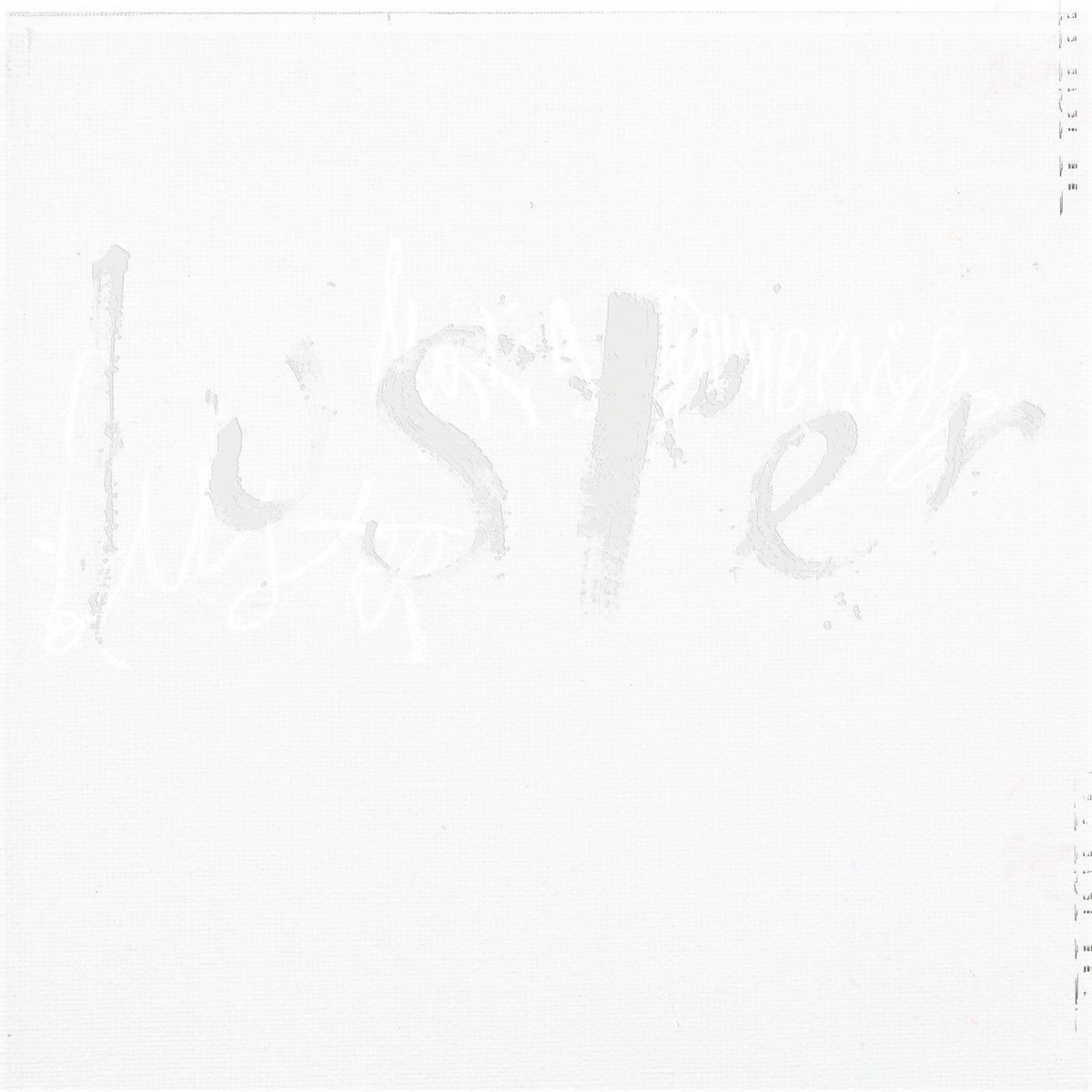
April was a crazy good month for releases in 2025. I was busy reviewing three other albums that made our THE NOISE OF column and exploring a handful of others from that list, not to mention whatever else was on my radar at that time. So, regrettably, I was not able to give words to Luster by Maria Somerville, and I have planned to make up for that mistake since. This album grew on me, though I enjoyed it immediately, and remains among my favorite and most listened to albums of 2025.
Luster begins with twinkles of guitar and field recordings of birds, and in those first few seconds, one can find a microcosm of the feel of Maria Somerville’s eloquent balance of sounds that feel rooted in the natural world with otherworldly dream pop. “Projections” carries the listener through slow acoustic strums and a low, clear bass line that gives weight to much of Luster, as echoes and reverb fill in the gaps applied to Somerville’s voice and electric guitars. The way these elements are layered bleeds into “Garden” fully embracing a sound that is reminiscent of The Cure’s masterpiece album, Disintegration.
Her vocal melodies are sweet and plaintive in turn, further echoing The Cure, but without Robert Smith’s yawp. “Corrib” feels more like a traditional Irish ballad, gently poetic and reflective. In fact, Luster, recorded in Somerville’s hometown of Connemara in County Galway, Ireland, feels romantically connected to the land and spirit of Ireland. No, there are no tin whistles or the like. This is still very shoegaze/dream pop, but the haunting echoes of emerald green, gray fogs, and blue ocean flow through each track, the way This Mortal Coil managed to make sounds simultaneously gorgeous and eerie.
This makes even more sense when you learn that Luster was released on 4AD, the label that forged This Mortal Coil as well as hosting foundational and contemporary alternative, indie, goth, and dream pop acts like Bauhaus, Dead Can Dance, Cocteau Twins, Camera Obscura, Lush, and Erika de Casier. Listen to the ambient music and vocal weirdness of “Flutter”, and try to imagine it on any other label.
This merger of goth-tinged dream-pop and Somerville’s connection to Galway are addictive. The music and songs themselves have lingered and begged for repeat playthroughs of Luster for most of the year, but recently they have taken a new perspective for me. I recently watched John Huston’s film adaptation of James Joyce’s classic short fiction, The Dead. Anjelica Huston, playing Gretta Conroy, gives a stunning performance as she hears a song through the walls while preparing to leave the party that occupies most of the story. The song reminds her of a lost love in her home, also in Galway. Without spoilers, this incident leads us to the main conflict and eventual, breathtaking end of the story, but one could imagine Somerville’s music being that kind of catalyst, at once dense and hushed as if heard through walls, but ever tugging on heartstrings of faded memories and tender longings.
Perhaps this is why Luster has stuck with me for most of the year. The thick walls of beautiful vocals and expertly mixed instruments feel more like dream logic than songs sometimes. Luster’s closing track “October Moon” is a standout example of this. All too often dream pop settles into the same kind of background mediocrity that makes any genre sound self-similar, either echoing Jullee Cruise a little too closely or relying on shoegaze guitars to betray the vocals, but Maria Somerville has truly created a tapestry of sounds that reward each listen with new, sublime details. Luster is an experience to behold.