And just like that, it’s over again. Part Three is here, ready to shower more noise on that ass. As always, we hope you found a cool new album and/or band through this feature. With all this talk about ‘rap fatigue’ and saying rock is dead or whatever, let this be a reminder that there’s good, fun music that you will like out there, you just have to look. Stop depending fully on biased algorithms and payola/botted to hell playlists, recognize radio is dead as the forefront of musical discovery, and SEARCH. Hell, you can use this cool site, Every Noise at Once (no affiliation to us, unfortunately), to look for a genre that sounds fun to you, click it, and immediately get a sample of an artist under that umbrella, then dig deeper until you’re $100 in debt because of Bandcamp purchases.
Check out Part One and Two if you missed them – there’s some great shit on there. Part Three finishes us off (AYO) with , , and heavy-as-fuck working class death metal from PDX!
Jimmy
What does it mean to be the most metal? Does it mean proudly confirming our expectations of what metal should be? Or does it mean reinventing what metal can be, just as the genre’s pioneers did decades ago? I find that metal is in tension between its extreme respect for tradition and its critical spirit of innovation. A modern metal band can be great for breathing life into an old style, or for blazing a fresh trail into metal’s remaining frontiers. For me, the music that most screams metal sits in the middle between convention and invention. It must embody the power of classic acts while also sounding different from all of them, and this is harder than ever in 2025.
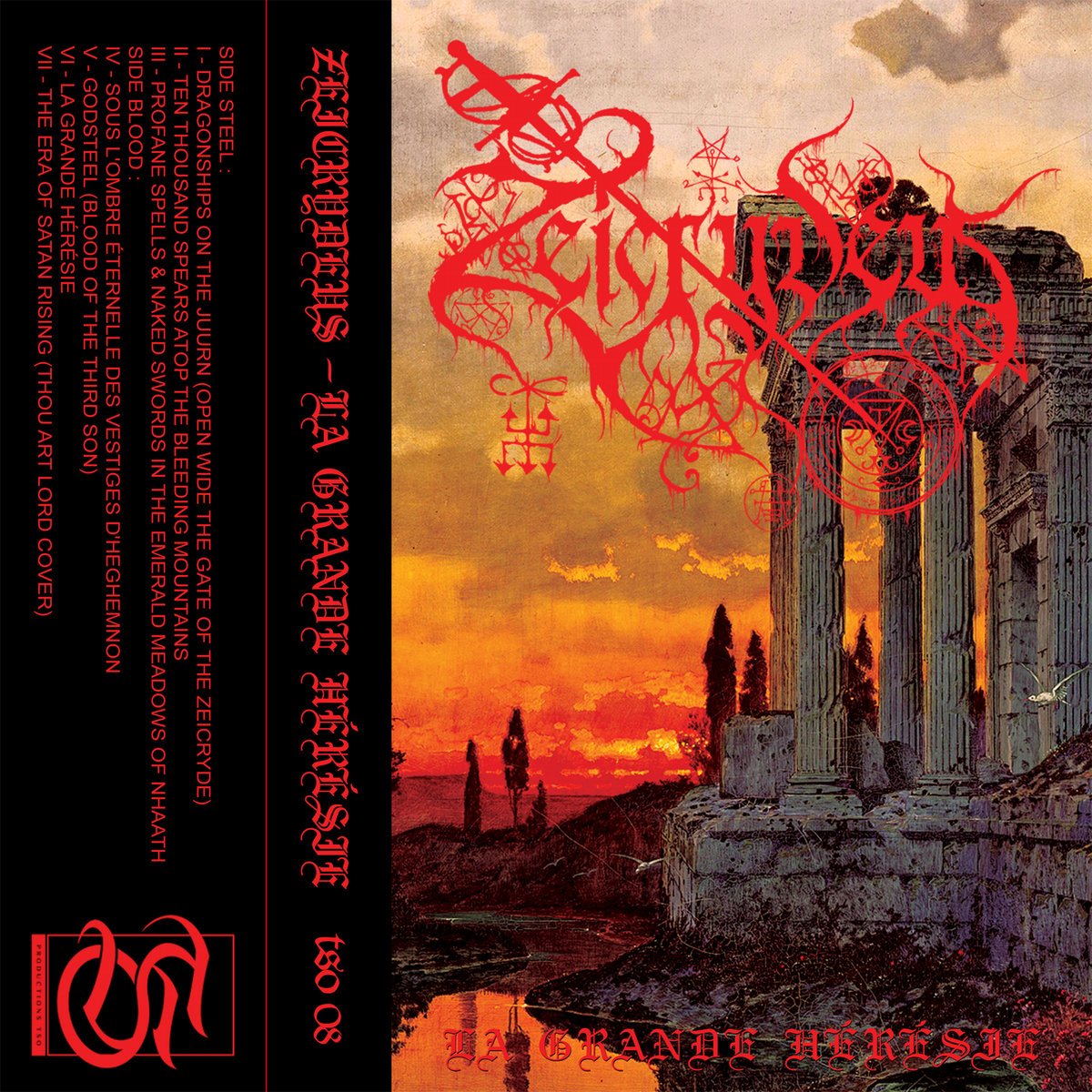
With that rant out of the way, let me introduce my pick for the metallest metal of the year: the debut album, La Grande Hérésie, from Zeicrydeus. This solo project is the latest venture from Quebecois shredder Phil Tougas. Metal Archives lists this man under 23 different projects (with nearly as many stage names), including the stellar First Fragment, Chthe’illist, and Worm. He has brought world-class shredding to each of these groups, but he also has a penchant for ominous atmosphere and concept-driven lyricism. The concept-driven part is key here. Tougas has worked on the songs in La Grande Hérésie for years, and his lyrics describe a self-imagined fantastical setting which has appeared in the work of multiple other bands of his.
Musically, Zeicrydeus harnesses the best of Tougas’ capabilities through a fresh combination of metal styles: United States power metal (USPM) and Hellenic black metal. Both of these styles exemplify metal in different ways. USPM is known for its rollicking riffs, emphasis on musical prowess, and grandiose hypermachismo. Hellenic black metal, meanwhile, is a more overlooked style originating from 90s Greece. Its pioneers mixed 1st-wave black metal with groovy mid-tempo riffs and synths to bring a very culty but traditional sound. Both have a core of melodic, heavy metal riffing, but USPM takes it to proud, virtuosic glory while Hellenic black metal takes it to the sinister murky depths of extremity. It’s not hard to see that the two combined would be metal as fuck.
Tougas manages to harness the dual vibes of these influences in a way that gives respect to both. His guitar and bass playing have all the pomp and bravado of USPM, but frequently explode into searing tremolo. The percussion is exclusively from a drum machine, and quite obviously so, but this does not make the album any less authentic. Such tech is a staple of Hellenic black metal, and it lends a biting, primitive edge to Zeicrydeus’ sonic weaponry. Tougas also gives direct references to bands in both styles. The very first vocals in the album are a tribute to the song “Under Jolly Roger” by USPM band Running Wild, and the final song is a cover of “The Era of Satan Rising” by Thou Art Lord, pioneers of Hellenic black metal. Indeed, Tougas gives ample tribute to his influences, but is nonetheless not held down by any of them. They are a foundation for his own musical language, and he uses it to fiery effect.
Every full song on La Grande Hérésie is its own maelstrom of riffs, ranging from plodding and doomy to righteous galloping to blasting tremolo. Somehow they all make me feel like a spearman in a phalanx marching to overthrow heaven. The sheer technical wizardry on display between Tougas’ bass and guitar is staggering in the riffs, but it soars to the firmament in the numerous solos. The guitar leads shred gloriously, because of course they do, but the bass solos! How they do sing, and they are in every song. Tougas even gives each one a lore-specific name, implying that they represent an event in the story of each song.
Speaking of the story, La Grande Hérésie is just as strong in its themes and atmosphere as its musical prowess. The album is rich with effects-laden keyboard and a plethora of sounds: thunder, bells, clashing swords and more. Zeicrydeus doesn’t avoid dorkiness, but rather blazes straight through it to enchantment. A dive into the lyrics then exposes a detailed and enigmatic world of gods, demigods, and warriors ruling and fighting across mountains, rivers, and seas. In just 42 minutes of total runtime, this album creates a musical and thematic world that seems to stand on its own.
I could continue singing the praises of Zeicrydeus for quite some time, but I fear to say any more would spoil the surprise of a first-time listener. Anyone who loves their metal fast, epic, and full of shredding has got to get on this album, and so does anyone who loves their underground black metal. All aboard the train y’all. Tougas has promised more Zeicrydeus very soon, and we already have a live rehearsal recording from Exxûl, a ‘power-doom’ band of his whose lyrics explore the same lyrical setting. Get hype.
Shaun Milligan

In January 2022, I claimed a modest little EP for reviewing by an Icelandic singer-songwriter after watching a video of her perform in the intimate, graceful acoustics of a church. Shortly after, my father (a man renowned for his ability to battle on tirelessly) suffered a heart attack and underwent major surgery, leading me to dwell on the realities of life and mortality. Arny Margret‘s Intertwined EP was the ironically titled soundtrack to this, played repeatedly, internalised as part of a formative point in my adult life.
Fast forward nearly four years and I find myself in a similar scenario, whereby Arny’s music softens the harshness of a world that appears to be falling apart at the seams. I intended to review this before its release in March, but life intervened, and hasn’t relented. It’s been an arduous year, harder in some ways than any before it. However, I had to write about I Miss You, I Do (the almost irony of its name not lost on me) – an album that has been a source of immense solace and serendipity throughout all the brightest and darkest moments of 2025.
All the way through, gorgeous vocals showcase an endearing vulnerability, as lyrical narratives nestle atop soothing folk instrumentals that perfectly accompany the emotions carried by each song: whether speaking of adoration (“You’re Mine, I’m Yours”), contemplation and longing (“Took the Train ‘til the End”), and everything between. Arny Margret has always excelled at this relatability, and I Miss You, I Do sustains that intimacy. It’s supportive, empathetic – like a close friend – lending great weight and effectiveness. The softened, humble acoustic playing that initially drew me in three years ago still entices now, propelling the meandering, titular opener alongside a soft, continual brush of percussion that welcomes you warmly. It’s a gradual start, laced with hopefulness and joined by elements that heighten the uplifting tones as electric guitar lines and harmonies galore seep in.
The insular nature that Arny’s solitary strums provided on earlier music has matured somewhat, with Arny’s acoustic guitar settling into a wider ensemble that expands as she herself grows as a person and artist. Her lambent playing still leads the collective, surrounded by fantastic companionship from various collaborators and Arny’s own demonstrative musicality. When I reviewed 2022’s they only talk about the weather, I did wonder whether more layered arrangements might oust the minimalistic origins that characterised Intertwined. Fortunately (and unsurprisingly), those stripped-back roots are far from suppressed here, proudly orchestrating matters in both strong and subtle ways. What’s more, we’re still treated at regular intervals to phenomenal live renditions of her music, often with more minimal composition.
Still, despite the lovely synthetic washes of sound and more varied instrumentation present here (including banjo that regularly stirs a hazy country tinge into Arny’s wistful indie folk such as on “Greyhound Station”), the textures and dynamics on I Miss You, I Do lay the foundation on which the crowning jewel shines – Arny’s voice. It’s long been a favourite aspect of her music for me. Emotive melodies trail off on the likes of “I Love You” with her characteristic natural tremolo and a breathiness in the quieter moments that portrays unabashed authenticity – the piano-laden “Crooked Teeth”’s ‘But I’m hours away, you don’t know me these days/Yes, I write the songs, oh, anyways/It’s the only gift you gave mе when you left’ also springs to mind. Another prime example is the stark plea of ‘Oh, I want someone to miss me/Oh, I want someone to love’ on “Took the Train ‘til the End”. Notes and syllables hope, ache, and grieve, but do so with poise and beauty through Arny’s clear and convicted delivery – whispered to you as if between hurting souls.
It works because Arny Margret always writes from the culmination of genuine, lived experiences and snapshots in time – immortalised within every beat of every track. Arny’s wonderful melodies linger like vapour long after songs have finished, leaving an imprint. Arny has also indulged fans’ curiosity for context, offering track-by-track rundown posts on her Instagram, which made for insightful reading alongside similar interviews elsewhere. It’s testament to the strength of Arny’s connection to her craft and to those who invest their time and energy in her frank storytelling.
On “Maybe I’ve Wasted My Time”, Arny ruminates on death. Such heavy subject matter is somewhat alleviated by her melodious voice, but you can still hear the shade of melancholy that sits beneath it. She mourns choices made, revealing that ‘I try to be better, I try to be bright/But these days are so damn dark all of the time’. These moments encapsulate a juxtaposition wherein sombre matters are conveyed through the most serene and beautiful sounds. This painted honesty is prevalent across the record, from the slightly wandering “Born in Spring” to the Fink-esque “Day Old Thoughts” with its marvellous low end and steadily introduced layers that see a harmonised chorus of Arny’s voice ring out. It’s all packed with nuance: a delicate chord here, an ethereal vocal run there, a lyric that leaves a lump in the throat as it hits a little too close to home. What’s more, it all unfurls with a closeness and sound design that make it seem as though Arny is performing before your very eyes, right up to “Happy New Year”’s effervescent ending.
The opportunity to hear Arny Margret‘s music face to face is actually increasingly likely. 2025 has seen Arny give herself entirely to her art, with a deluge of shows and festivals spanning continents as both demand and acclaim rapidly continue to grow. Even so, at the year’s end she finds more to give, releasing the Sjáumst edition of I Miss You, I Do last month. It comprises a previously unreleased song alongside alternate versions of three tracks – each one imbued with fresh charm and a sense of identity that’s just as enchanting as the originals.
It’s been a tough year, eased by the openness and understated charisma of I Miss You, I Do. Everything Arny Margret creates hits right at the heart, leaving you entranced by the elegance with which the simplicity of her lyrics aligns itself to the growing complexity and confidence of her wistful, expansive arrangements – as well as the ever tender soul of it all. Music that embodies such sincere humanity in every thread is extremely rare, but Arny Margret continues to accomplish this so naturally. Without any trace of hyperbole, I owe a great deal of thanks to this album and to Arny, and it shall remain a cherished companion as I venture into the uncharted peaks and valleys of 2026.
David Rodriguez
It’s not lost on me that my views politically, socially, across the boardally are generally seen as radical. Some of them I don’t even voice for what I’m sure are pretty obvious reasons living in the worst surveillance state of our time (so far!), but I also just don’t feel like dealing with people around me that are usually nowhere near as out there as me. Music’s an awesome validator – not because I need or want the validation, but to simply show me that I’m actually not alone with thinking a lot of the things I think and feeling the ways I feel. I don’t doomscroll on these fuckass apps for fun, y’all. The burden of being aware is heavier than it’s ever been.
It’s not hard to find bands that you fuck with theoretically as well as sonically in metal and hardcore, especially nowadays when bands are definitely getting more brazen (and, let’s be real, honest) about their reactions and distillations of the modern hell-on-earth landscape. The new MERC project was great for that, and bands like Terminal Nation, TURIAN, and Intercourse do it their own ways. So when Misery Whip came across my proverbial desk via my pal Jake sharing it with me, goddamn I jumped in hella quick.
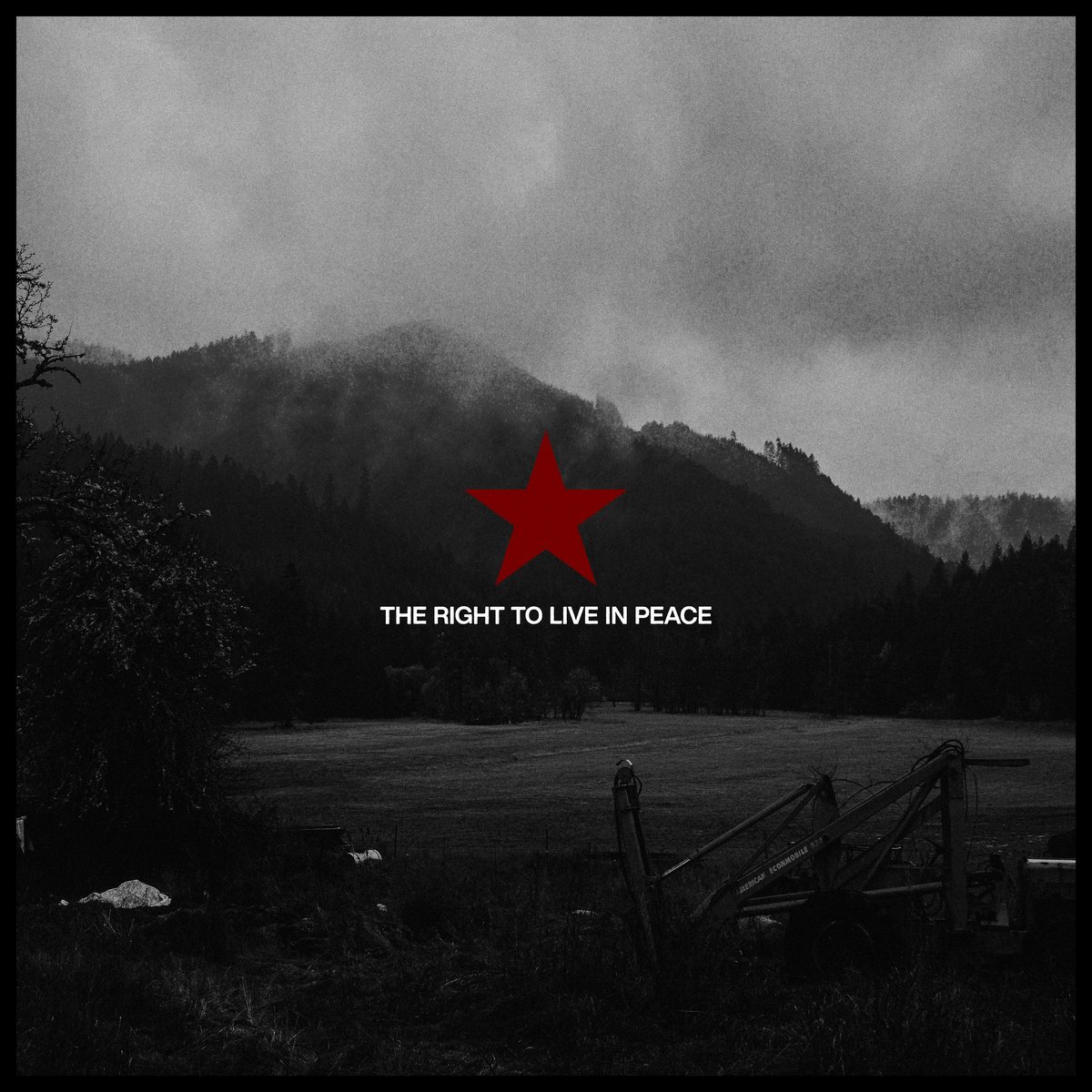
I mean, peep the song titles, the burning red star on the cover, and its ultimate theme embedded in the album name: The Right To Live In Peace, a right that should be deemed inalienable for anyone alive, even the ones we don’t agree with all the time. I was baited from the beginning and when I heard it back in July, I had every intention of reviewing it because it deserved the extra shine. I missed out because of everything happening all the time, but today that’s getting fixed.
Locked in on some militant hardcore-tinged death metal shit, Misery Whip are as blunt as it gets. The title track references Victor Jara, Chilean Communist revolutionary and musician who has an album of the same title, albeit in Spanish (El derecho de vivir en paz). “Militant Stomp” (and many other songs really) espouses class consciousness in the most brutally succinct way, ending with a famous Michael Parenti excerpt on third-world exploitation and plundering by Western civilization.
“Death Of A Small Town” reminds us that ‘labor is entitled to all it creates’, not capitalist bootlicker pig bosses, CEOs, and shareholders. “Hope For The Soil” is a bleak, poetic summation on the plight of Palestine as they resist genocide by Israel and the Western world’s hands, ultimately becoming a hopeful wish by which the lands will regrow with the thousands of souls buried in the soil bolstering resistance and paving the path to freedom. Indeed, we will see a free Palestine in our lifetime, from the river to the sea.
All of this theory packed into some of the heaviest metal you’ve heard this year. Yes, you. Tell me I’m wrong. Each song is catastrophically dense with steel-reinforced concrete guitar tones, death march drums, and gutturally intense vocals. I was surprised to learn that King Yosef (whose imprint Bleakhouse independently released this album) had work on here, not-so-surprised to see Stick To Your Guns’ (and Trade Wind – please release a new album, I beg!) Jesse Barnett show up, but as appreciated as their work is in this communally important effort, I must shout out Misery Whip themselves above all. The Right To Live In Peace is a hell of a debut effort after a handful of singles, an EP, and a split with Blood Tithe. They even end it with a working class folk song, calling back to when country music was by and for the people, highlighting their very real struggles and not… whatever it is they celebrate at the CMA Awards.
In a right and just world, Misery Whip would be recognized and platformed as a sonically edgier Rage Against The Machine, their message ringing out in stadiums to millions upon millions of socio-politically awakened people who have, simply by virtue of existing, been given a raw-ass deal to work until death, to pay into a system that leeches endlessly until death, to rot internally from substandard foods and living conditions until death. It’s only with collective class consciousness that so many of us strive toward that we even stand a chance at a better world, and we have to resign ourselves to the fact that it certainly won’t come in our lifetimes and that shouldn’t stop us from doing the work now. Learn how to help, play your part. We must take an inch so the ones that come after can take a foot, then a yard, then a mile (non-Americans, convert to metric for optimal effect). We must do what we can until death so that others may live and not merely survive.
Eyes on this band until further notice, and I’m not just talking about the NSA’s.