Welcome the fuck back to MISSED CONNECTIONS, somehow eight years old and still going, arguably sillier than ever. What isn’t silly though is the music we’re covering today for y’all. If you’re new to MISSED CONNECTIONS or Everything Is Noise as a whole, this feature’s our ushering in of the year-end content where we go back to sometime in 2025 and review projects (albums, EPs, mixtapes, whatever) that we missed initially. These projects may have been mentioned in passing like on our THE NOISE OF feature or something, but they weren’t properly delved into – this feature corrects that perceived mistake and gives you more bang for your buck with three reviews per part with three parts in total.
Today, we venture into some Norwegian deathjazz, Polish fish psych rock, and meditative ambient jazz to sip tea respectfully to. Be sure to check next week for Part Two and the week after that for Part Three!
Colleen Nerney
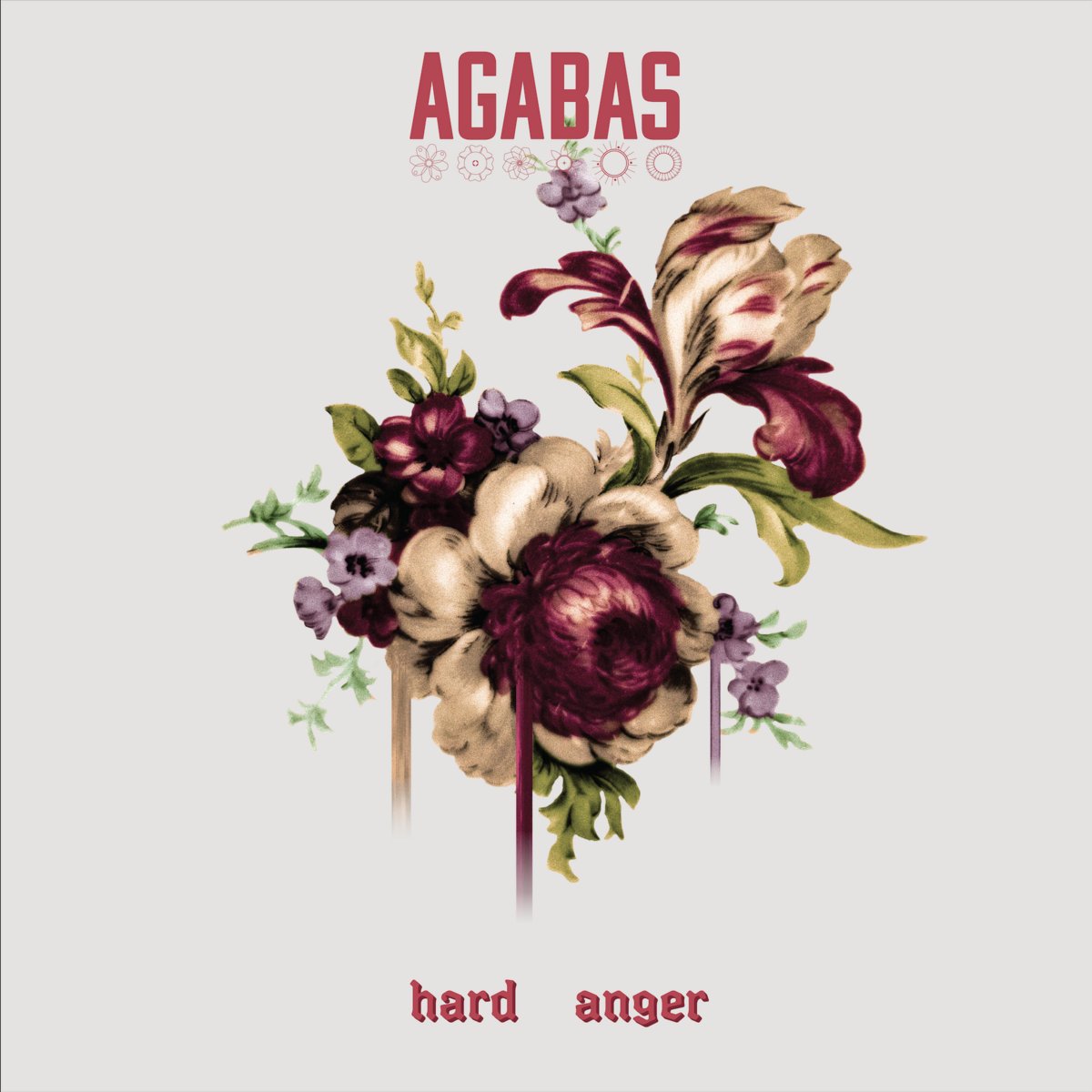
Listen, while it would be nice to think of myself as discerning and tasteful, the fact of the matter is that I’m a pretty easy mark for a good advertising hook. Norwegian group Agabas got my ass immediately when Instagram suggested a reel of their self-described ‘deathjazz’, complete with crazed, wailing saxophone over brutal blast beats. Sold.
Hard Anger is the band’s third full-length release and had a bit of a viral moment during promotion, mostly due to the fact that Agabas rented out an idyllic cabin for the actual recording process. That contrast–of beautiful Scandinavian scenery defiled by objectively wild music–seemed to really amuse the internet, and I completely understand why. The band seems to possess a rather meme-y quality as a whole, similar to nu-metal weirdos Flagman, where a healthy dose of self-awareness meets the chronically online social media machine. Their website even has a menu link titled ‘MEMES’ which routes the user to…well, here. I won’t ruin the surprise, but I’ll just hint that you should definitely throw any of the track titles mentioned below into Google Translate as well.
Despite this penchant for shitposting, Agabas have produced an excellent record that brings a fresh, energetic, and surprising angle to death metal via unique instrumentation. Opening track “Kjærlighet for alle” feels a bit like being greeted by an industrial-strength blast of hot wind prior to morphing into a more recognizable metal composition, but that is fitting for an album rife with both oppressive soundscapes and moments of genuine catchiness. I frequently found myself humming some of the more memorable refrains on this album, which is surprising considering it falls into a niche metal genre and is, well, in a language I don’t understand a lick of. Then a track like “La blodet flomme” would come on and I’d have to stop myself from jumping out of my seat from the sheer force of the music. Fascinating.
The alto saxophone obviously gets a starring role on Hard Anger, and I think the best tracks are the ones that really go to great lengths to showcase it. “En vakker himmel” has the sax in unison with the main heavily distorted guitar riff, which adds a nice textural layer to what would be a fairly bog-standard nu-metal hook. “Vis meg alt” features tenor saxophonist Michael Wilbur and contains the most whistleable line on the album. My initial joke for this section was that this song ‘sounds a bit like if Moon Hooch took an elevator directly to hell, and then met up with Car Bomb for a party.’ Turns out Wilbur is literally the guy from Moon Hooch, so I guess my instinct was spot-on there.
Agabas gives other instruments time to shine as well. There’s a crazy synth-bass prog moment towards the end of “Arv” that’s worth mentioning, and a long Django Reinhardt interlude on “På åpent hav” that allows their guitarist to strut his stuff a little bit. It may have been nice, however, to include another traditional wood instrument, like a flute, to add another layer of jazzy goodness to the general sonic landscape. But I don’t consider this a major failing, or a failing at all, really. This album is successful in that it popularized a bizarre genre, and while it may not be perfect, I think its existence is a triumph in its own right. Hard Anger as a whole feels a bit like if the entire soundtrack for David Lynch’s Lost Highway was put into a blender and then compressed into a .zip file. I can picture Bill Pullman going absolutely ham on his sax while early Rammstein plays the backing track, and the whole thing is a bit deep-fried and dreamlike and occasionally scary as hell.
You know, maybe I should get into the marketing side of things. That’s not a half bad pitch.
Pete Overell
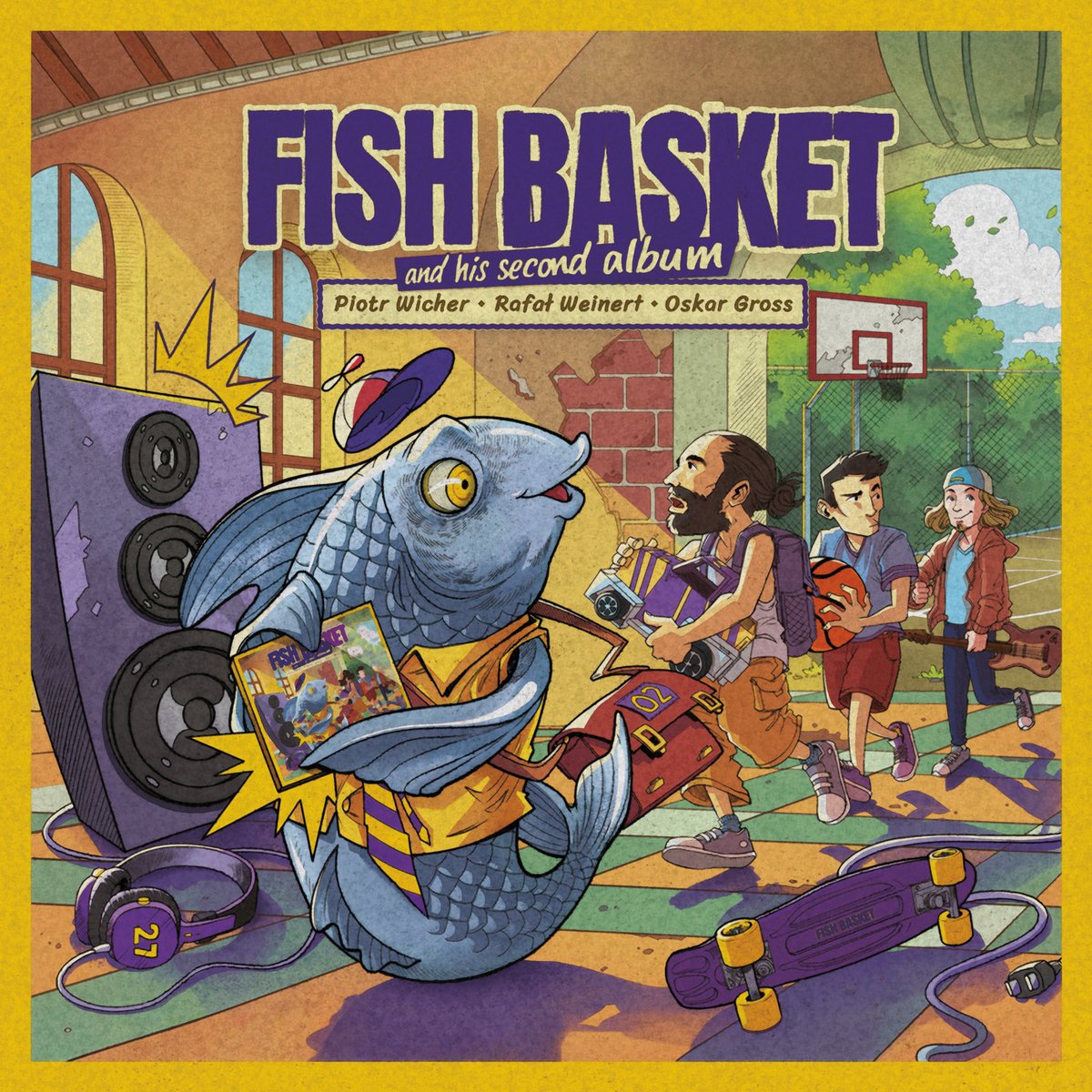
Before Fish Basket, I was already heading down the psychedelic-rock road, but their (his?) second album imbued a love of ‘journey’ music that I have simply not shaken in the last eleven months. Three hundred recorded plays of their discography later, not to mention the vinyl flips, it’s easy to say that Fish Basket and his second album is firmly planted atop my AOTY list.
The Polish trio blend psych, progressive, experimental, and post-rock to create tracks that are like the musical equivalent of a sprint track. Rarely returning to motifs or riffs, they switch up the mood so often that you’re frequently left questioning what you’re listening to if you drift off. Fish Basket are also the champions of masterfully topping off intense and moody moments with gorgeous, relaxing riffs that send you to the upper echelons of the sky. Tracks that take weight off your mind and shoulders are a common feature of the album, giving it infinite replayability.
“NA-HU-HA-NE”, the album opener, is the perfect introduction to the band and their sound. What first struck me about the track all that time ago was the gorgeous tones coming from Piotr Wicher’s guitar. Joined shortly by bass and percussion, you then hear the overall quality of the mix. For a small band in Poland, this record sounds incredible, with oodles of room on the soundstage. And this song and record need that space, despite having only three members, Fish Basket make a hell of a lot of noise, and the layers that are constantly introduced need that room to seed their riffs before taking over direction of the track. The raucous climax in the middle of the track, followed by the stunning contrasting mellow section, is one of my favourite musical moments of the year.
After this bombastic track, “Stray In Chill” certainly winds down the intensity a lot to begin, but also lets them showcase more of the psychedelic and moodier aspects of their music. This track is the perfect encapsulation of winter turning slowly into spring, the track starting with downtrodden riffs paired off against twinkling synths that feel like snowflakes falling. For the first four minutes, this whimsical track meanders along, before suddenly descending into an intense percussion and effects-laden section that really stifles the air. Breaking out of the other side of this storm, you are met with warbling guitars playing one of the sweetest riffs of the year. I could bathe in this section for eternity.
Fish Basket arguably have some of the most striking and fun artwork and merch in the game. Goofy yet brilliantly drawn cartoons adorn their record; their first album cover is literally a giant fish dunking a basketball. The vinyl comes with a brilliantly drawn artwork book that explains the theme of the song in story form, while letting your imagination run wild nonetheless. And this fun extends to their music videos, too. “Cartboard Racer” is an amazing high-intensity song on its own, but paired with its fantastic music video, you can see a band that fucking loves what they are doing. High-octane riffs meet that gorgeous production mentioned earlier, in a track that really stands out on the album.
The only thing I’d have changed with this record is to make it longer and maybe have a more grandiose closer, but the stage is now set for Fish Basket to unleash a litany of brilliant records with the foundations they’ve built. This is music for every occasion, be it working, gaming, or travelling. The lack of repeating motifs, the constant shifting of moods, it’s enthralling and well worth a late consideration for album of the year lists.
Dominik Böhmer
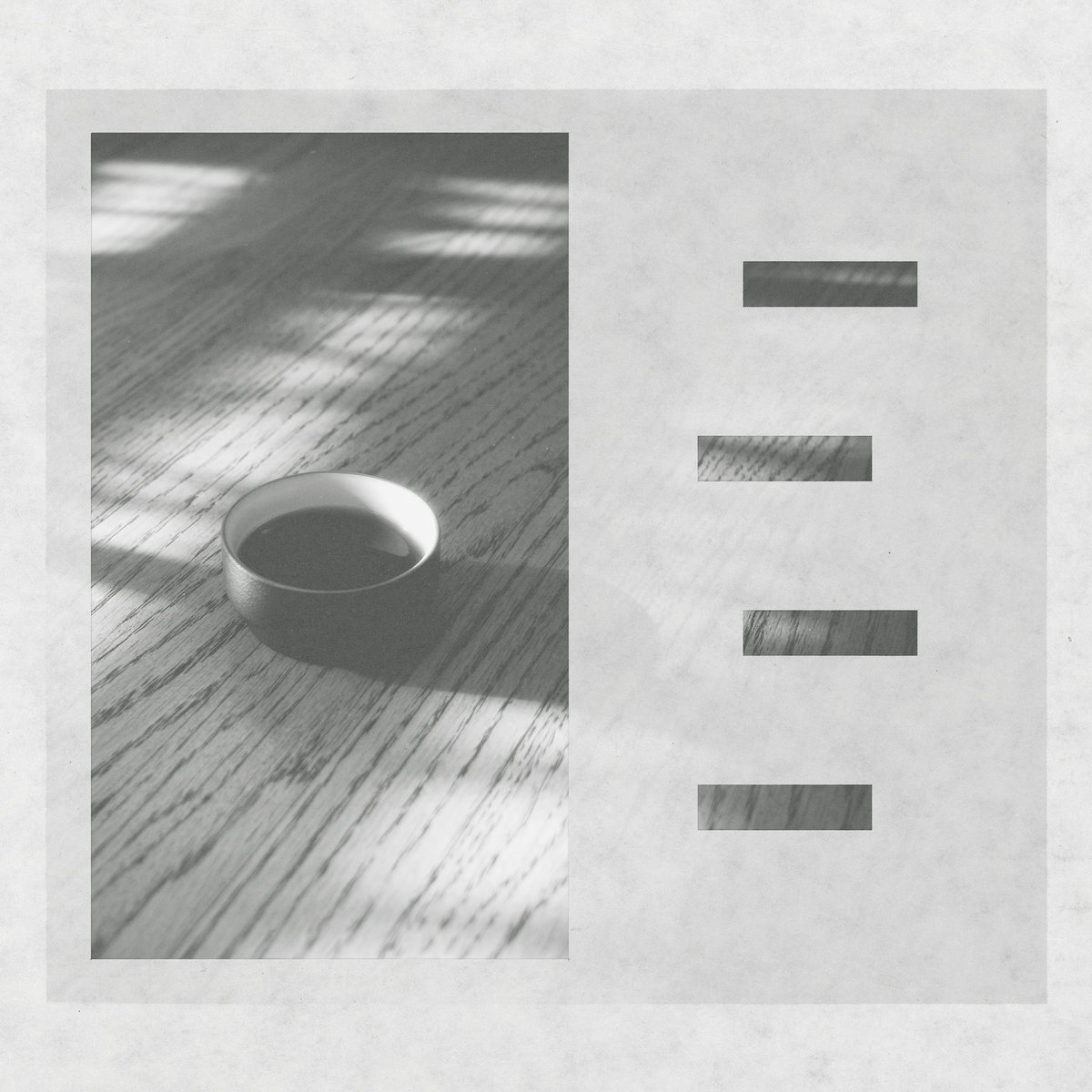
In Japan, the tea ceremony (sadō, ‘the tea way’) is a key representation of the long-standing integration of Tao, Shinto, and Zen principles into aspects of the country’s culture. Under the influence of key figures such as Sen no Rikyū, the father of the tea ceremony in its current form, the act of preparing and consuming tea has become a symbol of entire philosophical and religious trains of thought, including the famous ‘wabi-sabi’ principle. Using interview snippets from 1977, Leon Todd Johnson (aka Airport People) has created an artistic interpretation of this fascinating ritual.
Focusing its four short tracks around the four key principles of the tea ceremony, Johnson has chosen a meditative tone to guide the listener through this experiment in unifying tones and purpose. Windham Hills collectors will find their interests mirrored in the new age-inspired atmosphere, which is centered around a surprisingly jazz-inflected piano performance. Think of it as a jazz counterpart to Satoshi Ashikawa’s seminal Still Way, if you will.
Wa: ‘Harmony‘
Kei: ‘Respect‘
Sei: ‘Purity’
Jaku: ‘Tranquility’
These four elements are explained by a woman named Mine Somi Kubose in an interview recorded at the Buddhist temple of Chicago by Chungmoo Choi in 1977. Her speech is indelibly woven into the fabric of sound spun by Johnson to express the beauty and discipline inherent to this cherished ritual. These performances are bolstered by hand-picked field recordings to match the atmosphere of wa kei sei jaku. Together, these sounds reflect the attitudes and actions needed for a faithful tea ceremony.
Interestingly, Johnson chose to present his latest records in two different forms: one with and one without the interview snippets. I personally prefer the version that includes the spoken word, as Kubose’s speech patterns and expressions do color in the album’s intentions a bit further than the music alone does; however, it is my belief that the artist would not make a decision that undermines his own creation, so I trust that Johnson had good reason to choose this dual style of presentation.
Should you find yourself in dire need of a blank canvas, a moment to just sit and breathe, you might want to give wa kei sei jaku a spin. As Ram Dass famously said, ‘open the heart, quiet the mind’; I believe that Leon Todd Johnson and his music will help you achieve both.