For decades the Iberian Peninsula has been a hotbed of D.I.Y music venues, political activism, and independent record labels. The fact is, the region has been largely ignored by mainstream music taste makers and whether you were a young Andalusian trying to make a name for yourself in hip-hop or a small-time political-punk band from Lisbon, getting a show booked, demo released, or merch distributed was on you.
In today’s day and age it’s much easier for bands to get their material listened to further afield than their local venue, but it hasn’t changed the make-up of a lot of the artists and bands. Years of corrupt government officials and socio-economic negligence created disillusionment and distrust; it’s no longer a need to D.I.Y, it’s a requirement built into their DNA.
Seemingly, none are more do-it-yourself centric than the hardcore punk scenes in these regions. Every interview I seem to read, every shout out given, seems to center on the bands who originally built up the scene and helped to define the regional sound. Sonic foundations that allow a stable platform for new blood.
New blood, not unlike VÍBORA, a post-hardcore band from Vitoria-Gasteiz in the Basque Country. The band, formed in 2018, is made up of Goio Saenz (guitars, vocals), Xabi Arratibel (guitars, backing vocals), Fabio Oñate (drums) and Jorge González (bass). The group have been working hard since their formation, playing relentlessly emotive post-hardcore fused with the unrestrained flavour of screamo, putting on live shows that, from the video evidence, look like writhing sweat pits of mayhem, full of moshing and stage dives, sometimes from members of the band themselves in mid-song.
Since the release of their debut full length album, Zaldi Beltza, in 2023, the group have been touring but they are now gearing up for the release of their sophomore album, Egin ez dugun Guztia (in English, ‘Everything we haven’t done’), on February 20, 2026. On first listen the new album feels like a shift in the band’s sound. There are shining moments of post-rock respite amidst the dense metallic hardcore fog. The group harnesses shoegaze-y passages that intertwine with feral screamo. Listening back though, to Zaldi Beltza, I notice that these are moments that VÍBORA always had in their music, but with Egin ez dugun Guztia the band brings them into focus, like a photographer trying to direct our attention to a specific subject or emotion. Talking to the band via email, they gave me the lowdown on the new elements they have incorporated and their influences:
‘We’re always looking for new sounds and new influences. We also have a bit of a problem not repeating structures or songs in the same record. Since the record began to take shape we had the feeling it was more metal in the way it has probably less punk or less hardcore in it. We love bands like Viva Belgrado, La Dispute or Nothing; but we also love Nails, Converge and Harm’s Way. So sometimes we just want to do everything we like. Halfway through the writing of the record we may have the feeling we’re not writing enough breakdowns and then the next song will be pure violence. Then someone may have an idea of a really melodic song and we’ll go for it. I’d say sometimes these contrasts are intentional but are something we naturally like doing.
‘Maybe there are a couple of songs on the record that feel a bit different from what we’ve made before. “Fotos” was a bit of a risk actually. We’ve called it the shoegaze song from the record since the beginning hahah. We wanted to make a slower song and that’s what happened. “Fotos” or “Egin Ez Dugun Guztia”. They feel like full songs to us, something different but not completely moving away from our previous sound.’
While VÍBORA haven’t fundamentally changed the genre they focus on, the sound of the new record is one that incorporates and pulls from a host of influences. However, the result is no less caustic. A track like “Sentir Nostalgia de Cosas que Quizá Nunca Pasaron” is tinged with more metallic skramz, verging on the brink of delving into blackened territory, particularly with an agonizing and constricted vocal delivery set to crusty riffing, before veering off-course into a slow, strummed rock section. Switching between wild, bouncing-off-the-wall hardcore punk to shoegazey moments is something that the band has conjured into an art form. Nothing feels out of place Egin ez dugun Guztia, there is no moment that lifts its head feels out of place.
Conceptually, as well, this new album differs from VÍBORA’s previous release. The band are noticeably in a different place even just 2 years on, having grown together as artists and through a diet of touring relentlessly around the EU and US. This new album is a distinct result of the path the group has forged together and the effect this has had on their personal lives. While the album is written in a combination of Spanish and Euskara, you can’t deny that there is an emotional weight present, especially on tracks like “6:36”, a song that the band were happy to further explain:
‘”6:36″ talks about a long-distance relationship. It’s a love story with someone who is far away, about taking trains and planes and doing the impossible to see each other. 6 hours 36 minutes is the time between the homes of the two people in the relationship.
‘Zaldi Beltza was written entirely during a period of depression, and it’s noticeable that I couldn’t talk about anything else even though it wasn’t intentional. This album was written in a different period, one where we’ve played a lot. We enjoy nostalgia and hurting ourselves for no reason, but above all, it’s a nod to the things we’ve had to put aside these past two years because of being in a band.’
Touring over the years seems to have had a big impact on the group. Taking them to places they had never been; introducing them to scenes that mirror their own, yet are thousands of kilometers away. The act of traveling itself introduces ideas and inspires, with the band seemingly incorporating their previous tours into the ambience of this new record, saying, ‘We had the idea of using audio clips of ambient sounds, such as the birds used between “Zerbait Ona Idatzi” and “Fotos”.’ The group also uses a clip from a pro-Palestine protest of a strong female voice calling out ‘we are on the right side of history’ before breaking into album closer, “Egin Ez Dugun Guztia”. When asked about the clip in particular the band said, ‘Xabi remembered he recorded a pro-Palestine strike in Chicago when we played there a couple of years ago. Since we discussed this and was (again) something taken on tour we thought it’d be nice to include it. Also because we stand with Palestine and fuck Israel.’
It has even gone as far as to affect the choice of the album artwork. As a music fan, sometimes we hold little regard for album covers, but there is something that drew my eye to the cover of the Egin ez dugun Guztia, which features a towering mountain covered in snow. While the foreground is overgrown with evergreen trees the top of the mountain is barren, perhaps suggesting a loneliness that is ever present in us all, not just in the lives of ever touring band members. VÍBORA gave me a bit more context and reasoning behind this particular picture being selected for the artwork.
‘This is the first cover in the band’s discography (except from the split with Crossed) where the cover is not a framed picture or figure. The record talks a lot about the band and what we’ve done in the last years and what or has meant for us personally; and is the record we’ve more felt like a band so it made sense to move away from the previous artworks.
‘On Zaldi Beltza, the square was a reverse frame which symbolized the emptiness, depression and the void that the lyrics talked about. Here, the squares are windows to our band and to us. The inside of the gatefold cover it’s a kind-of cloudy thing that’d be the abstract graphic description of what a band could be. So what we see through these windows is this imaginary thing of what’s a band.
‘The picture in the cover is a photo Jorge took, on tour, of some mountains in Germany. This is also another step taking distance from the previous cover which was an urban picture; meaning it’s something different from the previous releases. And since the picture was taken on tour, it made perfect sense to use it, emphasizing the concept of the band.’
For a band that is so introspective and conceptually charged it’s no surprise that a lot of their music is well thought out and tied into the intrinsic beliefs of their local scene and musical forefathers. The political past of the Basque Country is turbulent, rife with oppression of its people, language and culture. I don’t want to do a disservice to the Basque people and their shared history so I recommend you take the time to read up on it yourself. The group, however, says:
‘80s and 90s here were difficult years and all the bands from this period we listened to when we were younger talked about political oppression, Basque identity, internationalism and class war. We do not play the same music they did but we grew up listening to them. The impact of these bands and the social movement from these years is still very present in the Basque society, and even more in our environment and scene.’
By the time this album is released, we will only be a small fraction of the way into 2026, but my, oh, my does it already set the standard high for post-hardcore and screamo. VÍBORA’s second full length, Egin ez dugun Guztia, will be out on Bandcamp and some other streaming services on February 20, 2026. Except it won’t be available on Spotify because, in my own words, fuck Spotify. In the band’s words though:
‘While we were recording the album a friend invited us to join the movement of musicians with Palestine of the Basque Country which was just beginning. He invited us to remove our discography from Spotify due to the investments in AI weapons for Israel, ICE advertising and the rest of the shameful news that came earlier this year. We discussed this one night and we decided we’d join the movement.’
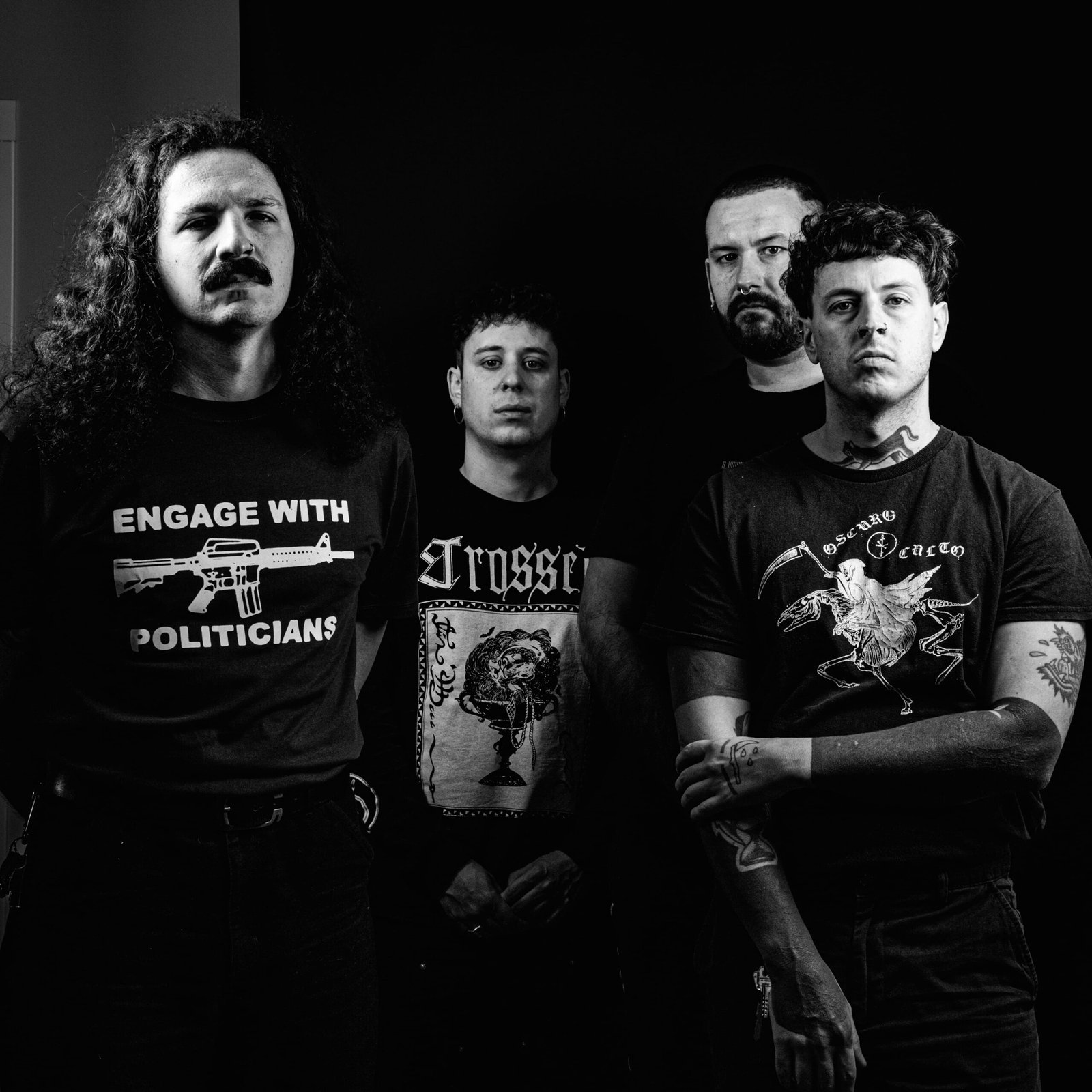
VÍBORA is:
Goio Saenz – guitars, vocals
Xabi Arratibel – guitars, backing vocals
Fabio Oñate – drums
Jorge González – bass
So there you go! Listen to the full album when it releases through Zegema Beach Records and BCORE. You can pre-order it through their Bandcamp now though! if you enjoy it show some love to the band on their Instagram.