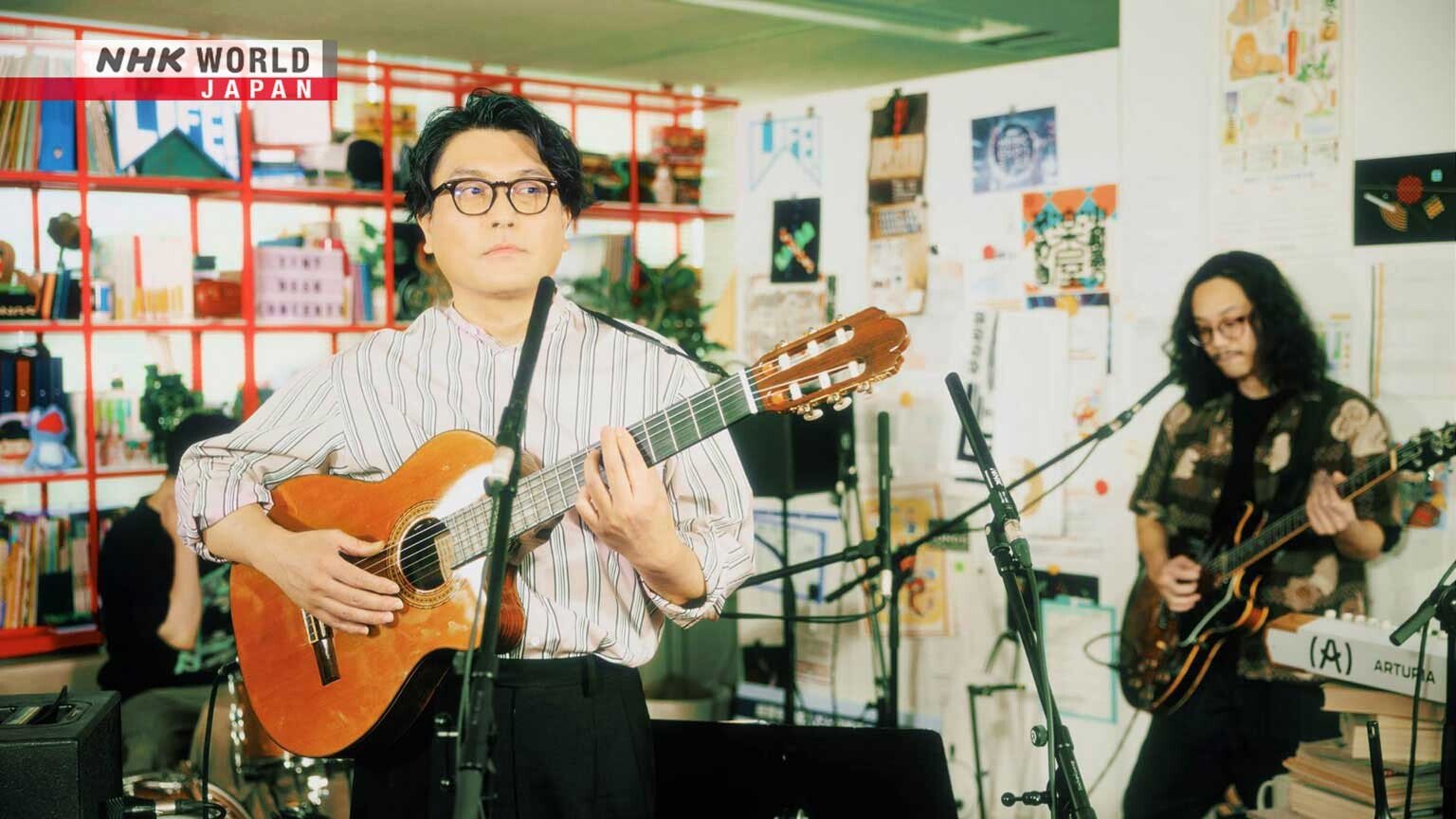
City pop mainstays KIRINJI prove that they’ve been at this for a long time for a reason with their 17th studio album.
Release date: January 9, 2026 | syncokin | Streaming | Instagram
Every summer, I enter a semi-fugue state and am only capable of listening to city pop for a few weeks before I get it out of my system. Something about the sunny weather and catchy jazz fusion-y guitars just work well together in my brain – I picture myself lounging on some sort of space beach, or floating in a pool in a retrofuturist city. It’s a nice time and a break from my other seasonal habits, which as of January 2026 include a lot of depressing blackgaze. So you can imagine my pleasant surprise that a KIRINJI album dropped out of nowhere in the midst of an unusually bleak winter, bringing some city pop goodness to the shorter days.
City pop, for those unfamiliar, is a genre of pop music popularized in Japan in the ’80s as an attempt to bring a more Western influence to the scene. Many of these hits, like Mariya Takeuchi‘s “Plastic Love” and “Midnight Pretenders” by Tomoko Aran, made their way over to the States eventually, but the style faded in popularity after the initial surge. During the late 2010s, and now, most city pop is known to younger people via future funk artists like Macross 82-99 and Vantage. This route was likely my entryway into the genre, courtesy of copyright-gray mega-playlist videos like this one below, or from TWRP‘s Return to Wherever, a career-defining album that introduced me to the general city pop sensibility.
KIRINJI, however, has been in the game for what seems like eternity, with their first album debuting in 1998. You know you’re really in for a hell of a discography when Wikipedia breaks out the artist’s career into three different iterations, reflecting, in KIRINJI‘s case, many various line-up changes, ultimately resulting in the current incarnation being essentially a solo project of singer Takaki Horigome. I actually had become familiar with the band from their 2019 album cherish, a few tracks from which feature heavily on the aforementioned fugue playlists. TOWN BEAT is the band’s (maybe? Not quite sure how to count these) 17th studio album, and it is very clear why they’ve had such a prolific and long-lasting career even upon first listen.
Here’s what you can expect from TOWN BEAT, in a lazy list format because it’s very cold outside and I’m going insane from snowstorm-induced isolation: carefree jazz guitars, smooth as silk vocals, some fun cinematic orchestration and horns, the occasional anime opening credits burst of energy, and generally, a warm sense of optimism. I need that currently. TOWN BEAT is genuinely quite magical to behold; familiar in that it sounds like many other contemporary city pop works, but new enough that you don’t lose interest over the 35-minute runtime. It’s both sunny and a little moody. It is gorgeously produced and, on a technical level, performed pretty much perfectly. There is simply a ton to like about this.
Like cherish, the standout tracks on TOWN BEAT are the collaborations. Both songs on the album that aren’t solos feature Tomomi Oda, whose unbelievably smooth voice adds an almost surreal layer to the duets, blending with Horigome’s so effortlessly that it almost sounds manufactured. “LEMONADE” in particular is a treat; catchy, upbeat, but admirably simplistic in its sing-along, single-word chorus. Album opener “unseen dancer” sets the overall tone well, with a swung snare beat and a bouncy bassline, giving a quick glimpse into the rather chipper tracklist to come.
The more downtempo tracks like “The View from Our Balcony” also deliver. I’ve always enjoyed the internal push-pull of the jazzy, faster-paced city pop tracks vs. the more relaxed, occasionally melancholy ones, and TOWN BEAT does a great job of providing both. There’s something a bit wistful about “The View from Our Balcony”, where the loosely translated lyrics detail a romantic night wishing the moment would last forever, bringing the overall cheery tone of the album down to a more reflective level.
A very real question – is this album pretty darn similar to other modern KIRINJI works? Well, yes. That’s not to say there’s been no artistic growth or general sound change over the course of the group’s extensive career, but the last handful of records do have a very analogous sound. I don’t really mind the ‘more of the same’ approach, though, as city pop itself is a genre that often stays tight within its own confines and has clear sonic identifiers. It is clear that KIRINJI and Horigome have a laser-focused idea about what they want their music to be, and I just so happen to enjoy that idea immensely.
I’ll see you guys at the pool?