Julianna Barwick and Mary Lattimore employ historic instruments connecting the past and present, earth and space, on the sublime Tragic Magic.
Release date: January 16, 2026 | InFiné | Bandcamp | Julianna Barwick Facebook | Instagram | Mary Lattimore Facebook | Instagram
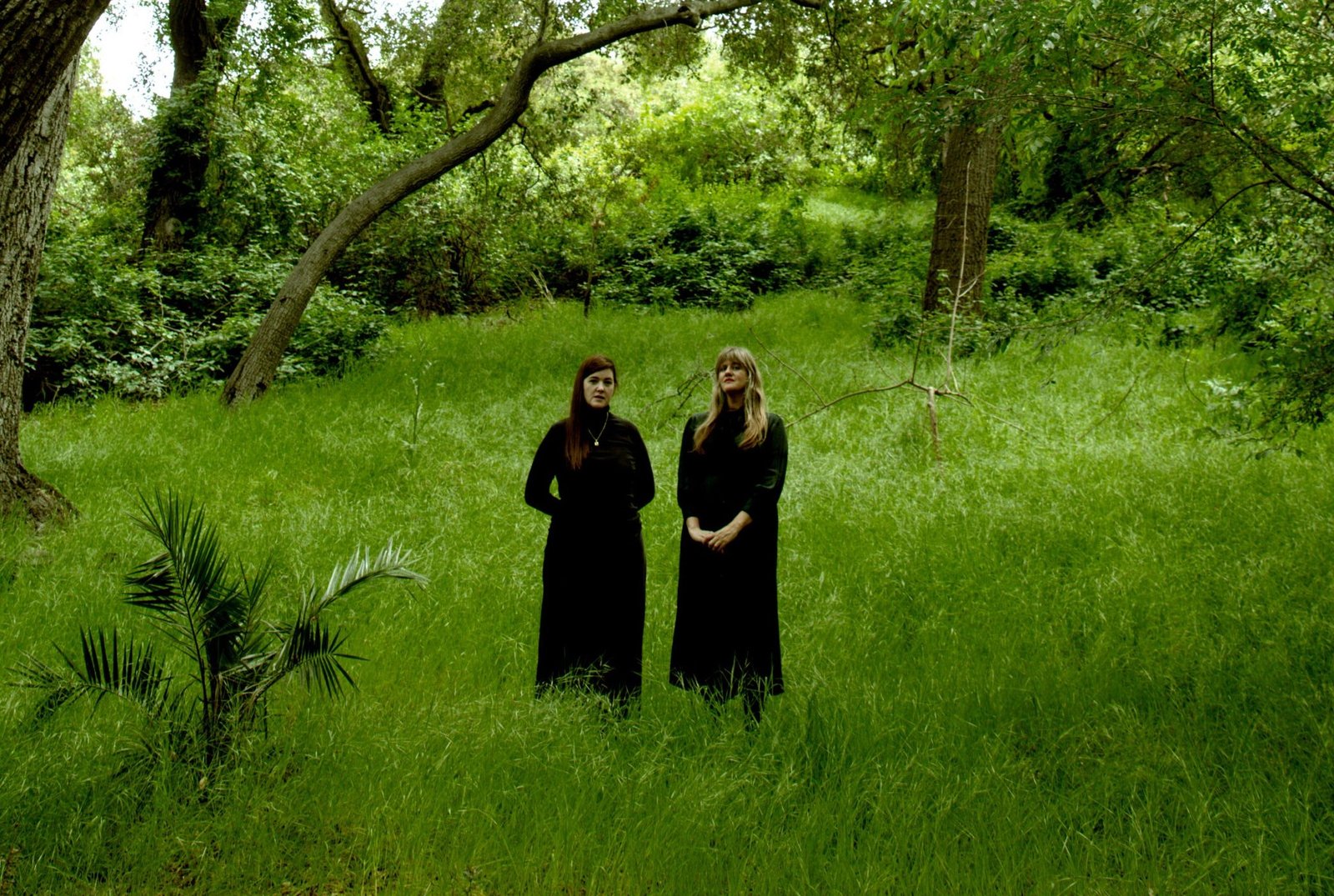
Much like two shooting stars colliding for a second time, Julianna Barwick and Mary Lattimore unite yet again, this time for a full-fledged effort that the world does not deserve. On Tragic Magic, they showcase everything that they’ve been highly revered for across their musical careers thus far. The end result is something that connects us back to our roots as living, sentient beings and that of the great beyond. Much like this album was a collaborative effort, we felt it appropriate to make this album review one too. Please join us as we open our third eye.
JP: Hey Broc, it’s finally time to talk some good music. I’ve been counting the minutes, well not really but kind of…
Broc: Yo! Work is finally done, and it’s my first time doing one of these discussion reviews. I wanted to kick things off by saying that the way this album came together is awesome in and of itself. Mary Lattimore and Julianna Barwick worked on Tragic Magic in the Philharmonie de Paris, accessing the collection of instruments at Musée de la Musique. I think that those old synthesizers and antique harps really were a major part of shaping this album. When I listen to these tracks I hear the reverence for history in each measure.
JP: You’re getting straight into it, I see! I didn’t look into the making of the album until I had already deeply familiarized myself with all the songs. Now, going back and learning a little bit more about how it was conceived truly does add another layer of wonder and mystique when I go back and listen again, and every time afterwards. The implementation of the synthesizers and harps, as you said, really is masterfully done and makes Tragic Magic simultaneously feel like a lost relic of the past but also a cosmic glimpse into the future.
Broc: I can hear that, especially on “Rachel’s Song”, the duo’s take on Vangelis‘ track of the same name from the Blade Runner soundtrack. Admittedly, I like Barwick and Lattimore’s version more. The harp, and the space of the instruments in general feels otherworldly, as if the individual sounds were emitted by various elysian bodies floating around our heads. It translates to the song having a greater weight and impact.
Though, “Stardust” does sound absolutely cosmic.
JP: “Rachel’s Song” is a fantastic track surrounded by fantastic tracks indeed. I wasn’t aware of that connection to Blade Runner, it seems too uncanny to be just coincidence. That song in particular is the beginning of my favorite 3-song stretch on the whole album. On first listen, it made me feel like a spaghetti Western set in space or something. The main melody captured in the vocalizations has that vibe, which is only then reinforced heavily with the whistling that carries on that same melody later in the track. All of this of course with the twinkling harp making it heavenly as can be, as if Lattimore was heaven-sent herself (Barwick as well).
Anyways, before we get too ahead of ourselves, I’d like to know more about how you came to discover Barwick and Lattimore’s work; I always find it interesting to hear about others music journeys when it comes to niche things like this. We can talk about “Stardust” in a second, as that is easily my favorite track and further discussion on that cannot be skipped.
Broc: For sure. Before this project I was unfamiliar with Lattimore, though I sampled a few tracks once Tragic Magic hit my radar. Julianna Barwick, however, came to my attention with her album The Magic Place, one of my favorite albums from 2011. I like that album so much it made my The Noise That Made Us feature as a representation of my appreciation for ambient and experimental composition. I have been a fan of Barwick ever since.
How about you?
JP: You’re a Barwick (and ambient/experimental music) veteran then, I see. Over the past few years, I’ve been gravitating more towards ambient and modern classical and the likes. The Magic Place lives up to its name indeed, so I wholeheartedly understand and appreciate your passion for that album. I feel the same way, despite being more of a ‘recent’ appreciator compared to yourself.
As for me, long story short, but I was on an endless exploration for a super specific type of ambient sound and after 7 years, I finally found what I was looking for and that was through Vines; I talk about that search more in detail in my review for that Vines album from last year. Anyways, in that search, I stumbled upon Julianna Barwick, and while her music didn’t exactly fit that highly specific need of mine (it was close), it did scratch a different yet adjacent itch that I find myself coming back to regularly.
It was through Barwick that I found Mary Lattimore, as Lattimore featured on “Oh, Memory” from Healing Is A Miracle. So, although we didn’t know it at the time, that song was a nod to a future collaboration that we have sitting before us today. Once I saw this album get announced, I was incredibly excited to see them back together in arms again.
Broc: Yeah, her work is always worth a revisit, and I’m excited to dive into Lattimore’s back catalog. Together, they seem like a perfect match. The addition of such a masterful harpist really elevates Barwick’s angelic vocals and heavy appreciation for synth sound design. I love the reverbed polyphony on “Stardust”. It sounds like something Carl Sagan would have used as an introduction to talking about the cosmos. Lattimore echoes this, saying about the synth lines, ‘I just need to put millions of stars over it, you know? Millions of glittering stars.‘ Then the drum machine kicks in with that motorik beat and the vocoder vocals swell into a beautiful round of harmonies. Unreal.
JP: Now that you’re rightfully back on “Stardust”, I concur 100% with what you said. That last third of the track is transcendental with how the gorgeously serene vocals slowly creep in. I look forward to that moment most on the entire record because it is so immensely powerful and spiritual. I love your reference to Carl Sagan, because not only is he a legend, but this track in particular is the definitive, unofficial ‘song of the cosmos’, being musical stardust after all. I never thought of this song in that manner, so I appreciate you bringing that up.
I wasn’t aware of that Lattimore quote about this song in particular, and now that we discuss it (and Carl Sagan), all the pieces are falling into place and I’m becoming more blown away than I already was.
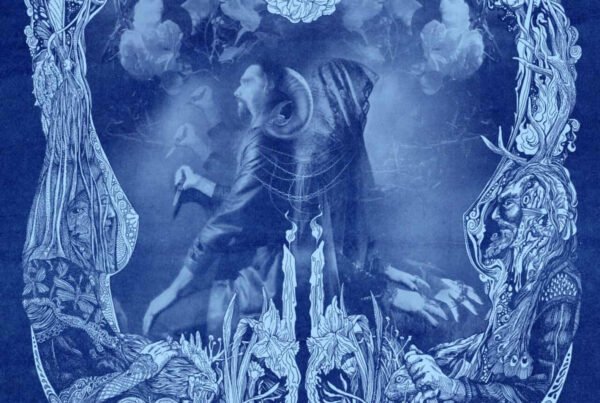
‘Millions of glittering stars’ is the perfect way to sum up the track and album as a whole. Based on the album artwork, I was for some reason expecting entirely forest-y, witch-y vibes, but they completely blindsided me with a voyage amongst the stars.
Broc: Now that you mention it, I think the album offers both. Witches are very in tune with nature, and the outer space is indeed a part of nature. We are all made of star stuff, right? I feel like the first half of the album feels a little more grounded in the pastoral and forest-y vibes. The opening track, “Perpetual Adoration”, feels like a lullaby that welcomes you in, while the harp riff on “The Four Singing Princesses” feels like the soundtrack to being welcomed into an inn in a medieval RPG; warm fires and mead await you within these sonic walls, weary traveler.
Songs like these, as well as Barwick’s layering of vocals like a madrigal, are what give me the impression of nods to historical music, but I am no expert in that field. They just feel like modern renditions of ancient worship music.
JP: I see what you mean and can fully get behind that as I now think about it more; space is a different type of nature after all, is it not? Anyways, there definitely is this gradient or progression from ‘earthy’ tones and atmospheres that evolves into the seemingly infinite and blissful exploration into the musical cosmos. The way the tracklist is arranged makes it feel like you’re zoomed in on the ‘small-scale’ beauty of the nature on Earth and then slowly zoom out to the far reaches of space. I suppose I hyperfixate on the space aspect of the music here because the last few songs in succession are especially addictive, and I have a thing for cosmic-related stuff in general.
Broc: Agreed, this album is remarkably sequenced. I accidentally listened to it on shuffle the other day, and it threw the whole thing off. Each song is so captivating, though, that the experience wasn’t detrimental, just different. Looking at the album from the ground-to-space view puts a new perspective on “Haze With No Haze” (which contends with “Melted Moon” as my favorite track), because it starts with the acoustic harp and ends with those swelling synths that transport you Star Trek-style into another environment entirely. It is the vocal melody, as it complements the harp, on “Haze With No Haze” that really does it for me, though, arguably the biggest ear worm on the album.
JP: Accidentally shuffling the album sounds like quite the disorienting type of thing to do, especially an album of this style. I applaud your commitment to finish it through like that. Being the full album purist that I am, I would’ve immediately removed the shuffle the instant my brain processed that another track and not “Perpetual Adoration” was starting it off.
Being smack-dab in the middle of the track list, you could say that “Haze With No Haze” represents breaking through the Earth’s atmosphere into the infinite beyond. It really does act as a sublime portal to the beyond in the way the song shifts sonically as you mention. I’m glad I finally get to talk to someone about this album, because now I see it in an entirely different light, only elevating my experience with it as a whole (and hopefully the same goes for you).
Broc: I think we both shifted each other’s perspectives! “Haze With No Haze” feels especially handled with reverence, as they wrote it in response to California’s wildfires. Before we wrap this up, though, I want to talk about “Melted Moon”, because the way Lattimore bangs on the harp for percussion is immediately hypnotic while her playing once again reminds me of something medieval, like a hurdy-gurdy could be on this track and make sense. Barwick’s synths add texture in the background for the first half of the song until her sweetly melancholic vocals kick in and the song begins to build to greater heights. It is almost like a microcosm of the entire album experience across its 8 minutes. This magic may be tragic, but it is still absolutely magical.
JP: “Melted Moon” is a fabulous closing track indeed, as it indeed distills the essence of the whole record into just 8 minutes that just fly by. I just wish it wasn’t released as the single, being the closing track, but I do get that it represents the album as a whole and serves as a perfect lead single.
I can already anticipate this being high on my year end list, because of the circumstances around this album, its concepts, and also the unique execution and all-around breathtaking performances from all involved. Nothing will be able to compare to it, honestly. Music continues to surprise me, and it warms my heart that it still can do that after all this time.
Broc: It really is a stunner of an album to kick off 2026, and all of the reviews that will follow will have to contend with this highwater mark. Tragic Magic feels comfortable while also feeling majestic. Maybe I am too accustomed to living in tragedy, but the warmth, beauty, and grace of this album will undoubtedly help me carry on throughout this new year and beyond. I would rank it up with The Magic Place, at least as far as how much I am immediately loving it, though I am sure it will stand the test of time for me, as well.
Although deserving of infinitely more listeners than they have (the pitfall of making genuinely fantastic music), there is only one Julianna Barwick and only one Mary Lattimore, and their individual works stand alone. By some (healing) miracle, in which the probability of it happening feels the same as two parallel lines colliding, these two musical masterminds have come together to create something that is far greater than the sum of their parts. Tragic Magic is balm for the soul, and with the way this year has kicked off already, we’re going to need more of it. A whole lot more.