

The new album by jazz drummer/composer Jeremy Cunningham is both artistically beautiful and emotionally powerful.
Release date: October 2, 2026 | Northern Spy | Bandcamp | Instagram
Most albums form their own little distinct realities. Depending on the artists’ style, personal character, and intentions, these realities can be fantastical, philosophical, satirical, political, surreal, dreamy, experimental, or ‘simply’ entertaining. We may also agree that most good albums take us with them into these realities, fully engaging the listeners with the worlds they encapsulate. Nevertheless, for Passing Fires, jazz drummer and composer Jeremy Cunningham created a musical reality based entirely on real-life emotions; and how can you not drop your defences when this album is dedicated to his late father – ‘the greatest dad of all time’ – and is kicked off with his child’s voice yelling ‘Oh, I don’t want to go to school‘ on top of a mellow piano part?
No defences then. Let’s join this wild ride of love, loss, memories, and nostalgia. Let the emotions speak!
As with his previous album, 2020’s The Weather Up There (which featured a similarly heavy theme), Jeremy Cunningham gathers around him a spectacular cast of musicians: Passing Fires features performances by artists like Jeff Parker, Makaya McCraven, Josh Johnson, Paul Bryan, Greg Uhlmann, Dustin Laurenzi, Sen Morimoto, and more, but what’s more impressive is the fact that these musicians don’t only perform; they contribute to composing, recording, producing, and mastering, making the whole experience feel like a work delivered by a circle of friends, the product of a collective mind locked in the ideas and themes of the album, like only true friends can do. This sense of intimacy is carried in the recordings themselves, with studio performances being combined with lo-fi piano sketches and family-room recordings.
With this in mind, it comes as no surprise that the aforementioned teamwork results in a variety of sounds and styles. Passing Fires doesn’t seem to care a lot whether it’s jazz or not; it remains mostly focused on its melodic backbone, its layered flow, and the emotions conveyed throughout. Surprisingly, this may be an album by a drummer, but it features very few drum solos. To be exact, I only noticed two: the very expressive final part of “Union Pier”, and the free-flowing, muffled, improv part of “You’re Still Here”. For the most part, the compositions are built around the interaction between saxophone and guitar, with the solid rhythmic foundation as the pillar of the music and with deep dives into psychedelia adding further flavours.
In some cases, the album remains upbeat and colourful: “Union Pier” has a nu-jazz feel not far from the wonderful SML project, and “To the Sky” is pretty much a summery bossa nova anthem. Funk elements are clearly present in pieces like “The Kids Are Asking” and “Galloway Street”, and fusion is the dominant force behind the amazing “Kobi Shobi”, where psychedelic guitars interplay with the vibraphone around rhythmic twists and mystical harmonies. There’s a lot to discover in these twelve tracks if you want to keep your ears and mind busy. But if I want to be honest, the point is elsewhere…
…it is specifically in these moments when nostalgia and love govern the music in a heartfelt manner. The soulful psychedelia and the beautiful vocals of “Some Days” and “Somewhere To Be” are like a comforting whisper to the weary soul (great job by Morimoto), as the futuristic noir woven by the Rhodes piano of Will Miller on “Windows” is pure magic. Above all is the melancholic ballad “Beyond the Veil” – where the similarities to Jeff Parker’s work cannot be hidden – and the piano/cello dialogue in the title track, where a basic conceptual idea of the album is presented; the idea of continuity from generation to generation, the eternal dance between death and birth, the weight of our unseen bonds.
There is no doubt that, artistically speaking, Passing Fires is a beautiful album. The performances are great, the changes in sounds and moods are always interesting, the production is excellent. But looking beyond all these things, its true power lies in its ability to evoke feelings and dress them musically. To make us remember our childhood and our long gone heroes, revisit dreams forgotten, and dreams yet to be achieved. Some of us are fortunate enough to have living parents, or children, or both: this album can make you look at your own reality and rethink your human connections. So, beyond its undoubted artistic value, Passing Fires may make you want to call your parents. How many albums can have such an effect?
Trying to define jazz music, Louis Armstrong once said that ‘What we play is life.’ Well, Passing Fires is a true jazz album.
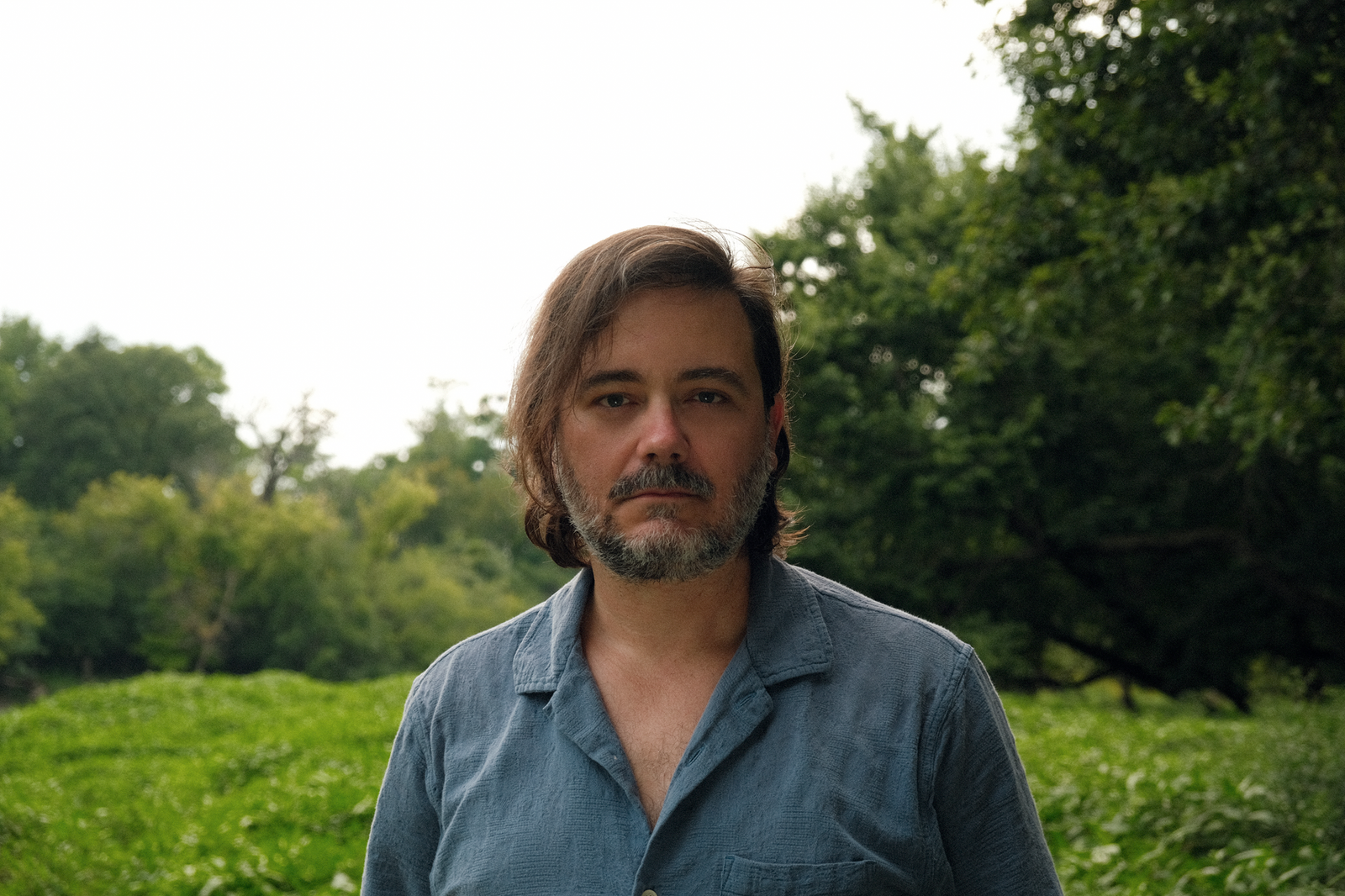
Artist photo by Shannon Marks