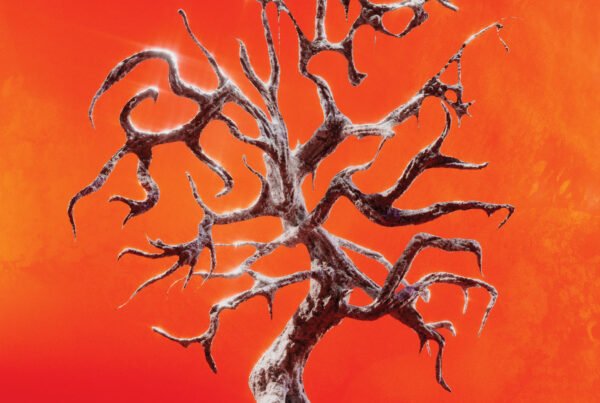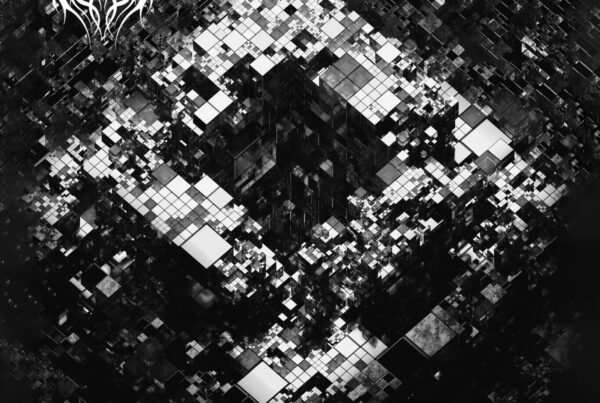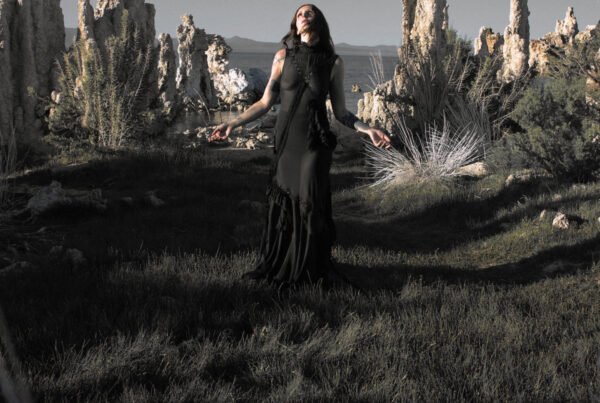


Raw, depressive, aggressive, and gloomy, Këkht Aräkh returns on Morning Star, their most realized and detailed album of lo-fi black metal, yet.
Release date: March 27, 2026 | Sacred Bones Records | Facebook | Instagram | Bandcamp
Black metal remains a mysterious genre. Since the second wave of black metal in the ’90s, the style has shifted and draped its cowl across many other genres of music like a funeral fog creeping under a blazing northern sky heralding black wizards to cast their spells on anything that suits them in the heart of winter. Despite the many experimentations, there remains the trve cvlt of fans who crave the rawest black metal. Anything else betrays the spirit of the angsty Norwegian edgelords who gave birth to the second wave with a baptism of burning churches, murder, and often bigotry. I don’t condone any of these crimes, and I am far from trve to the musical aesthetics of that era, but my first forays into the genre were Darkthrone, Mayhem, and Emperor. Their earliest works were shrouded in a low fidelity haze that nearly flattened their aggression, the blast beats, the icy tremolo guitars, and demonic vocals into something more mysterious, almost ambient.
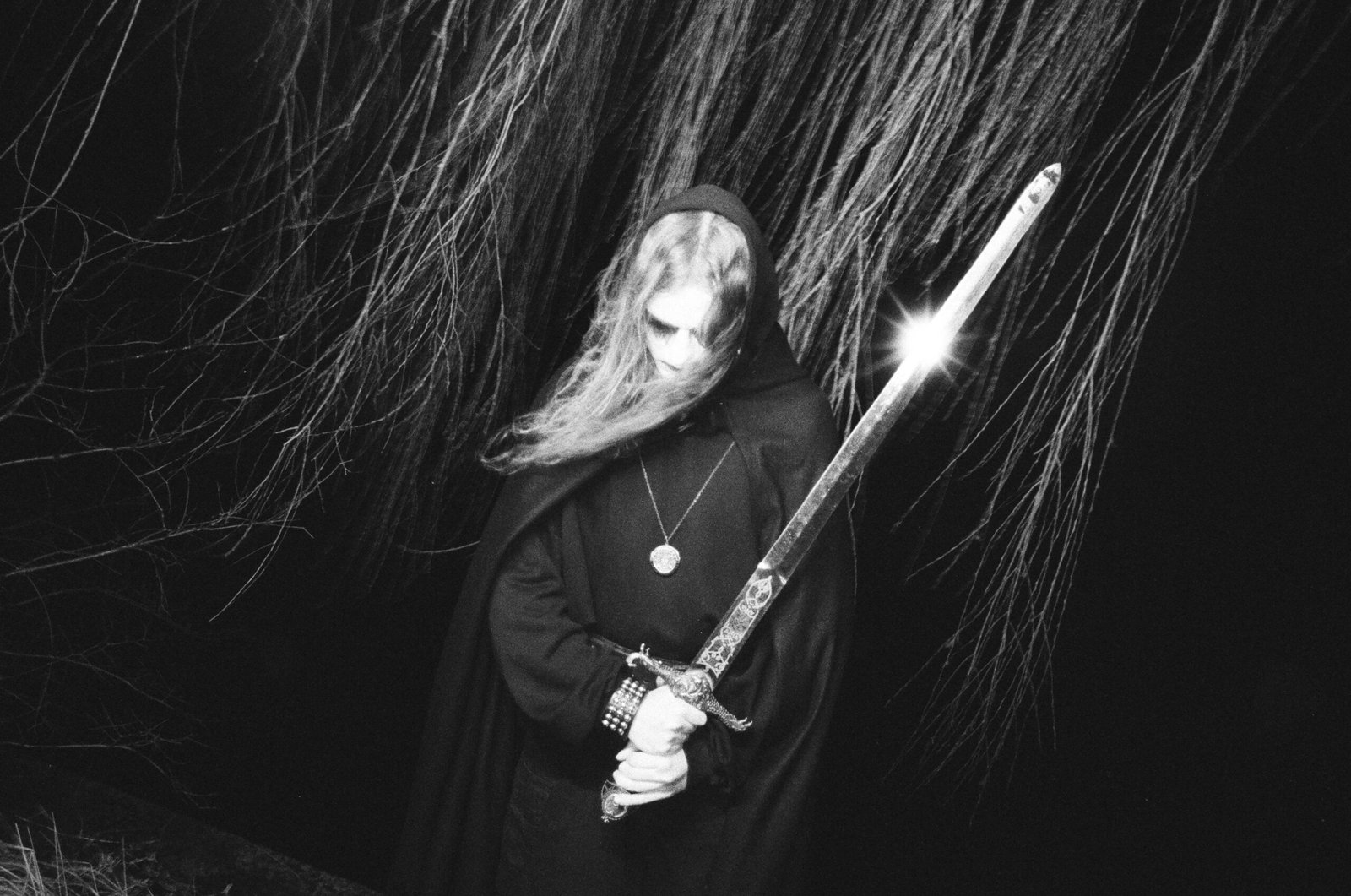
It is this lo-fi production that drew me to Këkht Aräkh. I came across the Ukrainian one-man project upon his signing to one of my all time favorite labels, Sacred Bones. Këkht Aräkh‘s music isn’t exactly straightforward, raw black metal. What separates Këkht Aräkh from others of that ilk is his fondness for mixing tender, medieval sounding ballads in between the black metal assaults. Dmitry, or Crying Orc, as he calls himself, wears his heart on his sleeve, dabbling in DSBM (depressive, suicidal black metal) and writing songs not only about castles and swordsmen, but about love and yearning and loneliness. His album art consists of grainy, black and white photos of himself looking morose in corpse paint, probably holding a medieval weapon. If all of that sounds cringe-worthy, it is because it is, but what about black metal has ever not been worthy of cringe? There is so much corpse paint and Satan worshiping and swords and depressive themes and fantasy themes in black metal that anyone who takes a step back from the scene (or was never invested in it) can see hundreds of dorky, cringey artists trying their best not to look like alienated leather daddies.
As Këkht Aräkh‘s popularity has grown, his songs have made the rounds on TikTok, and the fickle black metal community has responded with lots of shade and hatred thrown at an artist who is literally doing the very same kind of art the haters crave, but somehow not by the amorphous, unwritten rules they selectively abide by. For as much as I love black metal, the fans and fascists sure make it hard. Regardless, I’m here for the fantasy and the silliness of it all as much as I am for the anguish, the despair, the venomous anger and blasphemy and riffs, and Këkht Aräkh throws gothic deathrock ballads in the mix as well. That shit rules. Fuck the haters, we ball.
On his latest album, Morning Star, Dmitry (Crying Orc) and a cadre of collaborators take us on a voyage through a lonely night of longing, confronted by harrowing dreams, frigid snows, and the anguish of solitary existence in a castle. The gothic character is immediately apparent over the first three tracks as the Pale Swordsman narrator introduces his tale of wearily seeking love in the form of a castle before the acoustic “Genom sorgen” transfixes like a psychedelic folk song played from a dungeon. Dmitry’s songwriting has improved since his last full length, Pale Swordsman, feeling more melodic and textured than ever. While maintaining the medieval gothic aura, his ballads are layered with vocals and instruments and all with eloquently somber delivery while his black metal tracks feel self assured and gritty at the same time, like the ripper “Three winters away”. All of this is followed by “Raven King” that shifts from a haunting madrigal choir to frigid black metal with the choir popping in to embellish the chorus.
Later, “Eternal martyr” (featuring Bladee) introduces more melody in the cleanly sung chorus that starts timidly before a stronger and enveloping conclusion. It is times like this on Morning Star that I start to wish that this was at least a little higher fidelity, because under the “rawness” of this album exists a lot of really cool ideas and layers of instruments that could shine brighter. In fact, I expected this first new album on Sacred Bones (the previous two Sacred Bones releases were reissues) would have shinier production. Overall, the production fits the tone and aesthetic of the album while staying trve to Këkht Aräkh‘s previous works, but as Dmitry’s talent and popularity grows it begins to feel like a crutch or a comfort zone. However, I am not sure of the recording process. It could be a filter or simply the means at hand.
Ultimately, no one else really sounds like Këkht Aräkh, and Morning Star shines as his most realized and remarkable album to date, capable of invoking nostalgia and fantasy worlds at once. The ballads and acoustic parts are well balanced and less invasive than on previous releases, and the black metal is a well honed-dual edged broadsword of gloom and ferocity that long-time fans will love and aggressive enough to hook some new fans. Haters be damned. Morning Star is a fun time for bad time music.