

‘There is something deeply human about a record that refuses to move on before you’re ready.‘
-Jake Walters
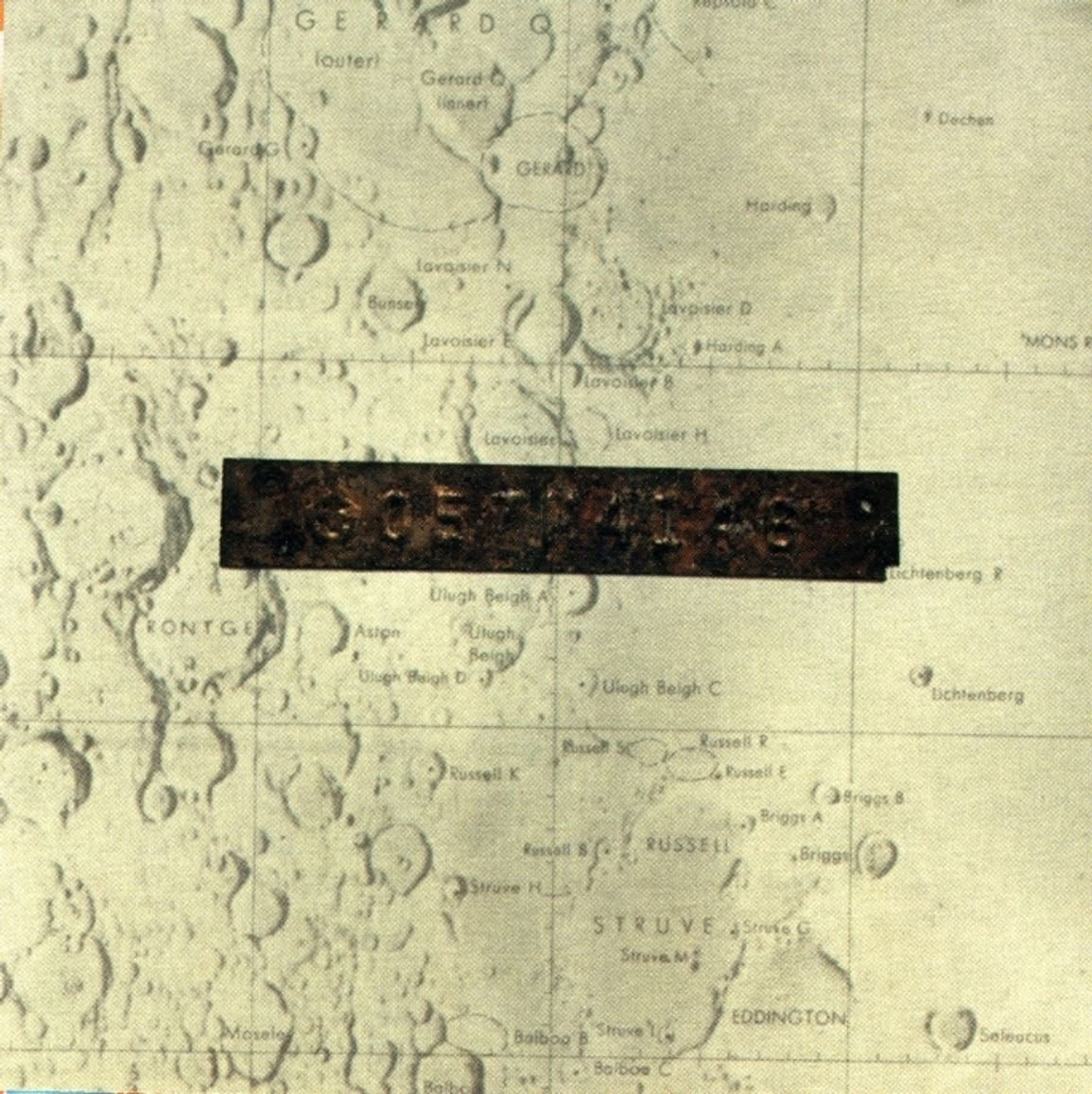
Release date: January 22, 2001 | Kranky | Facebook | Instagram | Website
We’ve talked about the death of a cultural icon in our last ASIR, and I’m afraid the shadow of mourning will hang above us in this episode as well. Duluth, Minnesota band Low has, over the course of almost three decades, quietly shaped slowcore into a pillar of indie rock, bringing solace to many fans and admirers. When vocalist and drummer Mimi Parker died in 2022, her sudden absence was keenly felt. This ASIR on Things We Lost In The Fire is dedicated to her memory.
Broc Nelson
I first became a fan of Low as a teenager. There was a nice little indie rock scene here in the Quad Cities, IA/IL, and at least two of those local bands cited Low on their homemade hype stickers on 7” records and CDs. One of those bands, Quiet Bears, seemed to be on the bill for dozens of shows I’ve seen over the years. Like Low, Quiet Bears was a husband-and-wife duo, who eventually became old friends of mine. The other was a band called The Winter Blanket, a full band that played less frequently, and eventually moved to Low’s home state of Minnesota. I was a fan of these locals, so, naturally I had to check out Low.
Things We Lost In The Fire was the first album by Low that I heard. Opening track, “Sunflower” has in some small way or another stuck with me ever since. The song starts with a slightly aggressive sounding muted guitar strum, but it quickly turns into something far, far more beautiful. Alan Sparhawk and Mimi Parker’s voices describe a body with X’s on its eyes and spending half of the ransom money on sweet, sweet, sweet sunflowers that they give to the night. It is cryptic, in a way, but very clear in another. The circumstances of a body and a ransom are secondary to the gesture of their offering, perhaps in mourning, perhaps as a symbol for letting go, or an act of contrition. It doesn’t really matter how you interpret it. There is a sentiment in this song that transcends scrutiny, and is simply felt through the music.
Low are the first band I would offer to someone curious about slowcore, the nebulous description of music that is slow, often sad, and sparse. They are hailed as a major band in the style; though like many bands who pioneer a new genre, Low would deny that label. Slowcore is seen as a response to grunge and alt-rock that dominated the radio in the mid-1990’s, though in many ways, I feel like Low is heavier than those bands. Sure, their music is sung sweetly, played slowly, and focuses on atmosphere and textures more than riffs using a minimalistic approach to their compositions, but you could easily play a song like “Dinosaur Act” faster and louder. You would lose the soaring horns in the chorus and the gentle organ in the verses, but the bones for a more traditional rock song are there. Low doesn’t need those abrasive textures, however. Their songs are far more affecting than anything Pearl Jam or Nirvana ever did.
Things We Lost In The Fire takes a look at moments of immaterial attachment. Were you to lose all of your possessions, it would suck. Trust me. I have lost all of my possessions before, but whether intentional or not, letting go of materialistic totems is an awakening. When left with nothing, you must be content with yourself and find comfort and joy with those who you care about. The importance of life becomes clearer. It isn’t about things, but about survival and community. I could tangent here into musings on Buddhism or write a whole essay’s worth of anti-consumerism arguments about how consumerism is both alienating and a prison of our own construction, but Low are more grounded and wholesome than that.
‘I don’t need a laser beam,’ sings Mimi on “Laser Beam”, later adding, ‘I need your grace, alone,’ in a fairly straightforward summery of this album’s thesis over spacious and sparse guitars. This song is almost a lullaby in its melody and cadence. While I am sure I have described songs as a warm hug, Low embodies that feeling of a tender embrace with most every song. They titled their first album I Could Live In Hope, and regardless of how sad they may sound, their songs have always conveyed a sense of hope, pragmatic yet dreamy. On Things We Lost In The Fire, they even have a song called “Embrace” whose instrumentation builds and swells with strings as Mimi takes the lead again describing the fleeting feeling of embrace in the face of mortality.
“Whore” follows, seeing Alan and Mimi contrasting vocals in one of their dreamiest and impressive duets, singing ‘you fill the house with bells/but who can live that?/you want to speak like angels, but you can’t’ amidst refrains of Mimi singing, ’you will get your reward,’ and Alan singing, ‘what is that whore you’re living for?’ in one of the most gorgeous anti-consumption songs ever. It’s beauty pales in comparison to “In Metal” a song that flips the script on possessions by wishing to preserve the smallness and tenderness of Alan and Mimi’s new child (at the time), Hollis, in metal.
It is that kind of personal reflection that helps define why Low was so special. Things We Lost In The Fire is one of their best albums, but before and after that album, Low created a body of work that is at once relatable to anyone who listens and deeply personal to them. Fans of the band felt the deep love between Mimi and Alan, and though they had other musicians, Low was always that couple.
I saw Low in April of 2022 after the release of their final album, Hey What. Divide & Dissolve opened, but Low went on to play a set for over two hours. It was one of the best concerts I have ever seen. I don’t think a single person in the audience had dry eyes that night.
The emotions that Low brought were always deeply touching, but it was only a few months earlier that Mimi Parker had revealed to the public her ongoing battle with ovarian cancer. They brought it up at the show, since they had cancelled multiple shows that year as she underwent treatment, and expressed a very heartfelt gratitude that they were able to play our little hometown venue. Mimi didn’t miss a beat or a note that night, and they remained hopeful for a positive outcome. In November of 2022, Mimi lost that battle, and the sadness that lingers from her passing is part of every Low fan. Alan Sparhawk announced afterwards that Low was no more, saying that, ’Low is and was Mimi. It was amazing. I’m grateful.’
I cannot fathom his loss and the loss for their children. It is hard to believe it has been over three years, but Alan has persevered and continues to make music as a solo artist, with his children, and last year with Trampled By Turtles. He also played guitar on tour with Circuit Des Yeux, who played a smaller venue in town. I went to that show with no knowledge that Sparhawk was there. My heart swelled at my fortune when I heard he was part of the band that night, and he played his role as guitarist professionally, not stealing the show. Afterwards, in line to pay my tab, Sparhawk stood right in front of me at the bar. He turned and made eye contact with me, frozen and in awe and completely unable to say anything. I patted him on the shoulder in passing and tried to convey all of my respects and condolences in a gesture that could just as easily been something casually done in casual politeness. Even now, I wouldn’t know what to say besides, ‘thank you for the music, I will forever be a fan.’
I know I have rambled and tried to fit a lot of information into this piece, but I am finding it difficult to put into words my love and appreciation for Low. Revisiting this album, and others, leading up to writing this has been a joyful experience, the comforting sounds of a parasocial relationship through their beautiful art, but there is still a sadness when I hear these songs. The way people mourned Princess Diana is the way I mourn Mimi. Long may her art live in the hearts and ears of those of us who have followed for decades, and may it find itself upon new ears, and open their hearts to the world Low envisioned, hoped for, where the connections we make with each other outweigh the superfluous things in life, where we stay true to our creativity, our hearts, and support each other along the way.
Jake Walters
I guess 2026 is starting off with a sort of, ‘in memoriam’ retrospectives and that’s a-ok with me. Beginning a year talking about Bowie and now Low feels like an important way to begin the next 12 months of a year that is already bursting at the seams with bullshit. But today we get to talk about Low and their record that turns a crisp quarter century this year, Things We Lost In The Fire. This is slowcore lamentations at their very finest with songs pondering not necessarily the loss itself but the aftermath of the immolation of the things that were sacred.
From the opening moments, the album feels like it’s already in the aftermath of something unnamed. There’s no fire here now, no collapse in real time — only the quiet triage of what remains. The voices never strain for drama or attention. They don’t beg or accuse. They simply exist, harmonizing in a way that feels intimate but distant, like a shared understanding that doesn’t require explanation and would scoff at a request for one. The language is sparse, but never empty. Every word feels placed with care, as if excess itself would be dishonest. It’s a vessel for being, not one begging for admiration.
The tonal qualities of the record feel warm but aloof, again only adding a dash of this or that here and there for impact but nothing that sends the record down a different path than the one it chose well before the first song played. The instrumentation is present but respectful, ever the supporting cast to the two voices whose story this is. There is a quiet confidence in that decision, an understanding that the songs do not need to announce themselves or prove their worth through escalation.
There’s a simplicity to Low’s, songs but like a good Italian dish, it’s not about the quantity of ingredients but the quality of each one and allowing each one to shine. Alan and Mimi (RIP) find seemingly endless ways to decorate their modest accompaniment with subtle but effective embellishments that amplify the impact of what they are saying and how they’re saying it. Things We Lost In The Fire is a modest record by a dozen metrics but where the data skews is in the impact that this record can have if you let it just wash over you. There’s not a lot of dynamics from song to song, but what is there is a feeling. A real feeling. That feeling pervades every moment of this album in an active way, and that feeling is one that I think is best described from the lyrics of “Embrace” when Mimi sings, ‘Crushing your skull/with my warming embrace’.
While there are a dozen songs on this album that could vie for the top spot, for me, “Laser Beam” is the one that connects with me the most. While there are endless ways to interpret the lyrics of any artist, and on this song, Low give nothing away with ease. It’s a solo vocal performance from Mimi that is intent on delivering a single message that to me speaks of the needs of a soul that doesn’t need proficiency, but understanding. I don’t need anything special, just be with me. I don’t want anything fancy, I just need some grace. After all that’s happened, I just need to feel okay. These are all the things that I feel and think when I hear this song and the sole voice that openly expresses the need from a place of brokenness, not one of demand.
Some records feel frozen in a moment. This one feels suspended in a feeling. Loss, faith, endurance, stillness. The weight of time passing without resolution. It’s all here, spoken softly, without garish ornamentation. And sometimes that’s exactly what lasts the longest.
There is something deeply human about a record that refuses to move on before you’re ready. Things We Lost In The Fire doesn’t ask for closure or offer redemption. It simply sits with you, steady and unflinching, long enough for you to recognize your own shape reflected back at you. Twenty-five years on, that kind of honesty still feels rare — and maybe more necessary than ever.