


In this dim year’s turning when frost grips the land,
and nations speak in thunder that none may understand,
the streets are thick with rumors and dread on every face.
Hope walks hooded and slow through time’s unkind place.
The bells still toll at Christmas, yet they sound more like a bruise than a cheer.
For hearts are worn and scattered by the weight of doubt and fear.
Old stars seem pale from watching. The night is long and wide.
And many souls wander with unsatisfied faith.
Yet hark—within the ruin, where words themselves grow thin,
a melody lingers, untouched by sin.
From cracked and humble chambers, from choirs of breath and bone,
it rises, frail yet fearless, a living truth.
No sword can silence its cadence; no lie can outpace its grace.
It threads the darkened centuries and warms the coldest place.
Where doctrine fails and banners fall to ash on the ground,
the human heart remembers how mercy once sounded.
For long before kingdoms learned the art of polished speech,
a song was born in Bethlehem within a shepherd’s reach.
Not written in law nor sealed in gold, but sung to the open air,
a promise borne on simple notes that sorrow could still bear.
So let the world be troubled and let reason stray and roam.
Let truth be bruised and exiled far from its native home.
Still, music keeps the candle when all but embers cease,
a trembling, stubborn witness to a possible peace.
This Christmas, guard the singing, though voices shake and break.
For in that fragile harmony, the stars themselves awake.
When sense is lost and pathways fade beyond the mind’s control,
a song may yet remember us and lead us back, made whole.
Wait, what? The old man has been going ham around town for seven years already? Well, color my butt red and call me Rudolph; that’s nuts! It’s Inter Claus again, and once again, a bunch of eager kids have gathered to show him how it’s done.
Dominik Böhmer was a good kid and got
Lost Crowns – The Heart Is In The Body
released April 1 independently

Giddy up, jingle horse, pick up your feet! It’s time to unwrap a present from the holly jolly music snob par excellence, the enigmatic figure robed in red and white: Inter Claus! I asked his excellence for a bit of old-school prog rock this year, and was surprised to find something other than a heaping pile of coal in my sock once more. Guess I’ve been sufficiently good in 2025; let’s see what the old fellow saw fit to bestow upon me this time around…
If prog rock was what I asked for, this is not quite what I had imagined – instead of whimsical wankery I received a psychedelic, outré slab of avant-rock that’s equal parts Canterbury scene (Centipede, anyone?) and Cardiacs. The Heart Is In The Body is the sophomore release of London-based jester troupe Lost Crowns, whose sound encompasses various flavors of progressive music from across the decades without feeling like a rehashed, refried dish born from lackluster imagination. Indeed, this feels like Gentle Giant jamming with Mr. Bungle and handing the results to the late, great Tim Smith to mangle them into ridiculous but undeniably catchy themes.
With this delectable record, the band managed to blow away the pungent funerary stench of a genre marred by repetition and inject it with a fresh perfume to make it palatable for people outside of the usual suspects. Lost Crowns employ a diverse arsenal of instruments, multi-layered vocal harmonies, and a weapons-grade sense of humor and whimsy to craft a unique palette of sounds and styles. Medieval airs meet modern-day wizardry, painting frontman Richard Larcombe as a manic bard commanding an equally deranged troupe of skilled musicians.
I asked for but a small treat and received a veritable feast for starving ears. Inter Claus, you jolly old rascal, you’ve done it again! The Heart Is In The Body is so out there yet immediately endearing it’s utterly delightful, and I couldn’t have hoped for a better present. Lost Crowns are now firmly planted on my radar, and I’ll be sure to give their latest release a couple more spins in anticipation of what fresh tomfoolery they might devise next.
Broc Nelson was a good kid and got
LAUSSE THE CAT – The Mocking Stars
released November 6 via Velvet Blues
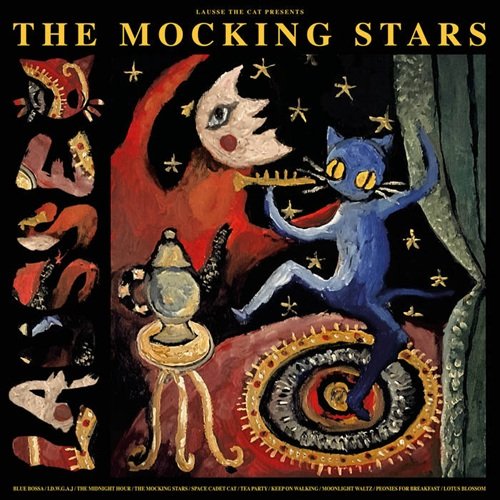
My holiday season with Everything Is Noise saw me in a music transition phase which may not be over, but I asked dear Inter Claus for a hip hop album thinking, ‘what wonderous hip hop does this wizard of wiggly air know?’ That moment, the desire to extend my hip hop knowledge and attention wound up being a several year obsession, to the point that this year I listened to more rap and hip hop than anything else. So, it was a bit of a gambit to ask Inter Claus this year for another hip hop album, because I was confident that I had heard the best albums of the year, already. However, there is always more to hear, and Inter blessed me with one of the more charming records of the year from a cat named LAUSSE…er, LAUSSE THE CAT.
This cat is probably actually a person, but he is at least a person-shaped, masked rapper from London who is building a dusky fantasy world about a personified cat struggling with depression, substance abuse, and poverty while longing for a better life, chasing tail, and consorting with ghosts, tree wizards, mice, and more. His second album, The Mocking Stars, presented as a theatrical children’s show, picks up where his first album, 2018’s The Girl, The Cat, and The Tree, left off, the broken and lonely anti-hero searching for meaning in his alley of existentialism amidst the rubbish of London. I know this all sounds very silly, and a touch of it is, but LAUSSE is a detailed storyteller who has as much of a poet’s sense of lamentation as he does drama kid whimsy.
The first listen intrigued me. At first, I was turned off by LAUSSE’s hushed and occasionally monotone delivery, but The Mocking Stars is filled with incredible jazz beats and impressively woven in ad-libs, samples, and gang vocals that truly give the impression of this album unfolding like a puppet show, awash in golden stage lights of a small theatre, complete with a gilded, red velvet curtain. The first track, “Blue Bossa” is practically hypnotic as it weaves through multiple instrument and beat switches over six minutes. The music really lets you lock into LAUSSE THE CAT’s lyrics, dynamically drawing your attention to every sound with it’s laid-back layering. Every element has room to breathe.
I love the discovery that comes from listening to hip hop, often from re-listening to lyrics and picking up puns and metaphors and themes, but The Mocking Stars manages to pack as much detail into the music as it does the lyrics, each passing measure and bar revealing clever embellishments. Every listen after my first (now somewhere between 5 and 10 listens) endears me to this album more and more. Through the chilled-out jazz and delivery, LAUSSE adds incredibly infectious refrains that linger long after they have run passed. The finale of “Peonies For Breakfast” is the best indie-rock group chorus I have heard since the 2000s.
Meanwhile, The Mocking Stars fills a complete narrative arc, seeing LAUSSE THE CAT determined to get rich without having a job, dealing with temptations, failing, and winding up in space. This album is magical, a surrealist, existential hero’s journey, picaresque in presentation, that invokes Lewis Carrol and inherits the rebellious poetry of Lord Byron and Percy Bysshe Shelley through the beatific dispositions of Allen Ginsberg or Tom Waits. This is an incredible gift, thank you Inter Claus.
Shaun Milligan was a good kid and got
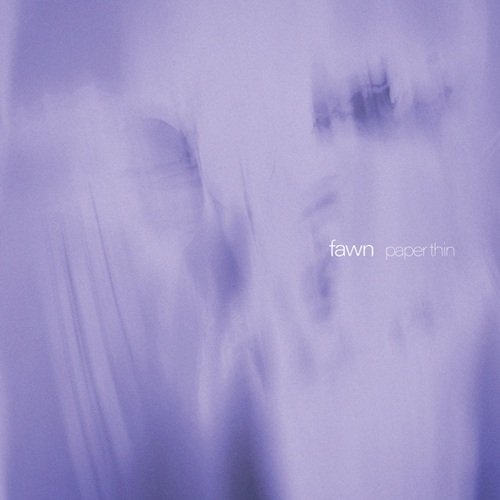
Fawn – Paper Thin
released September 26 via Sunday Drive Records
Unlike the well-known miracle infant who reportedly spent his first night trying to catch some much-needed newborn shuteye on a mattress of hay, I often sleep on great stuff. 2025 has been rife with instances of this – one of many reasons I’ll be glad to kick it to the curb. As a result, I found myself closing out the year in need of a saviour. No, not the one who was great at conjuring carbs, nor the fabled pie-pilferer and his posse of gravity-defying mammals. I needed Inter Claus. So, I lit the beacon and called for aid, but did he deliver?
Come on… I’ve done seven consecutive years of these now, what do you think?
Paper Thin, by San Antonio five-piece Fawn, is the latest balm of benevolence to soothe my seasonal outlook. Frankly, their gazey alt-rock does wonders. The alternative scene has broadened exponentially over the past twelve months, with the usual murmurs of oversaturation lingering overhead like Saint Nick peering down your chimney pot.
Well, there’s no fear of Fawn being the proverbial straw that sends a wise man tumbling to the floor: Paper Thin has enough substance to keep you in its clutches, while carrying a brevity that leaves you wanting more. The record floats softly into view as Jes Morales’ drums build anticipation of an incoming texture of sound that contradicts the opening track’s title. Then, once the guitars kick in, digitised droplets cascade above a lambent, repeating lead guitar motif – both complementing the spacious strums that distort the ground below.
This duality – reverberating notes that mesh together and drift heavenward in conjunction with robust, rhythmic roots – is all very atmospheric and will sit comfortably within the ear canals of anyone who enjoys the likes of Blanket, Vollam, Glare, or even Whirr for those gaze-ing a little further back.
The softened vocal melodies of singer/composer Trevor Humphreys are barely distinguishable at times – as if heard from on high, sprawling out into the twinkling, infinite expanse. It’s a stylistic choice that rewards close listening. Even at the summit of “Hill”, which carries a more sprightly energy thanks in part to the grounding bass playing of James Garcia, Humphreys’ singing finds a way to rein in the urgency. The track calls to mind a more recumbent My Vitriol: a band I cite from time to time, partly because I never fully appreciated their tuneful fervour as soon as I should have.
Here, the opportunity to atone for my prior ignorance is taken gleefully. “Fleeting Sun” is an excellent way to round off our brief venture; guitarists Olivia Jacome and Giovanni Campos fully commit to ushering us off with a droning, powerful ambiance not unlike Holy Fawn – a namesake relative from doomier pastures. With a dusting of grunge that would have the little drummer boy itching to go full pelt on his kit, the record ends just as we were truly getting acquainted with Fawn‘s lavishly layered music.
Paper Thin is yet another addition to my growing showcase of impeccable selections from the only Claus that counts. It’s four tracks. It’s under 20 minutes. It’s a cracker of a record that both JC and SC alike would want you to enjoy –
‘Hark!’ The herald angels sing,
Listen to this awesome thing.
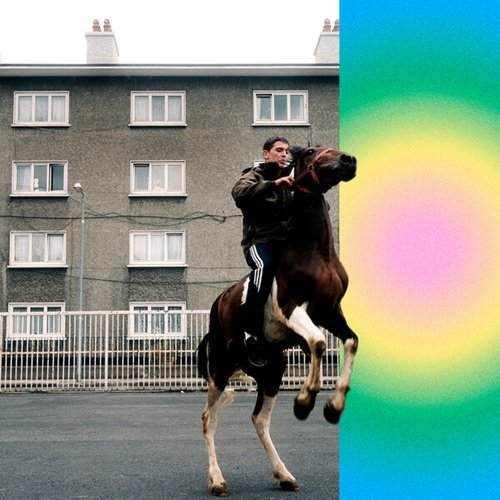
For my very first holiday season at Everything Is Noise, I asked Inter Claus for some post-hardcore that doesn’t suck. Not a particularly effusive prompt, but I figured I’d get straight to the point. I’ve always felt that I should love post-hardcore; after all, I love punk and some weirder sub-genres of metal, so it seems like a natural fit. But I’ve found that a lot of the more mainstream picks lean a little too tacky metalcore for my taste and ignore that frantic energy that early At the Drive-In, Snapcase, and some The Callous Daoboys tracks possess. Inter came through, obviously, and handed me some of the wackiest shit I’ve heard in a while that certainly brings the aforementioned energy to the table.
Norwegian band Honningbarna begins Soft Spot with a long, spoken-word introduction in their signature Kristiansand dialect. Huh. Well, as an American moron I do not speak anything other than English, so I pulled up the Genius translation of the lyrics, and was immediately floored by the first line: ‘A man on the internet tells me that we live in Elon Musk’s simulation. I close the computer. Enough for today.’
Oh. Yeah, that’s…strangely relatable. The rest of the track follows the speaker’s life phase by phase, culminating in a heartfelt thank you to the audience. And then the pedal hits the metal on “Schafer”, and the rest of the album is an absolute wild ride. This is about forty minutes of breakneck, voracious hardcore that I don’t think I’ve heard rivaled elsewhere this year. It’s rare that you see such intense and frenzied playing still follow some sort of structure, but Honningbarna pull it off with ease. Sometimes works in this sphere can come across as a bit scattered or simply an explosion of emotion, but Soft Spot retains a philosophical and auditory thread throughout that keeps things feeling cohesive.
Some standout tracks: “MP5”, which opens with a pulsating synth bassline and hook before cranking upwards with driving tom drums, blown-out guitars, and some truly harrowing high-register screams that rival Knocked Loose’s Bryan Garris. “Festen som aldri stopper” could almost pass for a 00s garage rock hit, at least in the first half, prior to the expansion of the sonic palette in the pre-chorus that brings some surprising reverb and gang vocals to the table. “Hvilke splinter” takes a more classic post-hardcore approach, but adds a little d&b-inspired drums to the verse to keep things interesting. Pretty much every single track is like this; recognizable at first, but exciting and fresh as it develops. Few albums can produce such consistency across the length of the work while maintaining forward momentum.
Soft Spot makes it very clear that Honningbarna have been in the game for long enough to not be afraid of experimentation or disregarding working within strict genre confines. The sheer amount of sound on this record is a testament to their sprawling creativity, and I’m excited to work my way backwards through their discography. Next year, I might have to ask Inter Claus for more kooky Norwegian stuff. I’m clearly missing out.
I’m not a Christmas person, in the least. I believe I’ve swung in with a sentence like that on every single one of these features I’ve taken part in, but it’s a fact worth repeating. Annually the world goes crazy over old fables that directly cause harm to an unbelievable degree globally, but it’s somehow alright because… Well, reasons. Instead of manufactured festive cheer or whatever the fuck, the one occasion I’m mostly looking forward towards the end of the year is this one. After all, if I wanted one red-dressed, catchphrase-slinging delightful buffoon to come down my chimney, it’d be Inter Claus.
My musical present this year couldn’t be farther from jolly, but it is festive alright. If ’festive’ translates to mind-bending, hallucination-inducing sonic explorations and crazy scientist-level experimentation, that is.
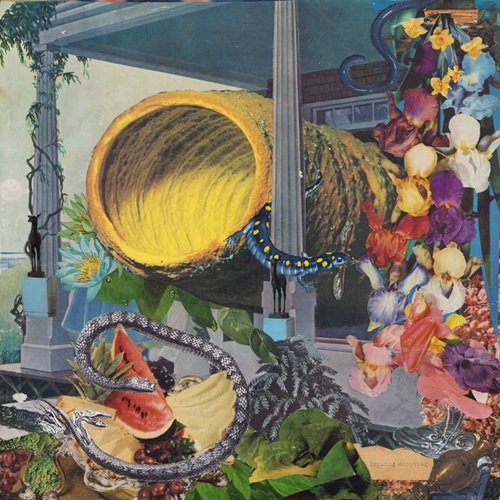
Memotone released Pruning through Discrepant mid-March, and as per usual, it’s something I should’ve heard before I did, but alas, such is the way of the world when it comes to living in a barrel, under a rock, with blindfolds and earmuffs on. In short, Pruning is a vivid foray into a world of beautiful crackles and clicks that together somehow manage to craft a musical appearance, to an exceedingly pleasant and immersive outcome. Take the concept of ear candy and infuse it with thousandfold amounts of sugar and mechanical sweeteners, and you have somewhat of an idea about the absolute fucking niceness that this record in its entirety is.
An acute dose of engaging aural warmth is exactly what the doctor ordered to withstand the bullshit weather constantly transmutating between bleak and dark, ever-raining hellhole and a snow-piled winter wonderland in the Northern Hemisphere. From the opening warbling lo-fi synths and watery plucks of ”Moss Zone” to the ratcheting groove of ”Riders”, and from the ethereal waves of ”Risidual Scum” to the soundtrack-ish, picturesque ”Beach Scene”, Memotone has tapped into a very pleasant musical fountain that the Bristolian is putting to use by any means necessary, existing somewhere between the liminalities of active and passive ambiances.
While it’s up for debate whether or not I have a way with words, my definitive sales pitch for Memotone’s Pruning is this; If something in this day and age, amongst global crises and interpersonal turmoils and other depressing hanky panky is capable to make you smile, it surely must be worth it, right?
James Carlson was a good kid and got
Avi C. Engel – Nocturne (Soundtrack for an Invisible Film)
released February 28 via Somewherecold Records/Shaking Box
For my first ever gift from Inter Claus, I requested a cool, immersive experience to inaugurate the winter season. The first snow had just fallen in my current abode in Western France, and I was prepping myself for long months of frigid atmosphere. Like usual, I wanted to overromanticize the impending cold with the most frostbitten music possible, with sounds so melancholic that the memory of warmth becomes but a distant glimmer lighting the way toward the future. My go-to when I want to immerse myself in such gloom has always been the folkier side of black metal, played by bands like Ulver and Agalloch. I’ve always loved hearing these artists forgo distortion and shrieks and strip down to despondent acoustics and mournful singing. It turns out there’s a whole genre of that stuff called dark folk, and I’ve tried previously to get into other groups that play it, but it hadn’t yet clicked for me. I figured that Inter Claus was my best bet for finding the gateway I needed and diving headfirst into depressive winter vibes.
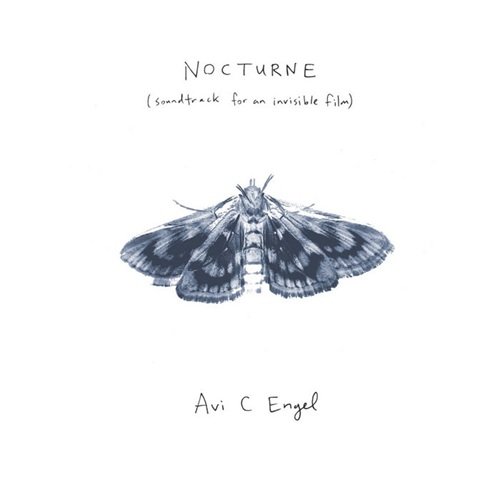
Inter Claus’ holly jolly gift of winter gloom came this year in the form of Avi C. Engel’s Nocturne (Soundtrack for an Invisible Film). Engel is a Canadian neo-folk artist with a very focused songwriting style that they’ve developed since 2005. They are aware of their music’s same-y nature, but describe it as all flowing together: ‘I’m not writing the same song over and over so much as writing one long continuous song that will end when I die’. This life-spanning song is a somber, contemplative one. Each piece of Engel’s that I’ve heard feels like a single moment extended through time, held in my mind’s eye like a wilted flower and turned round till I have seen every wrinkle in every petal. It’s the perfect contrast to the frantic music I usually listen to, and fits the frozen vibe I was seeking rather well.
I haven’t gone through Engel’s whole discography (not yet at least), but their sonic tableau seems to usually contain acoustic guitar, gently harmonized singing, and whatever other elements they deem appropriate to generate their desired melancholy. On Nocturne, they dabble in distant strings, soft electronics, gentle drums and more. These supplementary sounds wrap Engel’s singing and playing in a thin cocoon of atmosphere, lending them a meditative quality. Each song has a different touch of instrumentation, and thus its own color, but the songwriting is as consistent as usual. The album unfolds like a snowy still-life painting, each piece adding a new layer in a different shade of white or gray. The end result captivates, but to keep the painting metaphor going, the figures depicted aren’t so easily understood.
Nocturne for me is an album with a simple purpose, but a puzzling meaning. Emotionally speaking, while it very much exudes the deep melancholy that I sought, Engel writes that it is not meant to sadden, but rather soothe a sadness that is already there. I can certainly see this album doing this for me down the road when needed. Then, however, there is the matter of the title’s other half, this ‘Soundtrack for an Invisible Film’ business. I struggle to imagine the film that this album could accompany. Clear thematic parallels between the songs are few: only every other song has lyrics, and most are cryptic. The first with singing, “Where Does a Moth Go?”, is clear enough, describing a moth hiding from the rain in a cocoon before re-emerging to the sunlight. Later songs are less clear, but evoke images of eyes, wings, golden glows, bones, day and night, and waves. Of course, we do have a simple music video for “Bones Beguiling”, but it’s hardly revealing about the narrative of the overall album. My best idea is that Nocturne confronts nihilistic defeatism, wherein comfort is found in purposeless inaction, and all greater purposes point to a deadly light, a ‘golden void’. By facing these thoughts, we can soothe them, and find peace in the endless ebb and flow.
Thanks for the slow confrontation with existential dread and the resulting appreciation for life’s fragility, Inter Claus! Looking forward to next year!
JP Pallais was a good kid and got
Snakeskin – We live in sand
released October 10 via Ruptured Records/Beacon Sound
As I sit and think about some poetic or catchy way to kick off my Inter Claus piece, I sit and reflect how I got here. Ending up on Inter Claus’ nice list isn’t just some cute little thing EIN at the end of each calendar year, well it is, but it is so much more than that. It feels surreal to be a part of such a team for as long as I have been, getting to know so many peeps that have not only widened my musical interests, but improved my life in general with the genuine camaraderie we all share. Not only all that, but I/we get direct access to the man, the myth, the legend (Inter Claus) and his infinitesimal trove of music suggestions. It is an immense privilege to have access to such forbidden knowledge, but to also know him as an individual and that of the rest of the team. I struggle to fully convince myself that I deserve to be where I am in life, being on EIN included, yet I will never take that for granted.
Anyyyyywayyyyys, this year, I found myself heavily gravitating towards ambient/modern classical-adjacent music. More specifically, stuff that blurs the lines between ambient and dream pop; slightly more accessible ambient with a teensy little dash of vocals if you will. I found exactly what I was looking for with Vines, amongst a few other artists, such as Juilanna Barwick for example. Now that I had the ‘formal’ opportunity to tap into the wealth of expertly tailored musical recommendations, I leapt at it so that I could continue this ambient-adjacent exploration.
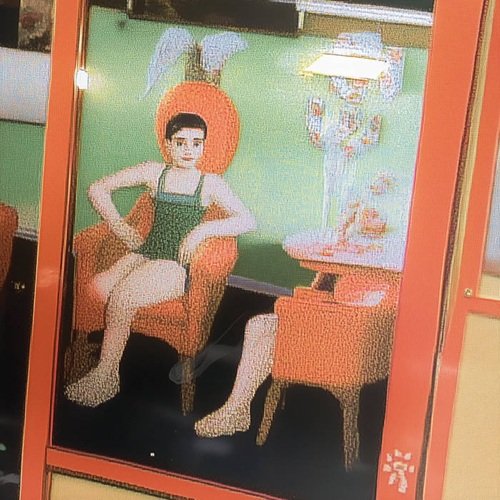
Not long after I had sent my carrier pigeon towards the EINorth Pole with my oddly specific yet vague request, Inter Claus returned to me Snakeskin’s We Live in Sand, an artist/album that was completely novel to me (as was the hope afterall). After receiving the title of the mystery-to-me record, I took a quick glance at the Bandcamp description and knew that this was going to be tasty; there is much to be said about the attention to detail of a Bandcamp album description/page and the quality of the music it represents. After heavily acquainting myself with its shapes and curves, We Live in Sand widens my expectation and enjoyment of this amorphous style of music.
Musically, We Live in Sand reminds me a lot of the experience of eating green tea ice cream. I don’t know what it is about that specific flavor, but every time I have it, I typically need to soft-brace myself for that first spoonful. The first bite, or track in the case of We Live in Sand, is off-putting initially with its bitterness. In the opening track (“Ready”), the rapidly pulsing glitchy electronics are immensely disorienting, yet streaks of gorgeous ambience start to reveal itself from behind the static. The song isn’t even done yet and it’s already telling you ‘don’t worry, it will be worth it, I promise’.
With that first bite out of the way, the rest of the album is smooth sailing, with hauntingly gorgeous and deep soundscapes, ethereal vocals, and masterful production to lose yourself in. While the artists like Vines and Julianna Barwick are more on the melancholic-yet-uplifting side of the ambient spectrum, Snakeskin carves their own niche being incredibly mysterious and unsettling whilst still charming. While there are other eerie moments outside of “Ready” – such as the percussive effects of “Black Water” that make me feels as if I am helplessly watching a colossal being stomp their way across an asphyxiatingly silent cavernous room deep beyond the surface of the Earth – I have never heard anything as deep as that before. Anyways, Snakeskin’s latest collection of tracks is scary at times, blissful at others, and everything in between.
I find music discovery to be a series of infinitely falling dominoes, for which the momentum of the falling dominoes will always exist as long as you have the desire to continue finding new music. Just when I thought my last fallen domino didn’t carry enough momentum to fall over, Inter Claus comes in with the assist and gives the gentlest nudge needed for it to collide with its neighbor and onwards, ultimately further broadening my enjoyment from ambient/electronic/experimental music more than I thought could be done. How foolish of me to think that though, as with the sheer amount of music out there, there is always something new and exciting to discover. Snakeskin was exactly that for me, reigniting the spark that I so desperately needed! Thank you, Inter Claus!!!
So now we part, dear song, till dawn or darker days,
yet keep thy light within us when the world has lost its ways.
If silence claims our voices and the night feels overgrown,
remember—we were singing, and we did not sing alone.